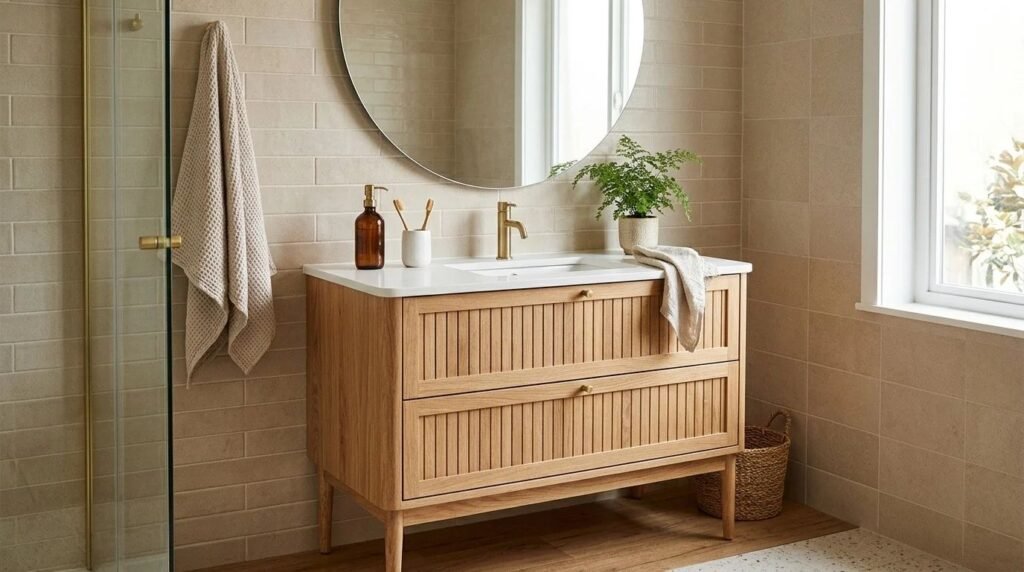
Choosing the right bathroom vanity can make a big difference in how your bathroom looks and functions. A 30 inch bathroom vanity offers a practical balance between storage and floor space, making it a popular option for powder rooms, guest bathrooms, and smaller primary bathrooms.
However, a compact vanity doesn’t have to look plain or lack personality. From classic white cabinets and natural wood finishes to floating designs and furniture-inspired details, there are plenty of ways to make a 30 inch vanity feel stylish and functional.
Whether you’re planning a complete bathroom renovation or simply replacing an outdated cabinet, these 25 ideas will help you find a design that suits your space, storage needs, and decorating style.
25 Beautiful 30 Inch Bathroom Vanity Ideas
1. Classic White Shaker Bathroom Vanity
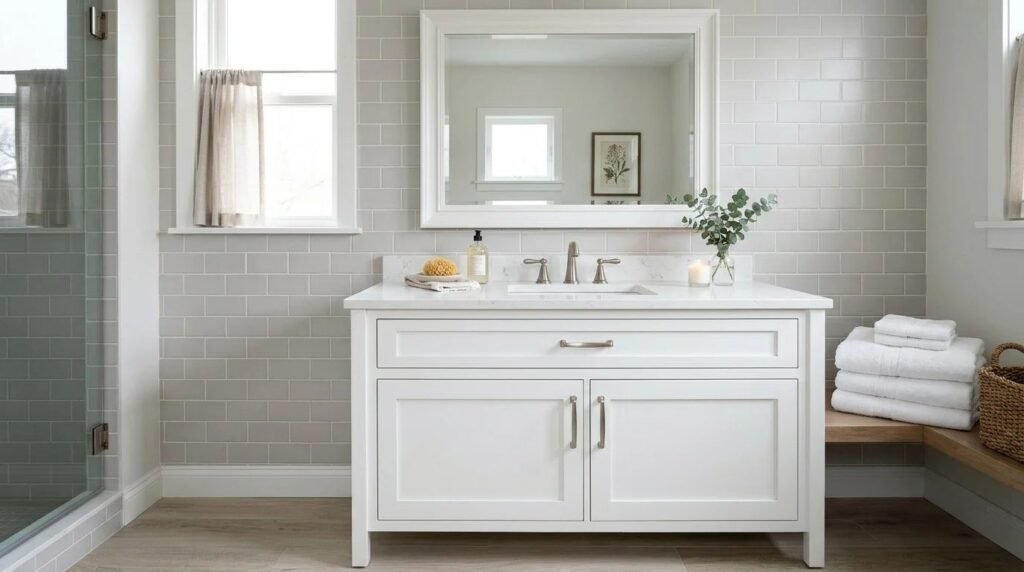
A white Shaker vanity features a simple square frame around a recessed, flat center panel, giving it a clean and timeless appearance. Its understated design works with traditional, transitional, and modern bathrooms.
Pair the cabinet with a white quartz countertop, brushed-nickel hardware, and a matching undermount sink. Light gray floor tiles and a simple framed mirror can complete the look without making the room feel busy.
2. Natural Oak 30 Inch Bathroom Vanity
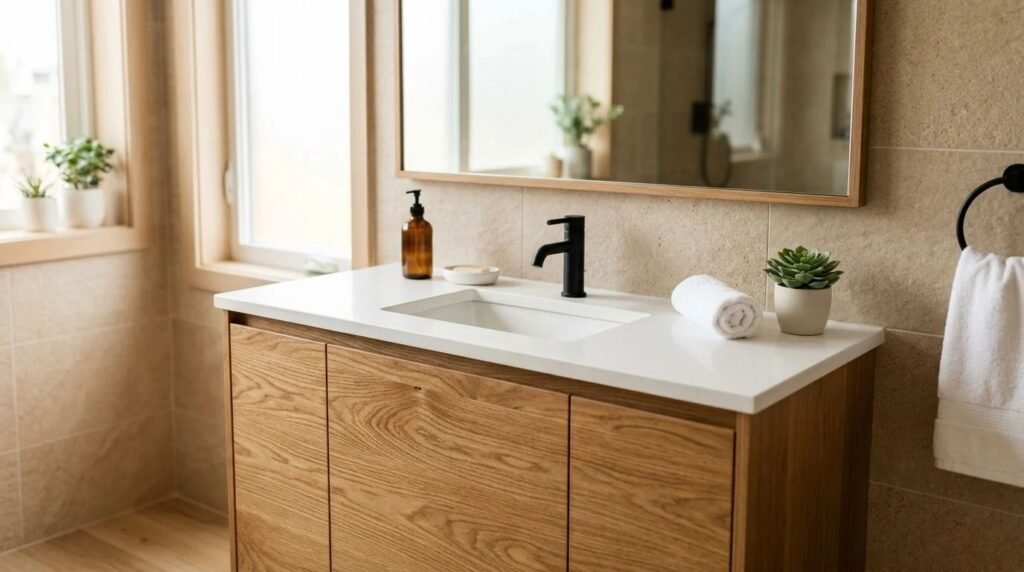
Natural oak brings warmth and texture to a bathroom without overwhelming a compact space. A flat-front oak cabinet with minimal hardware creates a relaxed, contemporary look.
Combine it with a white countertop, matte-black faucet, and warm neutral wall tiles. The wood grain adds visual interest while keeping the overall design simple.
3. Floating Bathroom Vanity with Concealed Drawers
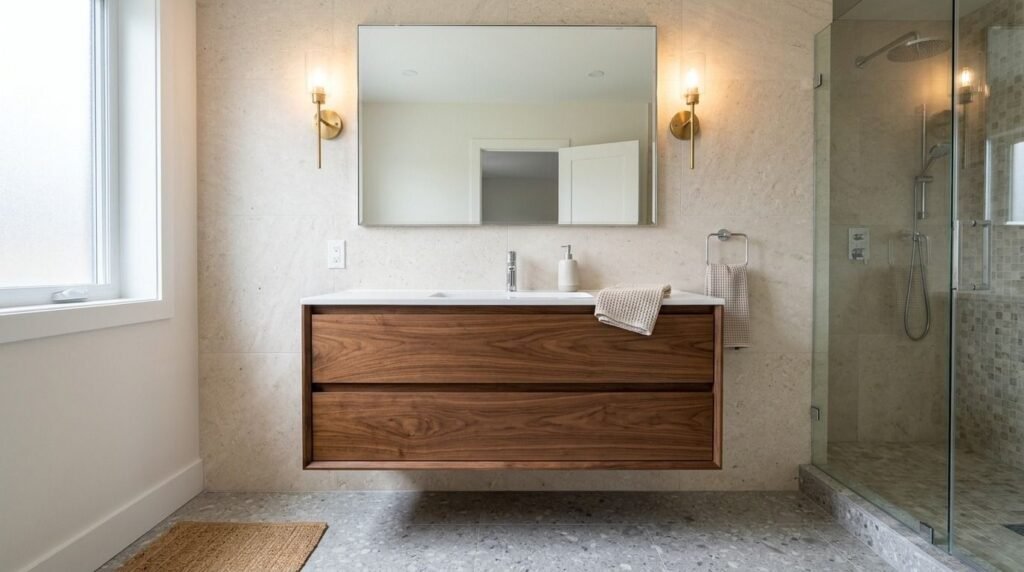
A wall-mounted vanity creates an open area underneath the cabinet, helping a small bathroom feel less crowded. Choose a 30 inch design with deep, handle-free drawers to keep toiletries and everyday essentials organized.
A floating vanity needs secure wall mounting and suitable structural support. Confirm that the wall and installation system can handle the cabinet’s weight before choosing this style.
4. Matte Black Minimalist Vanity
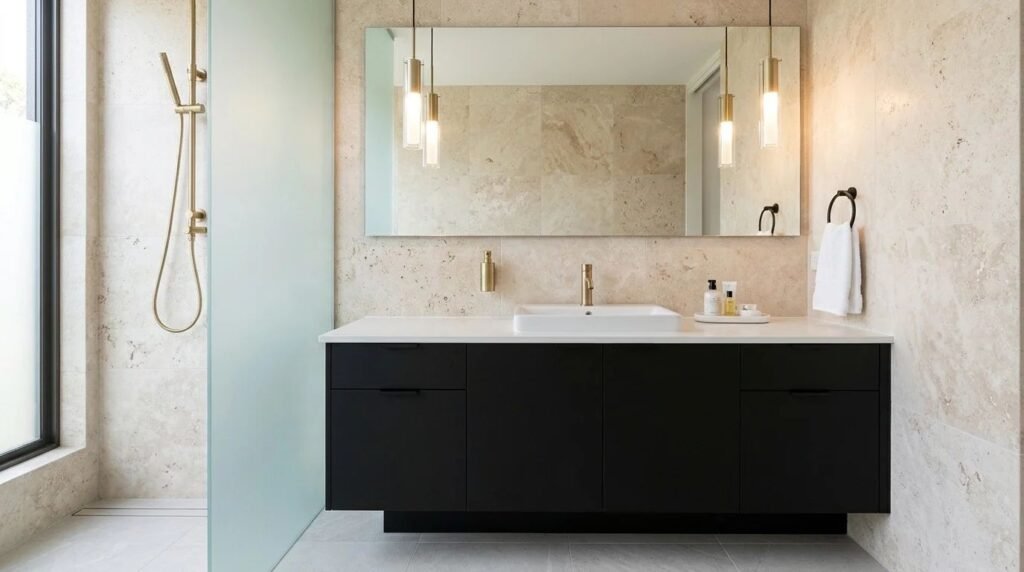
A matte-black vanity creates a bold, modern look through its smooth surfaces, straight lines, and understated hardware. Unlike a traditional cabinet, this design keeps decorative details to a minimum.
Balance the dark finish with a white countertop, pale walls, and a large mirror. Warm wood accessories or brushed-brass fixtures can soften the contrast.
5. Sage Green Traditional Vanity
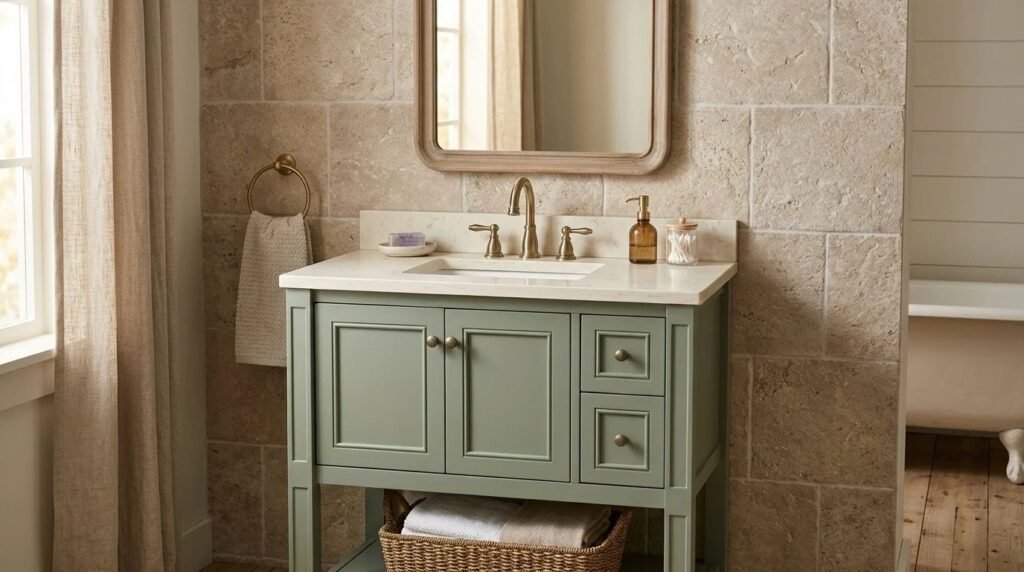
Sage green adds a gentle touch of color while maintaining a calm, natural atmosphere. A traditional cabinet painted in muted sage can bring personality to the bathroom without overpowering the other finishes.
Pair it with a cream or white countertop, brass knobs, and soft beige tiles. This combination suits bathrooms that lean toward cottage, farmhouse, or classic interiors.
6. Navy Blue Raised-Panel Vanity
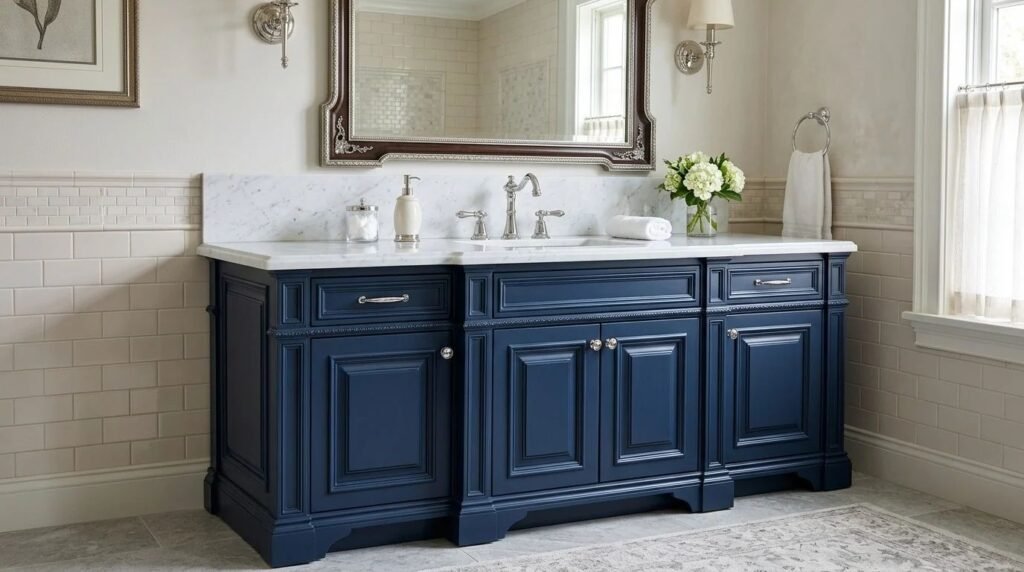
A navy raised-panel vanity has a more dimensional cabinet front than a simple Shaker design. Its raised center panels and detailed door profiles give the cabinet a formal, traditional character.
Use a white marble-look countertop, polished chrome faucet, and a large mirror to balance the deep blue finish. This style is a strong option when you want a colorful vanity with a classic appearance.
7. Fluted Wood Bathroom Vanity
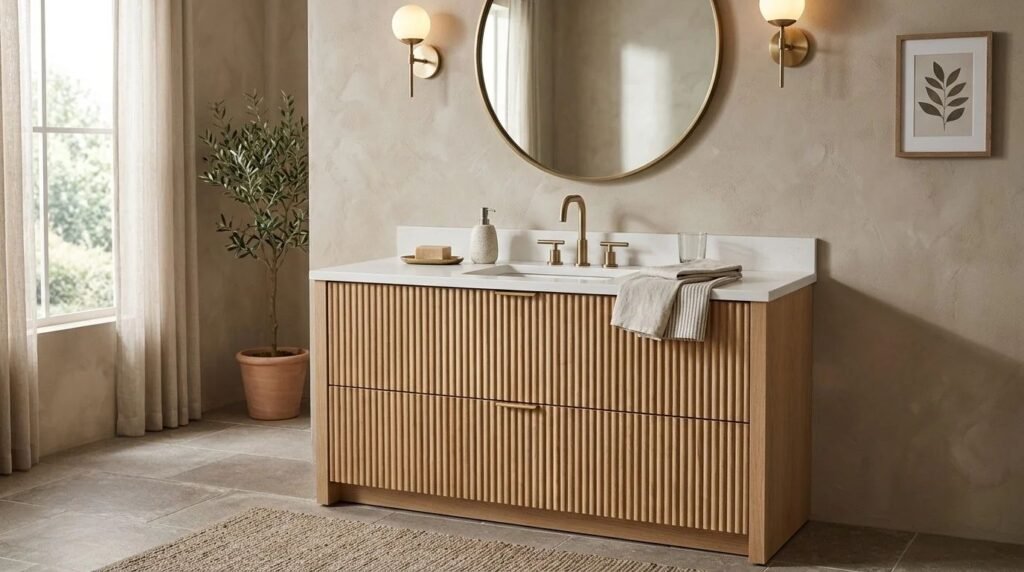
Fluted cabinetry features narrow, evenly spaced vertical ribs across the cabinet front. These raised details create a sculptural texture that makes a simple wood vanity feel more contemporary and decorative.
Choose a light oak or walnut finish and pair it with a white countertop and simple round hardware. Keep nearby accessories understated so the textured cabinet remains the main feature.
8. Furniture-Style Vanity with Decorative Legs
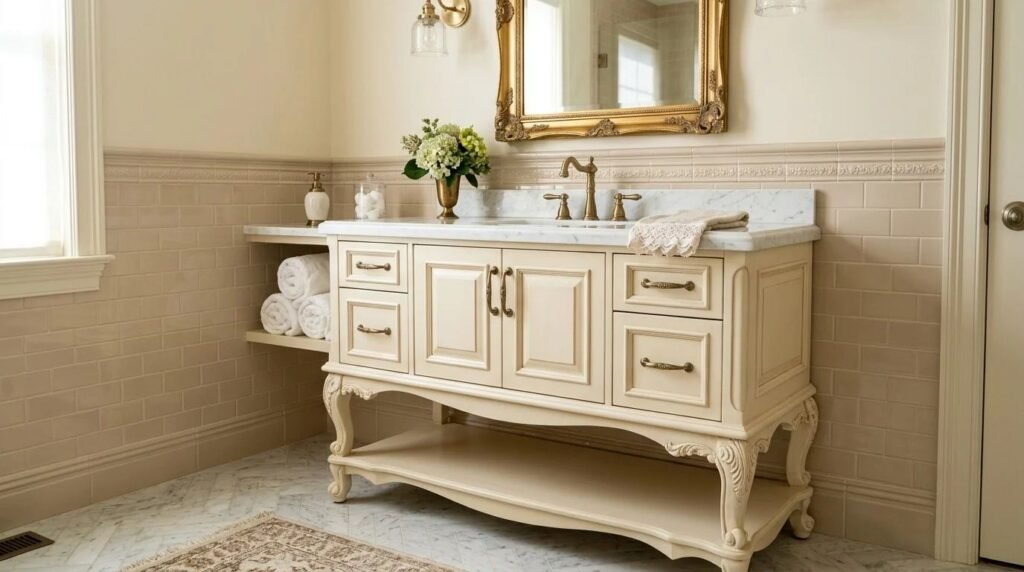
A furniture-style vanity looks more like a freestanding piece of bedroom or living-room furniture than a standard bathroom cabinet. Its exposed legs, shaped base, and decorative silhouette give it a distinctive appearance.
A white or warm wood finish can complement traditional bathrooms, while brass handles add a refined touch. Make sure the design still provides enough enclosed storage for everyday bathroom supplies.
9. Reclaimed Wood Bathroom Vanity
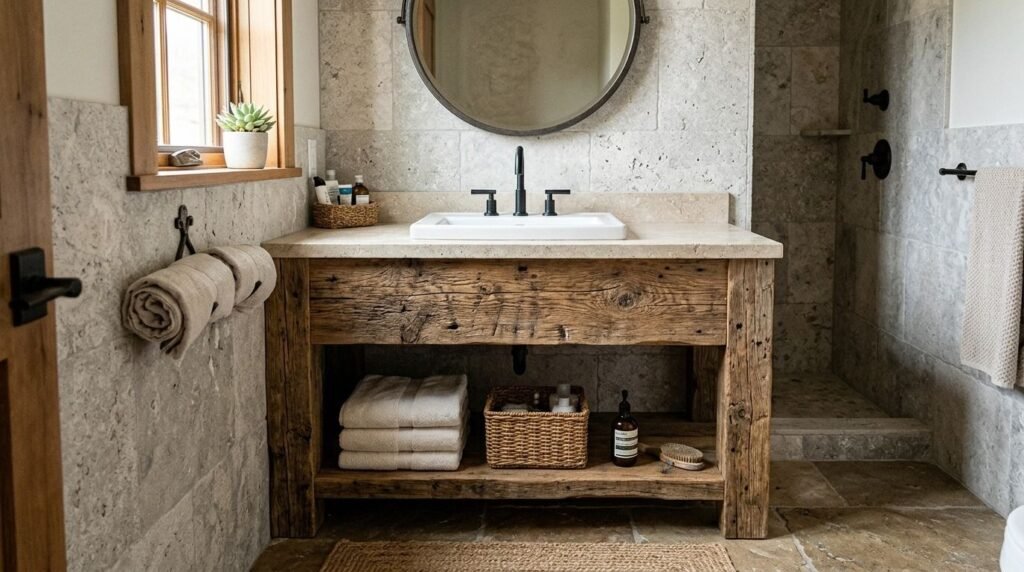
Reclaimed wood gives a bathroom vanity a naturally weathered appearance, with variations in grain, color, and texture. Each cabinet can have a slightly different character, making this a good fit for rustic and farmhouse-inspired spaces.
Protect the wood with an appropriate moisture-resistant finish and choose a countertop that can handle regular bathroom use. A white sink and simple black faucet create a pleasing contrast with the aged wood.
10. Open-Shelf Vanity with Woven Baskets
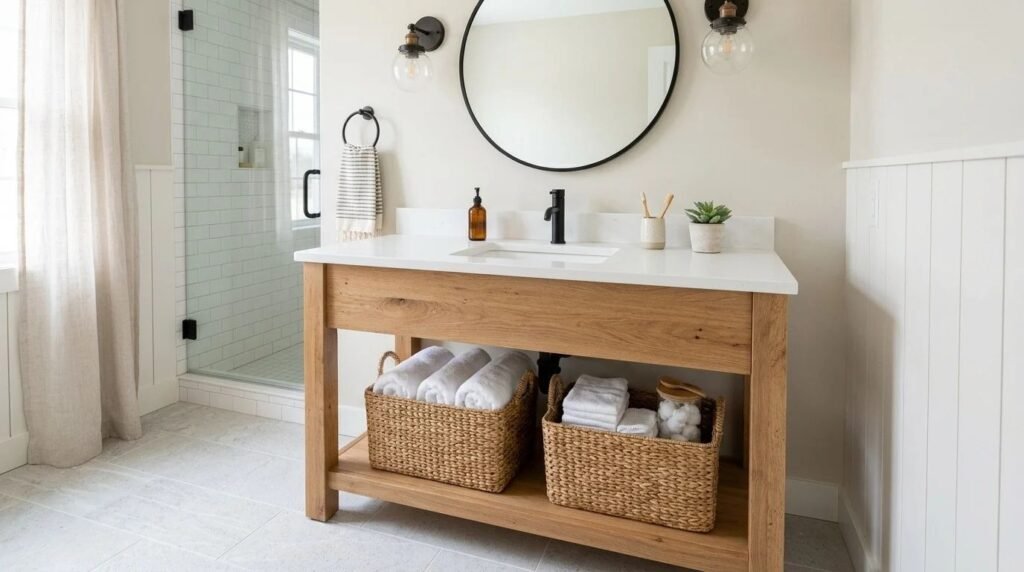
An open-shelf vanity replaces some enclosed cabinet space with visible storage underneath the sink. Woven baskets can hold rolled towels, toilet paper, and smaller bathroom essentials.
Choose a sturdy wood cabinet with a practical shelf height. Since the contents remain visible, matching baskets and neatly folded towels help the arrangement look intentional.
11. Deep Drawer 30 Inch Bathroom Vanity
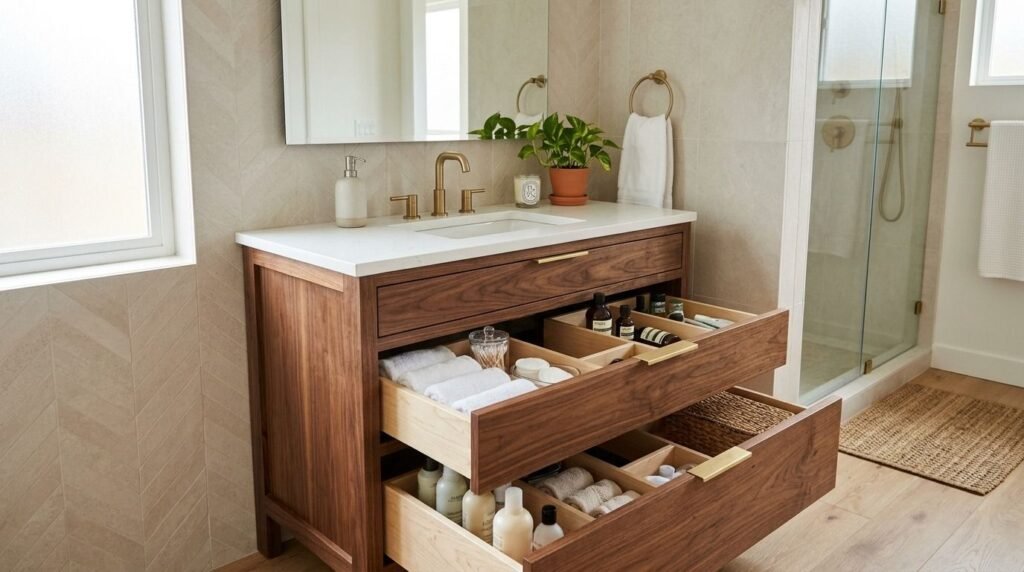
A vanity with several deep drawers makes better use of vertical cabinet space than a design with only one large cupboard. You can separate skincare products, hair tools, cleaning supplies, and other essentials instead of stacking everything together.
Look for full-extension drawer slides so items at the back are easier to reach. Drawer cutouts around the plumbing should also be designed to preserve as much usable storage as possible.
12. Traditional Inset-Panel Bathroom Vanity
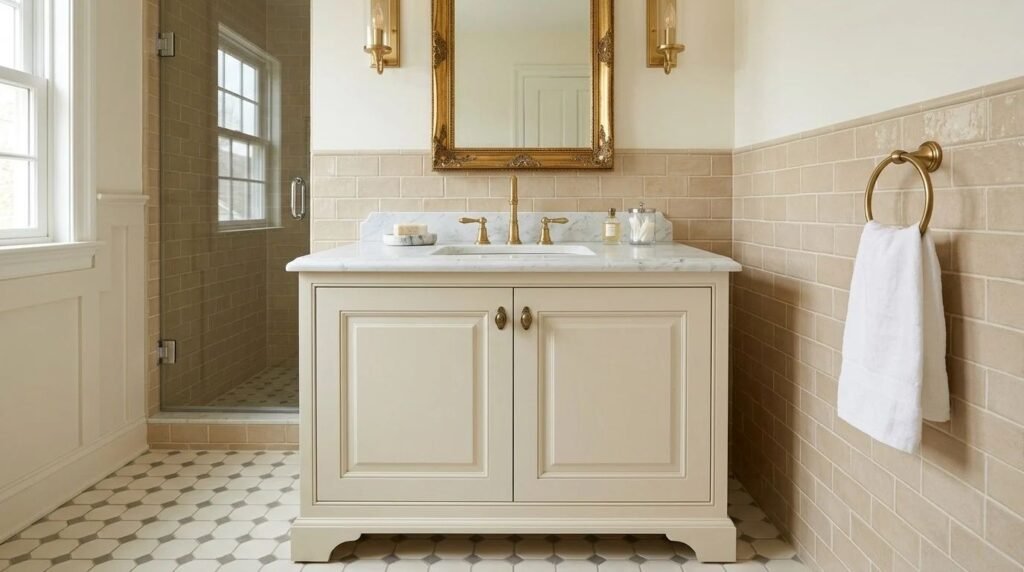
An inset-panel vanity has cabinet doors that sit flush inside the face frame rather than overlapping it. This creates a precise, tailored appearance that differs from the recessed-panel look of a standard Shaker cabinet.
A painted cream, gray, or soft white finish can highlight the careful cabinet construction. Pair it with classic knobs and a stone-look countertop for a polished traditional bathroom.
13. 30 Inch Bathroom Vanity with a Built-In Laundry Hamper
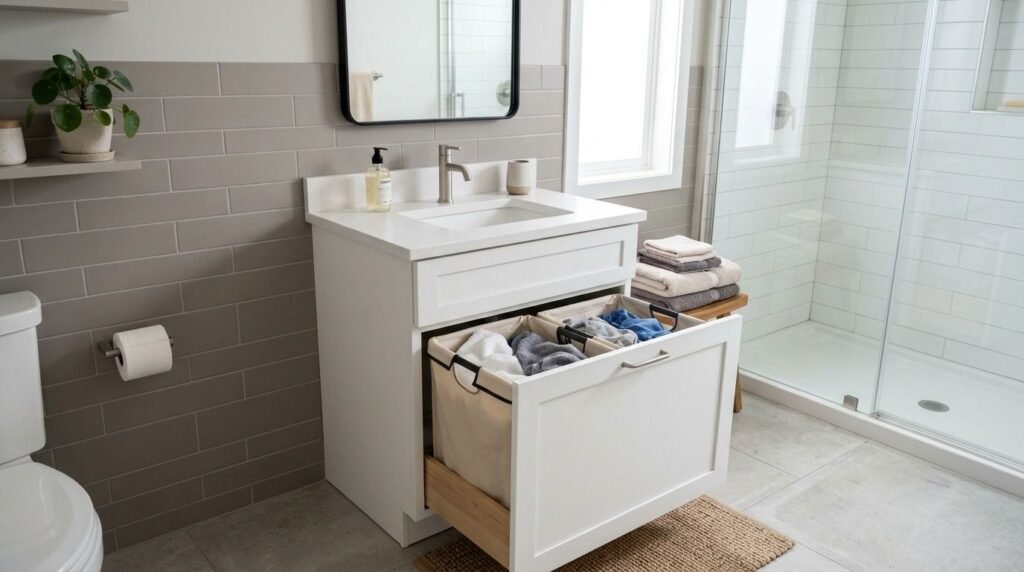
A built-in hamper makes a compact bathroom more practical by giving dirty clothes a dedicated place. Some vanity designs include a pull-out hamper compartment behind a cabinet door, keeping laundry out of sight.
Look for a model with a removable liner or basket so you can take laundry to the washing machine easily. Check the internal hamper capacity and make sure the compartment doesn’t take away too much space from essential plumbing or storage.
14. Arched-Front Bathroom Vanity
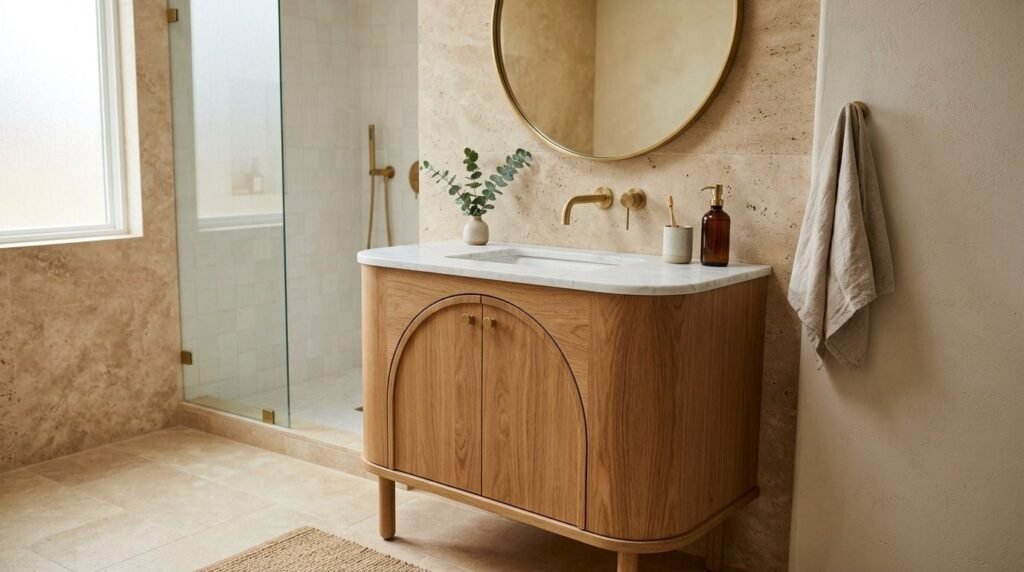
An arched-front vanity has a gently curved cabinet face instead of the straight lines found on most standard designs. This rounded detail softens the appearance of a small bathroom and creates a more distinctive focal point.
Choose a warm wood finish or muted paint color and pair it with a simple countertop. A round mirror can echo the curved shape without making the design feel overly decorative.
15. Repurposed Dresser Bathroom Vanity
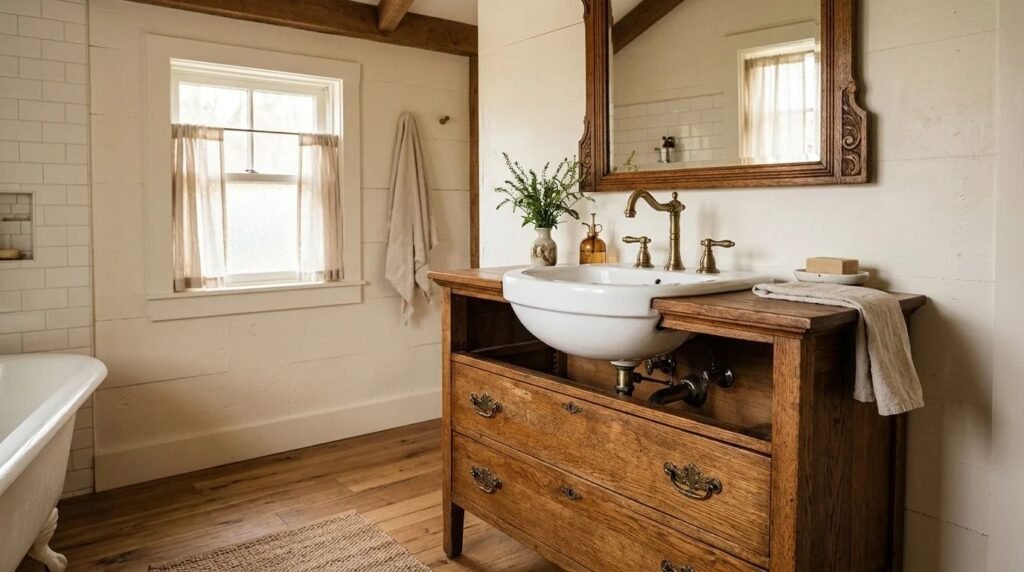
Turning a small dresser into a bathroom vanity is a creative way to introduce character and reuse existing furniture. A vintage dresser with attractive drawer fronts can become a unique focal point when fitted with a suitable countertop and sink.
Before converting a dresser, confirm that its frame can support the countertop and sink. A qualified plumber should handle the sink, drain, and water-supply connections to help prevent leaks and installation problems. The wood should also receive suitable moisture protection.
16. Two-Tone Bathroom Vanity

A two-tone vanity combines two finishes to create contrast without relying on a bold color throughout the cabinet. For example, you could choose a natural wood base with white upper drawer fronts or a dark cabinet with a lighter wood accent.
Keep the countertop and wall colors relatively simple so the two finishes work together. This approach can add depth to a compact bathroom without requiring an elaborate cabinet design.
17. High-Gloss White Bathroom Vanity
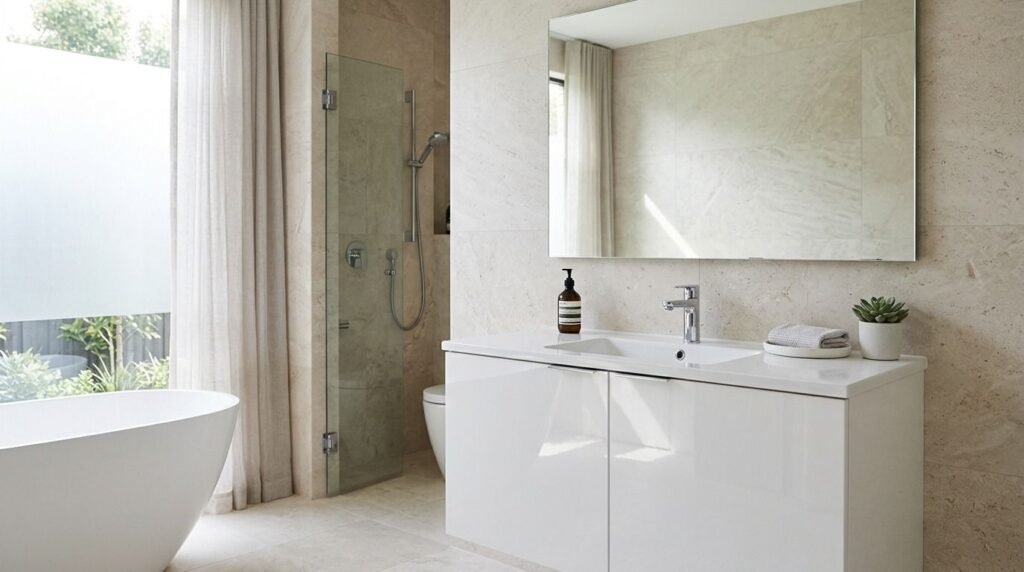
A high-gloss white vanity has a smooth, reflective surface that can help reflect light around a small bathroom. Its clean finish works with contemporary interiors and makes it easy to coordinate with different countertop colors.
Combine it with chrome hardware, a frameless mirror, and pale wall tiles. Keep in mind that glossy surfaces can show fingerprints and water marks, so regular cleaning may be needed.
18. Warm Taupe Bathroom Vanity
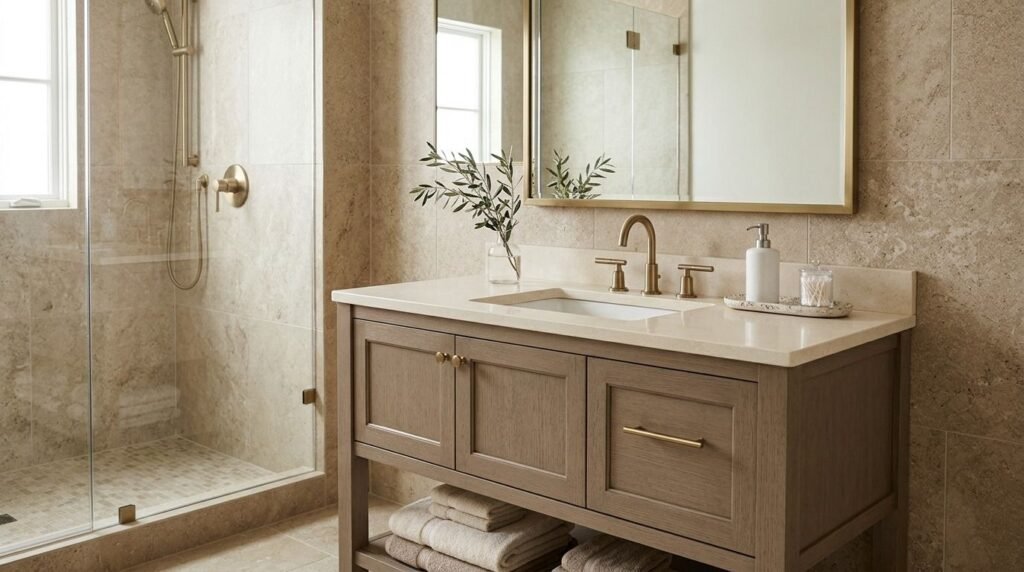
Warm taupe offers an alternative to plain white or gray cabinetry. Its soft brown-gray undertone creates a comfortable, understated look that works with natural materials and neutral bathroom palettes.
Pair a taupe cabinet with a cream countertop, brushed-brass hardware, and beige stone-look tiles. The result feels warm without making the room look dark.
19. Industrial Metal-Frame Vanity with Enclosed Storage

An industrial-style vanity uses a visible metal frame to create a more architectural appearance. Unlike a fully open metal console, this version includes an enclosed cabinet or drawers for hiding bathroom essentials.
Choose black or dark bronze metal with a wood or neutral cabinet finish. A concrete-look countertop and simple mirror can reinforce the industrial character.
20. Beadboard Farmhouse Bathroom Vanity
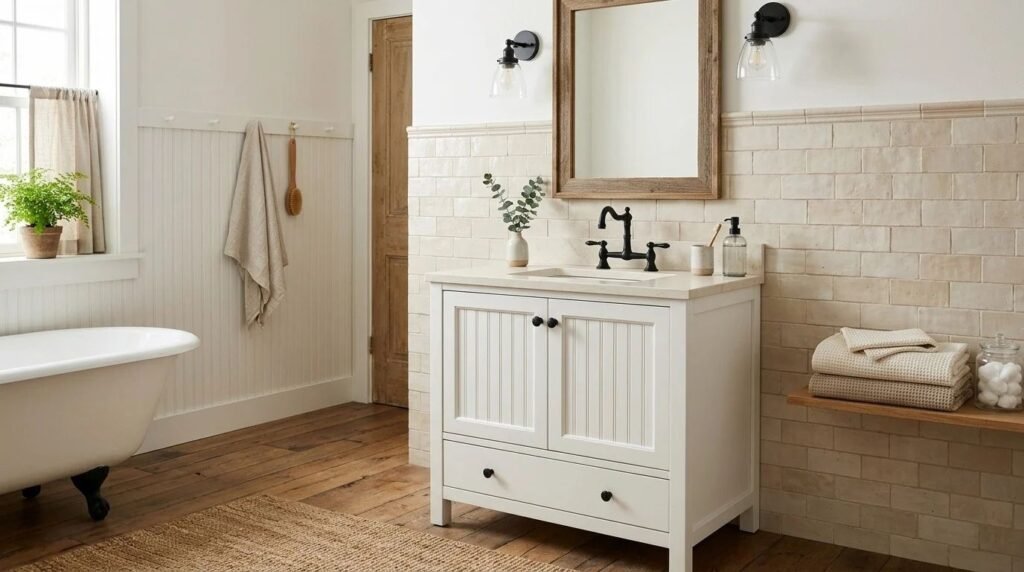
A beadboard farmhouse vanity takes inspiration from traditional country cabinetry and cottage interiors. Its framed panel construction and painted finish create a familiar, handcrafted appearance that feels different from the sculptural texture of fluted wood.
A white or soft cream finish looks natural with a light countertop, black faucet, and rustic wood accessories. The design brings farmhouse character to the bathroom without needing elaborate decoration.
21. Vanity with an Attached Side-Storage Cabinet
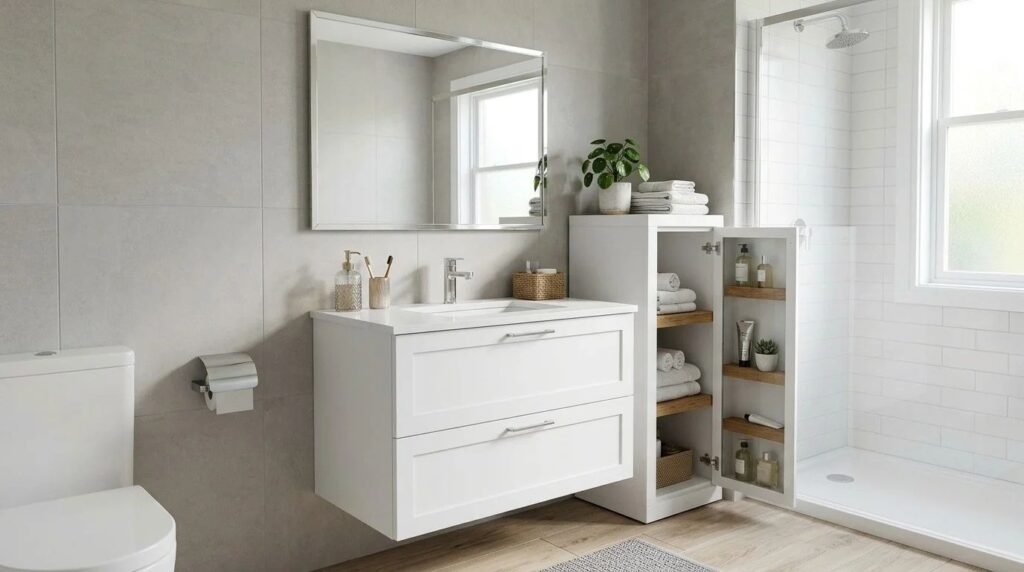
A vanity with an attached narrow side cabinet makes use of otherwise wasted space beside the sink. The extra compartment can store toiletries, towels, and cleaning products while keeping the main cabinet relatively compact.
Before selecting this layout, measure the full combined width rather than looking only at the sink cabinet measurement. Make sure drawers and doors can open without hitting nearby walls or fixtures.
22. Asymmetrical Drawer Bathroom Vanity
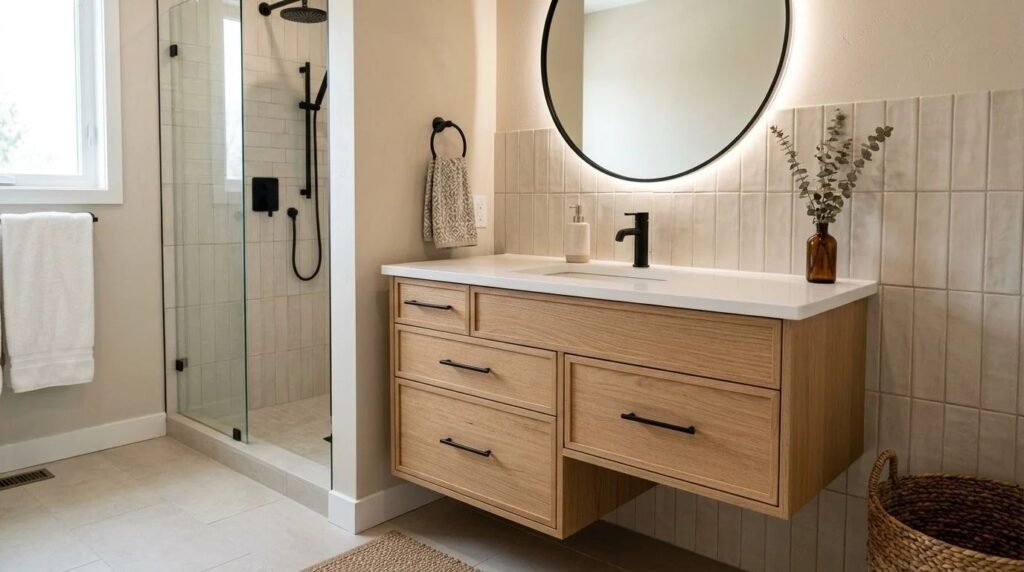
An asymmetrical vanity uses drawers of different widths or positions to create a less conventional cabinet layout. This can be useful when you want a modern look or need storage arranged around a particular plumbing configuration.
Choose a design with drawers that remain easy to access and enough clearance for the sink plumbing. A simple finish such as oak, white, or charcoal helps keep the unusual layout from looking too busy.
23. Shallow-Depth 30 Inch Bathroom Vanity
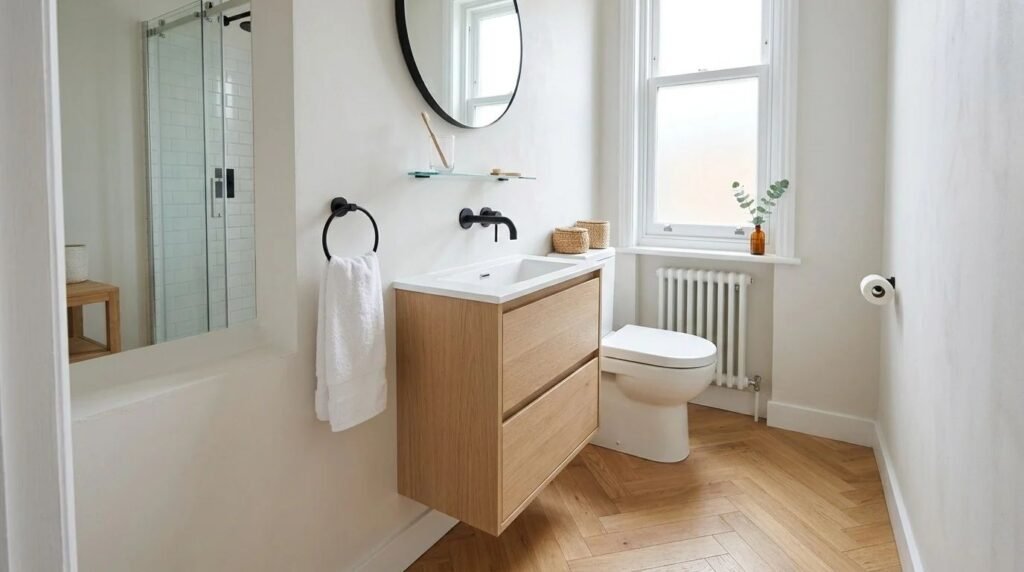
A shallow-depth vanity is designed to project less from the wall than a standard cabinet. It can help preserve walking space in a narrow bathroom while still providing a proper sink and some storage.
Measure the available depth carefully, including the countertop and sink projection. Also check that the basin is comfortable to use and that the faucet has enough room for installation.
24. Antique-Inspired Vanity with Decorative Molding
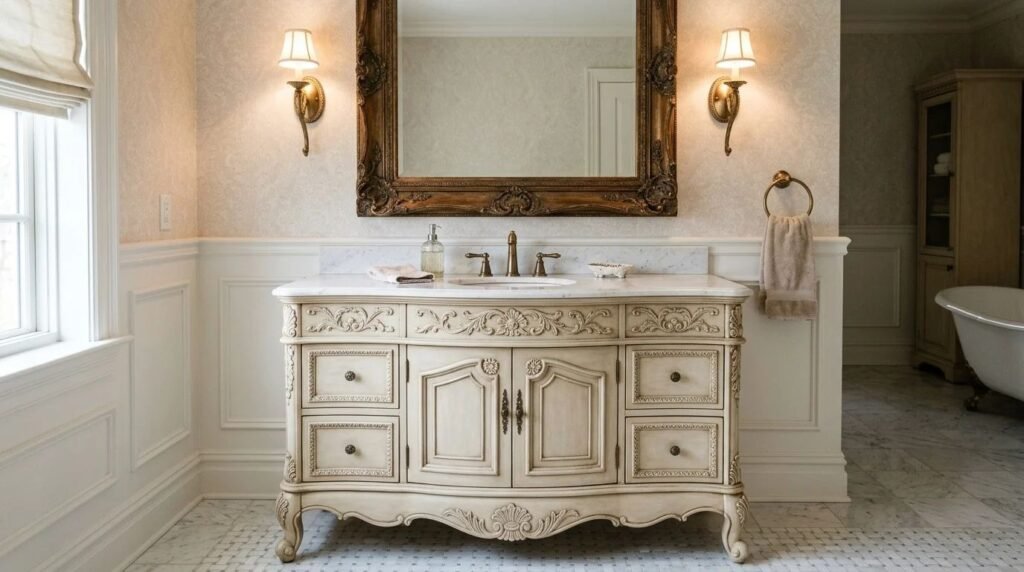
An antique-inspired vanity stands out through ornamental details such as carved trim, decorative edging, shaped feet, and elaborate hardware. Its character comes from the overall furniture detailing rather than simply having paneled cabinet doors.
A distressed white, muted blue, or warm cream finish can reinforce the vintage appearance. Pair it with an understated countertop so the decorative cabinet remains the focus.
25. 30 Inch Bathroom Vanity with an Integrated Charging Drawer
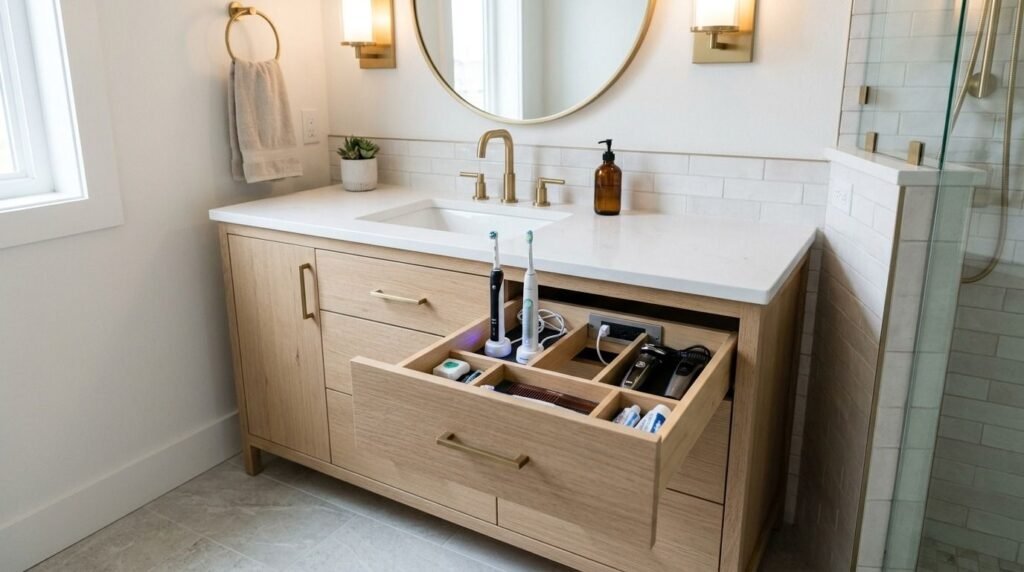
A vanity with a built-in charging drawer offers a convenient place to store electric toothbrushes, rechargeable grooming tools, and other small devices. The charging area stays hidden when the drawer is closed, keeping the countertop clear.
Look for a purpose-designed model with suitable electrical protection for bathroom use. Bathroom outlets generally require GFCI protection in many US installations, but requirements depend on the location and applicable local electrical code. Have electrical work completed by a qualified professional.
How to Choose the Right 30 Inch Bathroom Vanity
The best vanity is not necessarily the one with the most attractive finish. It should also fit the room, work with your plumbing, and provide enough storage for your daily routine.
1. Measure Your Bathroom Carefully
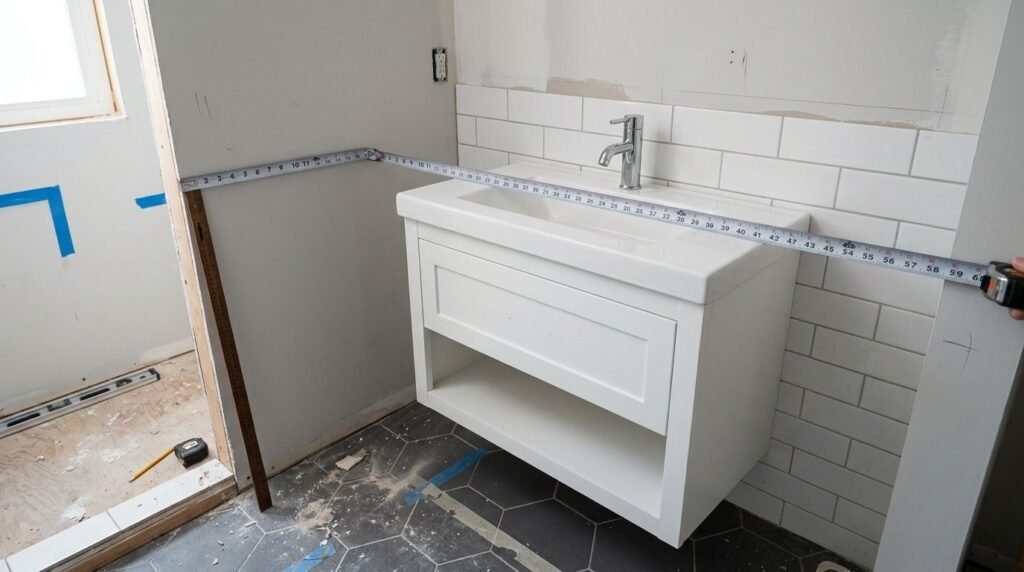
Start by measuring the available wall width, cabinet depth, and floor space. A vanity described as 30 inches wide may need additional room for side clearance, countertop overhang, or nearby fixtures.
Measure the distance to the toilet, shower door, and bathroom entrance. Also check whether cabinet doors and drawers can open without hitting other fixtures.
2. Decide How Much Storage You Need
Think about what you normally keep in the bathroom. If you have several skincare products, hair tools, and cleaning supplies, a vanity with deep drawers or enclosed cabinets may be more useful than an open-shelf design.
For a guest bathroom, a simple cabinet with one or two storage compartments may be enough.
3. Choose the Right Sink Configuration
A 30 inch bathroom vanity can come with different sink arrangements, including an undermount sink, an integrated sink, or a vessel basin.
An undermount sink creates a clean countertop appearance, while an integrated sink can make cleaning easier because there are fewer visible joints. A vessel sink sits above the countertop and can create a decorative focal point, but it may affect the usable counter space.
Check the basin dimensions and faucet placement before buying.
4. Select a Practical Countertop
The countertop should complement the cabinet and stand up to regular moisture exposure.
| Countertop material | Appearance | Considerations |
| Quartz | Consistent colors and patterns | Low maintenance and nonporous |
| Natural marble | Distinctive natural veining | Needs sealing and careful maintenance |
| Cultured marble | Smooth, seamless appearance | Often available with integrated sinks |
| Laminate | Wide range of colors and patterns | Budget-friendly, but protect seams from water |
| Solid surface | Smooth and often repairable | Check product-specific care instructions |
Quartz is a popular choice for homeowners who want a durable, relatively low-maintenance surface. Marble offers a more natural appearance but usually requires more care.
5. Match the Vanity Finish to Your Bathroom
The cabinet finish can influence the entire mood of a small bathroom.
- White: Creates a clean, timeless look and coordinates with most color schemes.
- Natural wood: Adds warmth and texture.
- Navy or dark green: Introduces color and creates contrast.
- Black: Works well in contemporary and industrial interiors.
- Taupe or beige: Creates a soft, neutral atmosphere.
Try to coordinate the vanity with the floor, wall color, faucet, and mirror frame rather than choosing each finish separately.
Pros and Cons of a 30 Inch Bathroom Vanity
A 30 inch vanity can be a useful solution for a smaller bathroom, but it may not suit every household.
| Pros | Cons |
| Fits many compact bathrooms | Limited countertop space |
| Takes up less floor space than wider cabinets | Storage may be restricted |
| Available in traditional and modern designs | Some sink styles can reduce usable counter area |
| Often more affordable than larger vanities | May not suit multiple users at once |
| Can be easier to replace in a small renovation | Plumbing and wall clearances still need careful planning |
If you need substantial storage or a larger sink area, consider whether a wider cabinet could fit your bathroom without restricting movement.
What Cabinet Materials Are Best for a 30 Inch Bathroom Vanity?
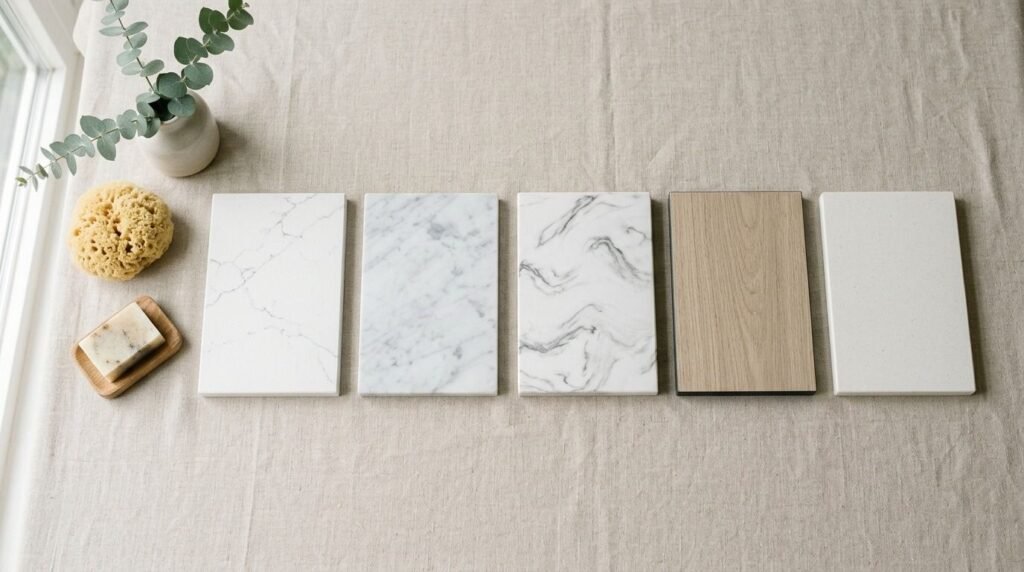
Bathroom cabinets experience regular exposure to moisture, so material quality matters. The cabinet material can affect durability, appearance, and long-term maintenance.
| Cabinet material | Benefits | Things to consider |
| Solid wood | Natural appearance and can be refinished | Needs suitable moisture protection |
| Plywood | Strong and generally more stable than particleboard | Quality varies by grade and construction |
| MDF | Smooth surface for painted finishes | Protect edges and joints from water |
| Particleboard | Often less expensive | Can swell if moisture reaches the core |
For the cabinet, quality plywood or properly sealed solid wood can be good options. If you choose MDF or particleboard, pay attention to edge sealing and the manufacturer’s moisture-resistance specifications.
How Much Does a 30 Inch Bathroom Vanity Cost?
The price of a 30 inch bathroom vanity depends on the cabinet material, countertop, sink, storage features, and brand. As a general shopping guide, consider these budget ranges:
Under $300: Budget-Friendly Options
This range can include basic vanities and entry-level vanity-and-sink combinations. You may find simple white cabinets, basic wood-look finishes, and straightforward storage layouts.
Always check what is included. Some listings are for the vanity base only and do not include the countertop, sink, or faucet.
300–700: Mid-Range Options
This is a useful budget to explore for complete 30 inch vanity-and-sink combinations. You may find more finish choices, improved drawer storage, engineered-stone or cultured-marble tops, and more contemporary cabinet designs.
Compare the included hardware, sink type, countertop material, and warranty before making a decision.
$700 and Above: Premium Options
Premium vanities may offer upgraded cabinet construction, higher-end finishes, more distinctive designs, and better-quality countertop materials. Furniture-inspired cabinets and specialized storage features may also fall into this range.
Retailer prices change over time, and the final cost depends on the model and included components. Check the current listing before purchasing and confirm whether the sink and countertop are included.
Remember to budget separately for the faucet, mirror, delivery, installation, and any plumbing or electrical work.
What Clearance Do You Need Around a 30 Inch Bathroom Vanity in the US?
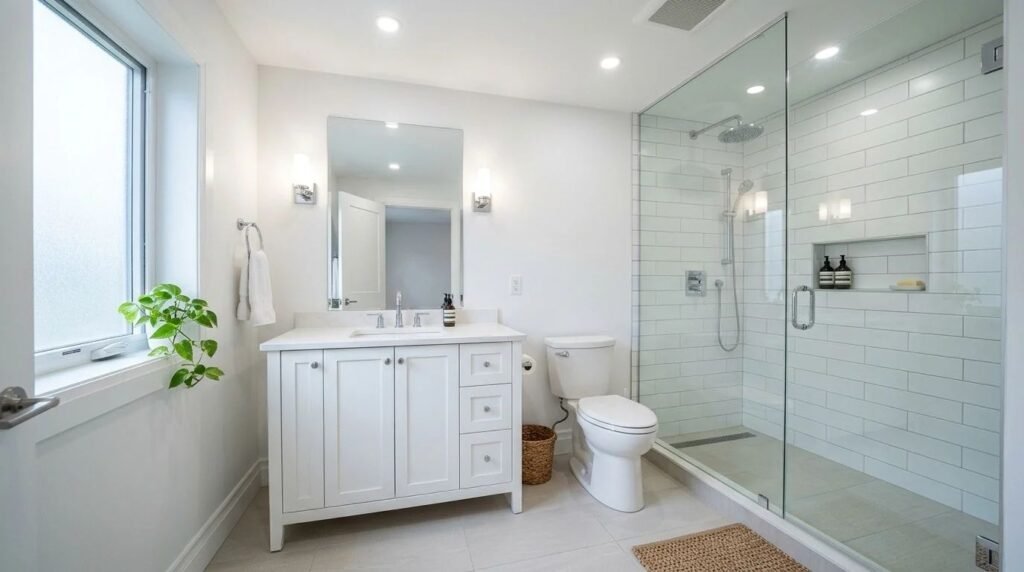
A vanity should fit comfortably without making the bathroom difficult to use. In the United States, common residential planning references include approximately 21 inches of clear floor space in front of a fixture, while around 30 inches can feel more comfortable.
Toilet placement also matters. A common US residential planning reference is to keep the toilet centerline at least 15 inches from a side wall or obstruction. These are general planning references, not a guarantee that a layout meets every local requirement.
If your bathroom needs to meet accessibility standards or local building codes, check the applicable requirements before installation. Also consider the clearance needed to open vanity doors and drawers.
Frequently Asked Questions
1. Is a 30 Inch Bathroom Vanity Suitable for a Small Bathroom?
Yes. A 30 inch vanity can be a practical choice for a small bathroom because it provides a usable sink and some storage without taking up as much wall space as a larger cabinet.
A floating design or shallow-depth model can help preserve a more open feeling. Measure the room first to make sure there is enough space for the toilet, shower, and cabinet doors.
2. What Size Mirror for a 30 Inch Bathroom Vanity?
A mirror around 24 to 28 inches wide is a useful starting point for a 30 inch vanity. It leaves a small amount of space on either side and can create a balanced appearance.
The ideal size also depends on the faucet, lighting, wall space, and whether you prefer a framed or frameless mirror. Measure the available wall area before buying.
3. Are Bathroom Vanities 30 Inches High Anymore?
Yes, 30-inch-high bathroom vanities are still available, although many modern models are taller.
Vanity width and height are two different measurements. A 30 inch bathroom vanity usually refers to its width from left to right, not its height.
Traditional vanities are often around 30 to 32 inches high, while many contemporary comfort-height models reach approximately 34 to 36 inches, including the countertop. Choose a height that feels comfortable for the people using the bathroom.
4. Should I Buy a 30 Inch Bathroom Vanity with Sink or Separately?
Buying a vanity with a sink can make the selection process easier because the basin and countertop are designed to fit the cabinet. It may also simplify installation.
Buying them separately gives you more flexibility in choosing the sink shape, countertop material, and overall appearance. Just confirm that the sink, countertop, and cabinet dimensions are compatible.
5. Is a 30 Inch Bathroom Vanity Big Enough for Two People?
A 30 inch vanity is generally better suited to one person at a time. It usually has limited countertop space and is not wide enough for two comfortable sink stations.
If two people regularly use the bathroom together, a wider vanity with additional storage may be more practical.
6. Can a Floating 30 Inch Bathroom Vanity Hold a Sink?
Yes. A properly designed floating vanity can support a sink and countertop when it is securely attached to suitable wall framing or an approved mounting system.
Always follow the manufacturer’s installation instructions. If the wall needs reinforcement or the plumbing must be moved, use a qualified professional.
7. What Is the Best Countertop Material for a Small Bathroom Vanity?
Quartz is a popular choice because it is durable, nonporous, and relatively easy to maintain. Cultured marble can be a practical option when you prefer a smooth surface with an integrated sink.
Natural marble creates a distinctive appearance but requires more maintenance. The right material depends on your budget, style preferences, and willingness to care for the surface.
8. Can I Install a 30 Inch Bathroom Vanity Myself?
Some homeowners can install a vanity cabinet as a DIY project if the plumbing and wall connections are already in the correct positions. However, the job becomes more complicated if you need to move water lines, alter the drain, or install new electrical connections.
Follow the manufacturer’s instructions and use a qualified plumber or electrician for work that requires professional expertise.
Final Thoughts
A 30 inch bathroom vanity can bring style, storage, and everyday convenience to a compact bathroom. The right design depends on how you use the space, the amount of storage you need, and the overall look you want to create.
Classic white cabinets, warm oak finishes, floating drawers, and colorful painted vanities all offer different ways to update a small bathroom. Before making your final choice, measure the available space, check the sink and countertop dimensions, and confirm that the cabinet works with your existing plumbing.
With thoughtful planning, even a compact vanity can make your bathroom feel more organized and beautifully finished.