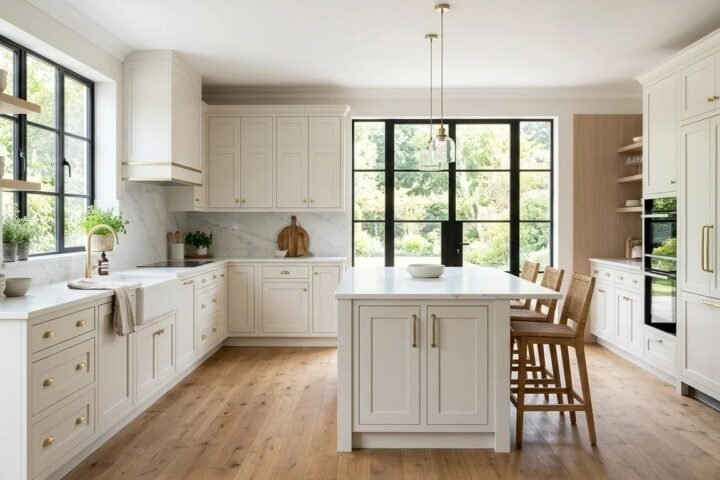
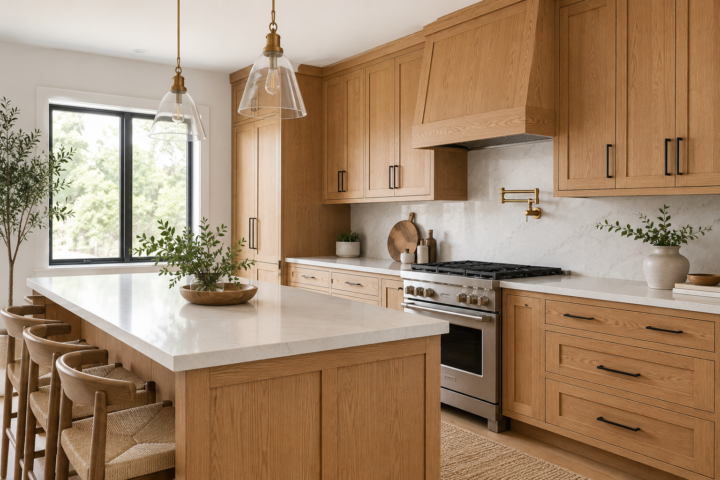
Walnut kitchen cabinets bring a beautiful balance of warmth, natural texture, and sophistication to a kitchen. Their rich brown tones and distinctive wood grain can make even a simple kitchen feel more inviting and thoughtfully designed. Whether you prefer a sleek modern space, a cozy farmhouse kitchen, or a luxurious contemporary interior, walnut cabinetry offers plenty of possibilities.
One of the best things about walnut is its versatility. Light walnut finishes can create an airy, relaxed atmosphere, while dark walnut cabinets add depth and drama. You can also combine walnut with white countertops, marble backsplashes, brass hardware, or even soft green accents to create a kitchen that reflects your personal style.
If you’re planning a kitchen makeover or simply looking for inspiration, these 17 walnut kitchen cabinet ideas will help you explore different finishes, layouts, and color combinations. You’ll also discover what makes walnut a good cabinet material, how much it may cost, and how to keep it looking beautiful over time.
17 Walnut Kitchen Cabinet Ideas to Inspire Your Kitchen
Walnut cabinetry works with many different kitchen styles, from minimalist and modern to traditional and rustic. The following ideas show how to use its natural beauty while creating a functional and welcoming space.
1. Modern Flat-Panel Walnut Kitchen Cabinets
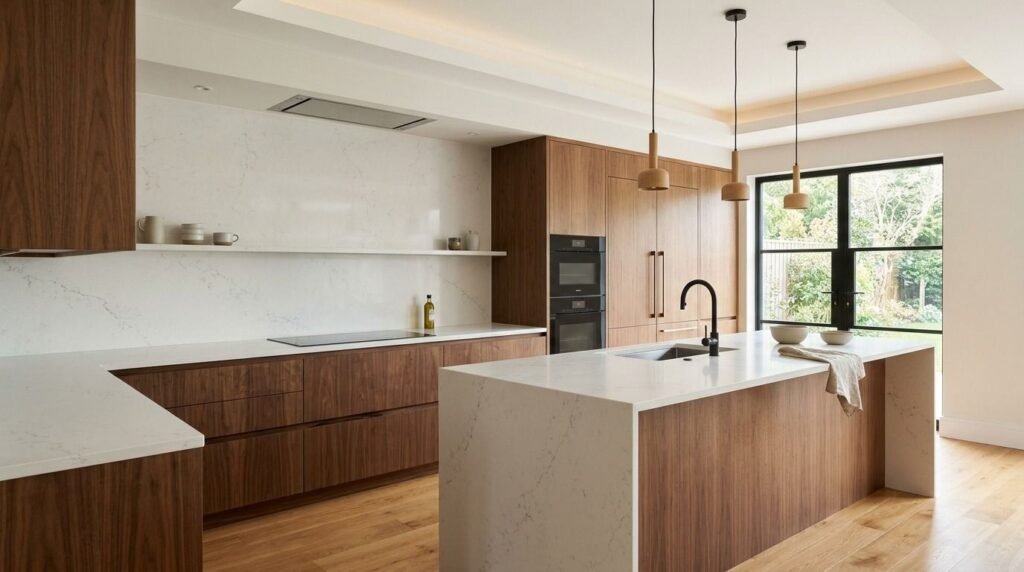
If you love clean lines and uncluttered spaces, modern flat-panel walnut kitchen cabinets are an excellent choice. Their smooth, simple doors allow the natural walnut grain to become the main design feature without adding unnecessary decoration.
Pair these cabinets with white quartz countertops, a simple backsplash, and integrated appliances for a polished contemporary look. Handleless doors or slim black pulls can make the design feel even more streamlined.
This style works particularly well in open-plan homes where the kitchen needs to feel connected to the surrounding living space. Warm pendant lighting and a few natural accessories can soften the overall appearance without making the room feel busy.
2. Dark Walnut Kitchen Cabinets with White Countertops
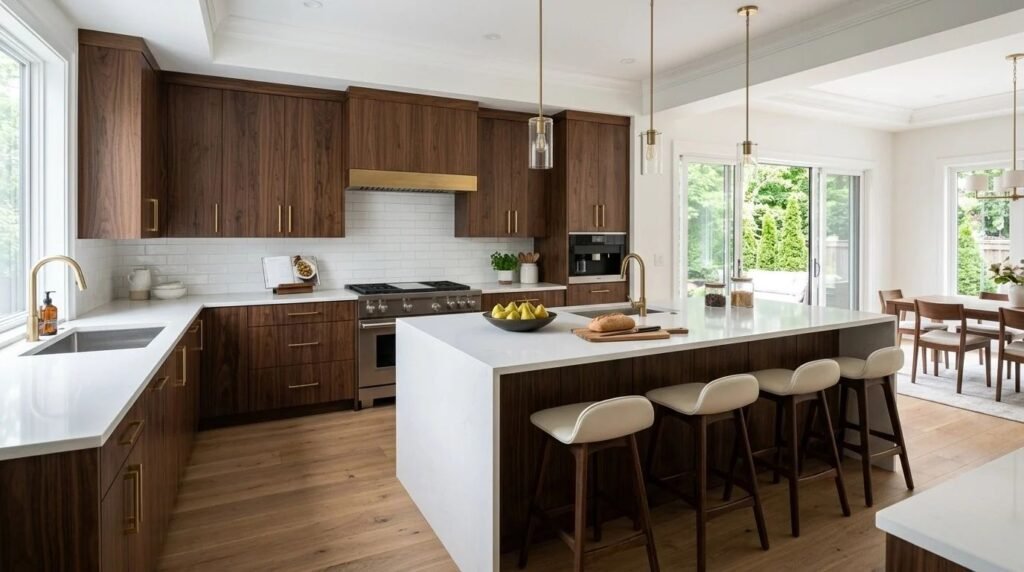
Dark walnut kitchen cabinets create a rich, dramatic appearance that instantly gives a kitchen more character. Their deeper brown tones look especially attractive when paired with bright white countertops, which provide contrast and prevent the space from feeling too dark.
Consider using white quartz or marble for the countertops and a matching light backsplash. These surfaces help reflect light while allowing the darker cabinetry to stand out.
You can complete the look with brushed brass handles, warm under-cabinet lighting, and light-colored flooring. If your kitchen receives plenty of natural light, this combination can create a luxurious atmosphere without feeling overwhelming.
3. Walnut Kitchen Island with White Cabinets

You don’t have to cover your entire kitchen in walnut to enjoy its beauty. A walnut kitchen island surrounded by white cabinets is a simple way to introduce natural warmth while keeping the room bright.
The white perimeter cabinetry creates a clean background, while the walnut island becomes the main focal point. You can choose a matching walnut countertop detail or use white quartz to create a beautiful contrast.
This combination works particularly well in large kitchens and open-plan layouts. Add comfortable bar stools, simple pendant lights, and a few wooden accessories to make the island feel like a natural gathering place for family and friends.
4. Two-Tone Walnut and Cream Kitchen Cabinets
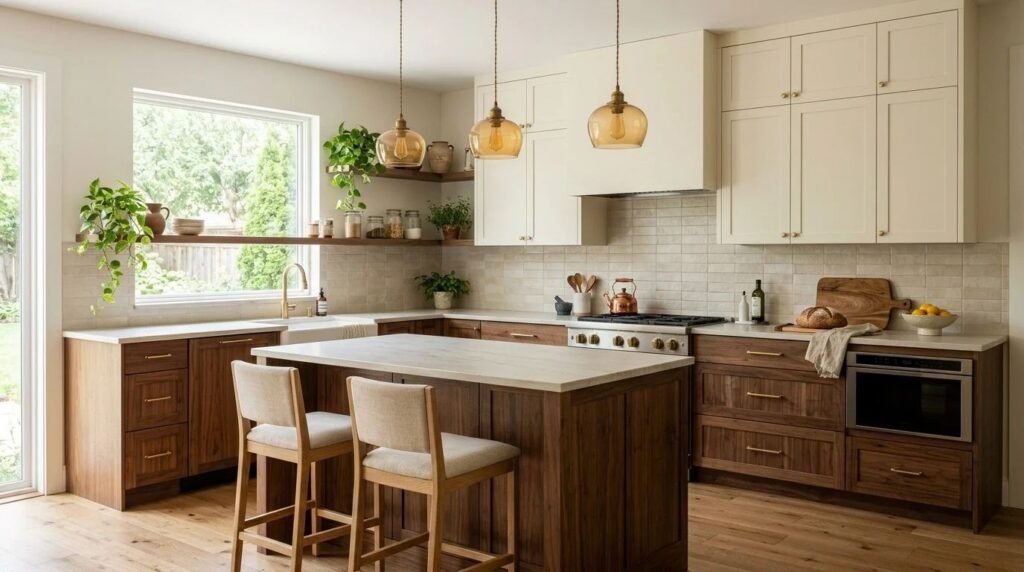
Two-tone cabinetry is a lovely option if you want a kitchen that feels warm without looking too dark. Combining walnut cabinets with soft cream cabinetry creates a balanced appearance that feels both modern and timeless.
One attractive approach is to use walnut for the lower cabinets and cream for the upper cabinets. This keeps the natural wood closer to the floor while making the upper portion of the kitchen feel lighter.
For a cohesive finish, choose warm white or beige countertops and a subtle stone backsplash. Brushed bronze or brass hardware can connect the two cabinet colors and add a little extra elegance.
5. Walnut Cabinets with Brass Hardware
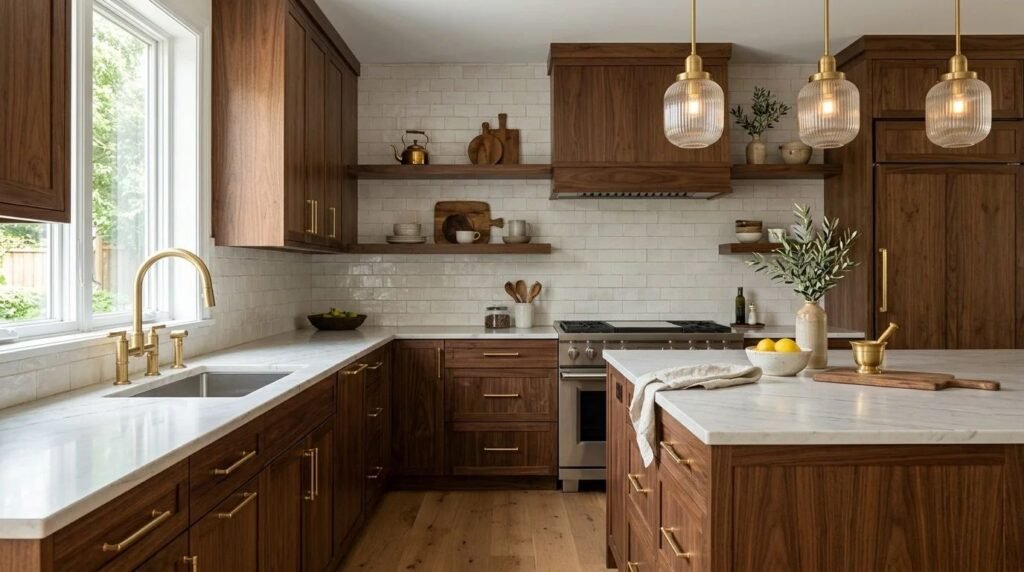
Sometimes, small details make the biggest difference. Brass hardware can bring out the warm undertones of walnut cabinets and give the entire kitchen a more refined appearance.
Choose brushed brass handles for a softer look or polished brass knobs if you prefer a more noticeable decorative touch. You can repeat the same finish on the faucet, pendant lights, or other small details to create a coordinated design.
Walnut’s natural grain already provides plenty of visual interest, so keep the remaining finishes relatively simple. Cream walls, pale stone countertops, and warm lighting will help the brass details stand out without competing with the wood.
6. Classic Walnut Shaker Kitchen Cabinets
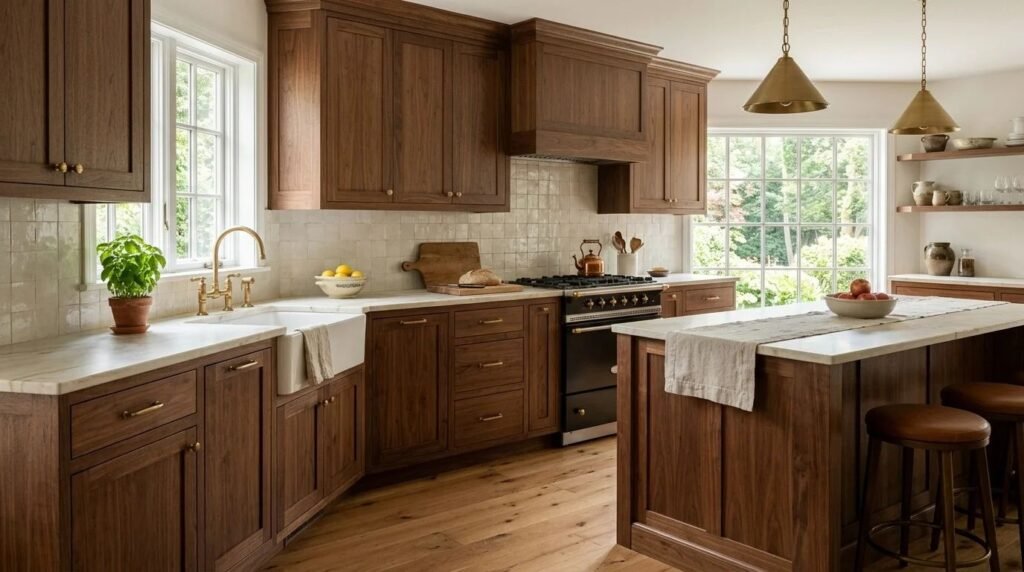
If you prefer a kitchen with a little traditional character, walnut shaker cabinets are worth considering. Their framed door design adds subtle detail while allowing the natural wood color to remain the star of the space.
Unlike heavily decorative cabinetry, shaker doors have a relatively simple appearance that works well in both traditional and transitional kitchens.
Pair them with light marble countertops, a white or cream backsplash, and understated hardware. You can also add a farmhouse-style sink or traditional pendant lights for a more classic atmosphere.
7. Floor-to-Ceiling Walnut Kitchen Cabinets
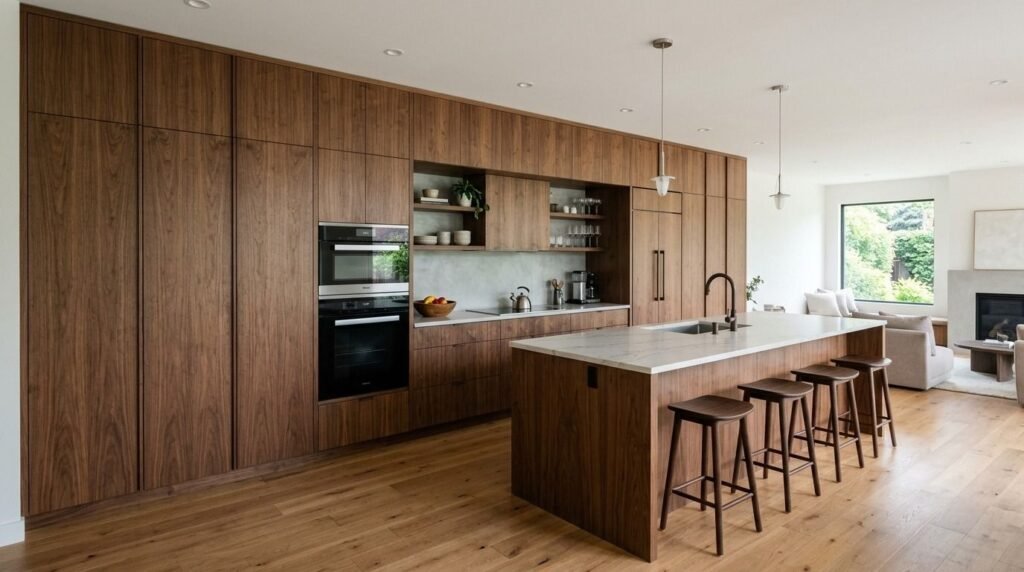
Floor-to-ceiling walnut cabinetry creates a seamless, built-in appearance while making excellent use of vertical storage. It is especially useful when you want to keep countertops clear and reduce visual clutter.
Tall cabinets can accommodate pantry storage, built-in ovens, refrigerators, and everyday kitchen essentials. Using the same walnut finish across the entire wall creates a continuous design that feels polished and intentional.
To prevent the room from becoming too enclosed, consider pairing the tall cabinets with light countertops, pale flooring, and good task lighting. This combination is particularly attractive in contemporary kitchens with simple architectural details.
8. Light Walnut Cabinets for a Bright Kitchen
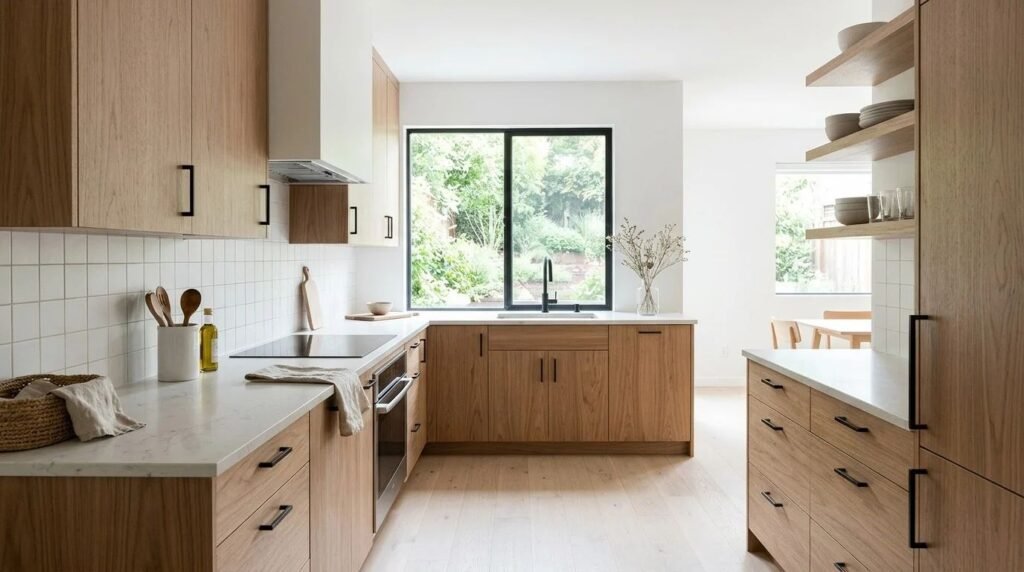
Light walnut cabinets are ideal if you love natural wood but prefer a softer kitchen palette. Their warm, lighter brown tones can make a room feel relaxed and welcoming without introducing the visual weight of darker finishes.
Combine them with white walls, pale countertops, and light wood or neutral flooring. Natural light can also highlight the wood grain and bring out its subtle color variations.
This style is particularly useful in smaller kitchens where you want to introduce wood without making the space feel visually crowded. Choose simple cabinet doors and minimal hardware to maintain an airy appearance.
9. Walnut Cabinets with Black Countertops

For a more dramatic kitchen, consider combining walnut cabinets with black countertops. The rich brown wood and dark stone create a sophisticated palette that feels bold without relying on bright colors.
Black quartz, granite, or another suitable dark countertop material can create a smooth visual connection with black appliances and cabinet hardware.
However, balance is important. Introduce warm lighting, lighter flooring, or a pale backsplash to prevent the darker surfaces from overwhelming the room. This combination is especially attractive in larger kitchens with generous natural light.
10. Walnut Cabinets with a Marble Backsplash
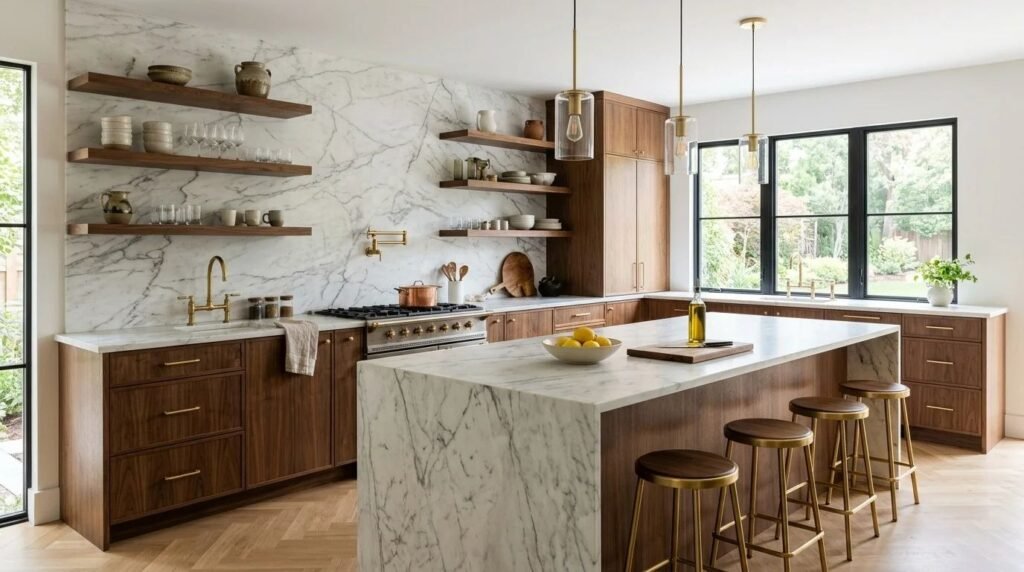
Marble and walnut make a beautiful combination because their natural patterns complement each other. Walnut brings warmth and organic texture, while marble introduces a lighter surface with elegant veining.
A full-height marble backsplash behind the cooking area can create an impressive focal point. You can use a similar marble for the countertops to give the kitchen a more cohesive appearance.
If you prefer a quieter look, choose marble with subtle gray or beige veining. For a more dramatic design, select stone with stronger patterns while keeping the cabinet hardware and accessories simple.
11. Minimalist Handleless Walnut Cabinets
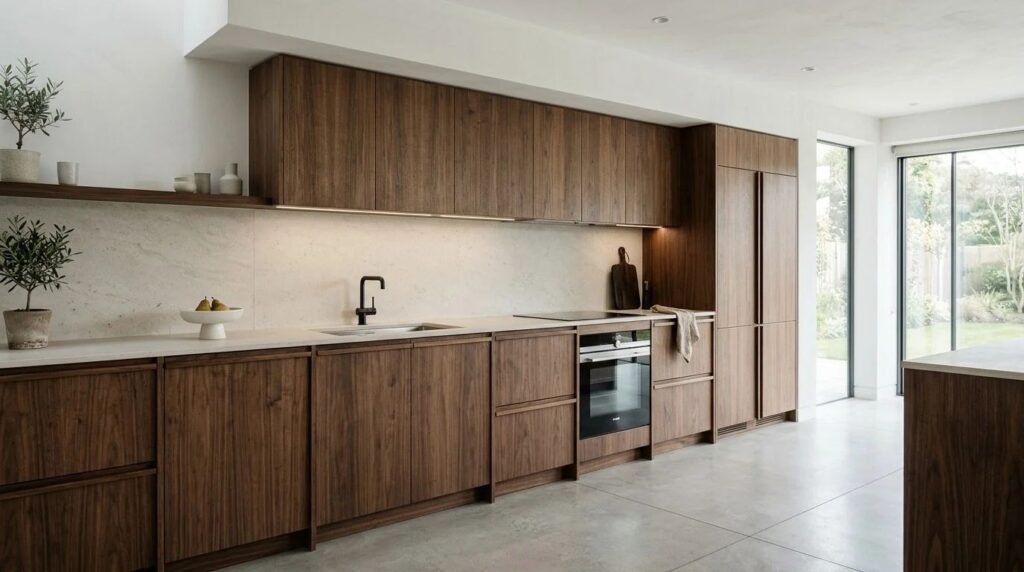
Handleless walnut cabinets are a great choice for homeowners who appreciate minimalist interiors. Without traditional handles interrupting the cabinet fronts, the natural walnut grain becomes more noticeable and the kitchen feels visually streamlined.
You can choose push-to-open mechanisms or integrated recessed pulls depending on your preferences and cabinet design.
Pair the cabinetry with simple stone countertops, concealed appliances, and understated lighting. Avoid too many decorative accessories so that the beautiful wood texture remains the main feature.
12. Walnut Cabinets with Sage Green Accents
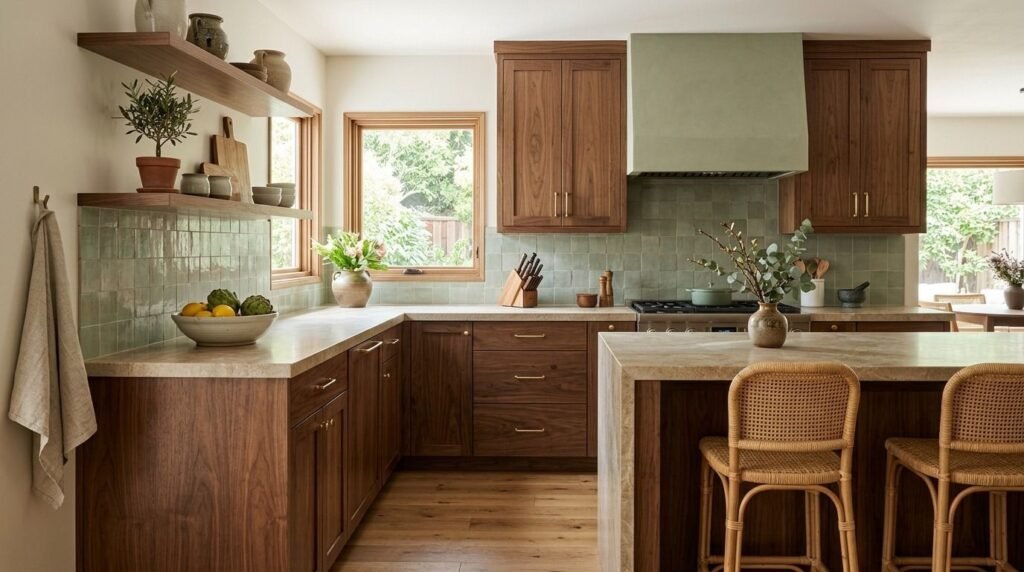
Sage green and walnut create a calming combination inspired by nature. The soft green shade balances the warmth of brown wood, giving the kitchen a relaxed and welcoming atmosphere.
You can introduce sage green through an island, backsplash, painted walls, or even a few decorative accessories. Keeping walnut as the main cabinet finish helps maintain a natural, cohesive appearance.
For an especially attractive result, add cream countertops, warm brass hardware, and a few indoor plants. This combination works beautifully in organic modern, contemporary, and relaxed farmhouse kitchens.
13. Rustic Walnut Kitchen Cabinets with Natural Stone
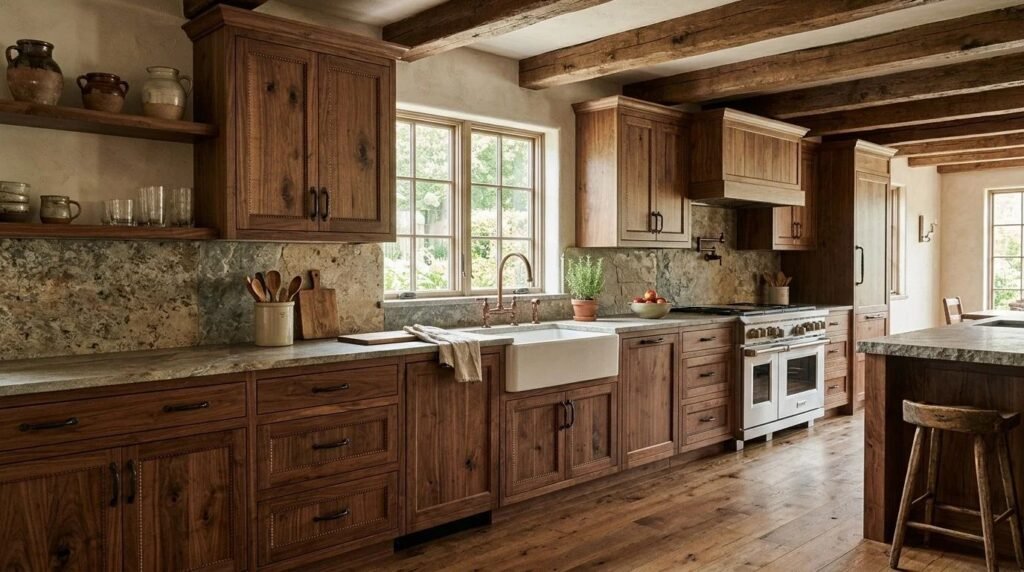
If you love rustic interiors, walnut cabinets can help create a kitchen that feels warm, natural, and full of character. Their visible wood grain pairs beautifully with textured stone, natural flooring, and simple traditional details.
Choose walnut cabinet doors with a finish that allows the natural grain to remain visible. Combine them with stone countertops, a textured backsplash, and warm pendant lighting.
You can also introduce open wooden shelves, ceramic accessories, and natural fabrics to create a comfortable farmhouse-inspired atmosphere. The key is to mix different natural textures without making the room feel overly decorative.
14. Walnut Cabinets with Open Shelving
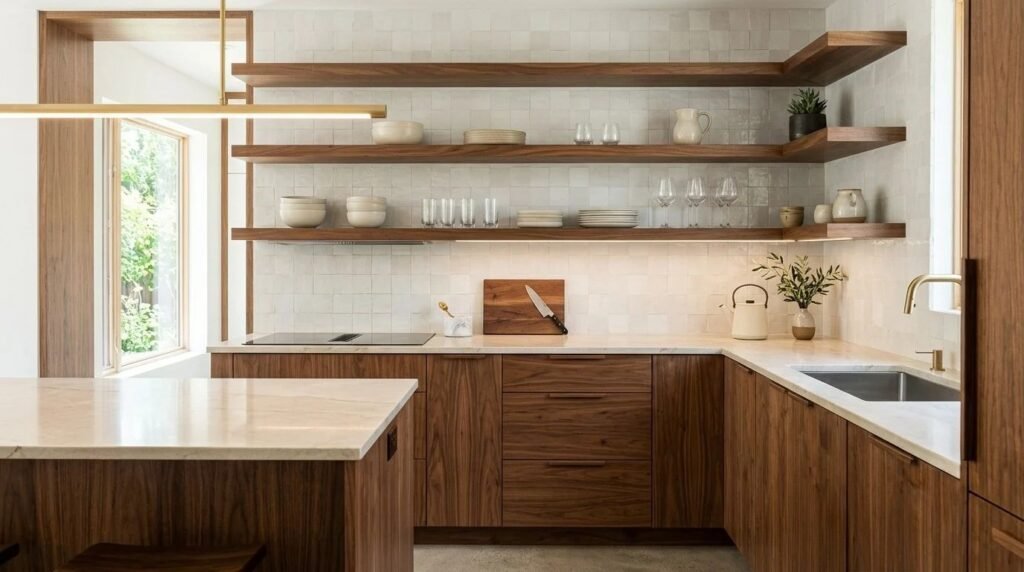
Open shelving is a practical way to break up a wall of closed cabinetry while giving your kitchen a more relaxed appearance. Walnut cabinets paired with matching floating shelves create a consistent wood finish and add useful display space.
Use the shelves for everyday dishes, glassware, small plants, or a few attractive kitchen accessories. Keep frequently used items within easy reach so the shelves remain functional rather than purely decorative.
A light backsplash behind the shelves can provide contrast and make the walnut stand out. This arrangement is particularly suitable for smaller kitchens where a full wall of upper cabinets might feel visually heavy.
15. Small Kitchen with Walnut Cabinets
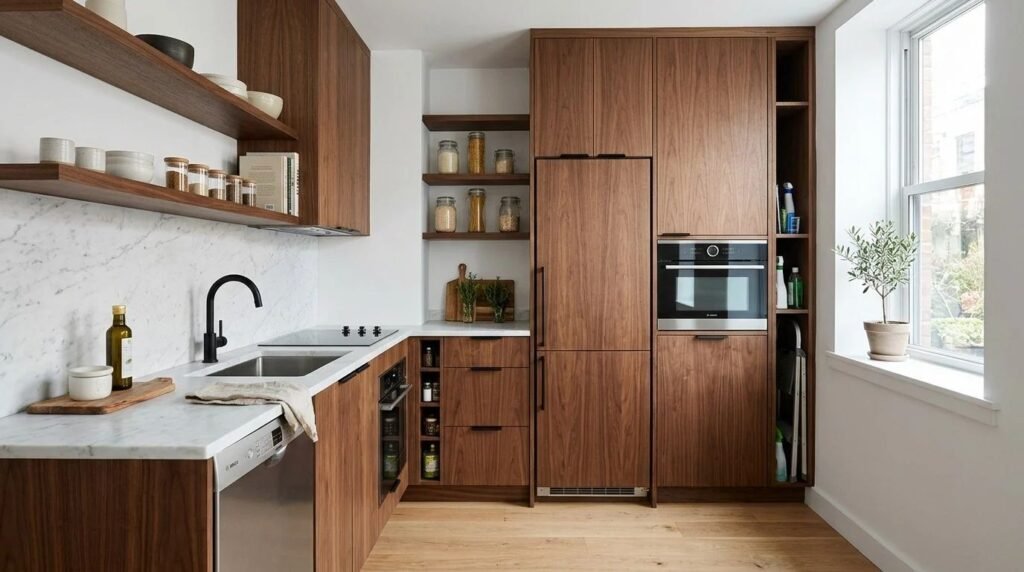
Walnut cabinets can work beautifully in small kitchens when you choose the right shade and layout. Instead of using very dark finishes throughout the room, consider lighter walnut tones that introduce warmth without making the space feel enclosed.
Use simple cabinet fronts, reflective surfaces, and light countertops to create a more open appearance. Good under-cabinet lighting can also make work surfaces brighter and highlight the wood grain.
Storage is equally important. Consider pull-out drawers, vertical organizers, and cabinets that extend toward the ceiling. These features help you make the most of limited space while maintaining a clean design.
16. Contemporary Walnut Cabinets with a Waterfall Island

A waterfall island can make walnut cabinetry look especially impressive in a contemporary kitchen. In this design, the countertop material continues down the sides of the island, creating a continuous surface with a sculptural appearance.
Pair a walnut cabinet wall with a marble or quartz waterfall island for a beautiful contrast between natural wood and stone.
Choose simple pendant lighting and integrated appliances to keep the overall design uncluttered. This idea works especially well in spacious kitchens where the island can become both a functional work surface and a central gathering area.
17. Custom Walnut Kitchen Cabinets with a Matching Pantry
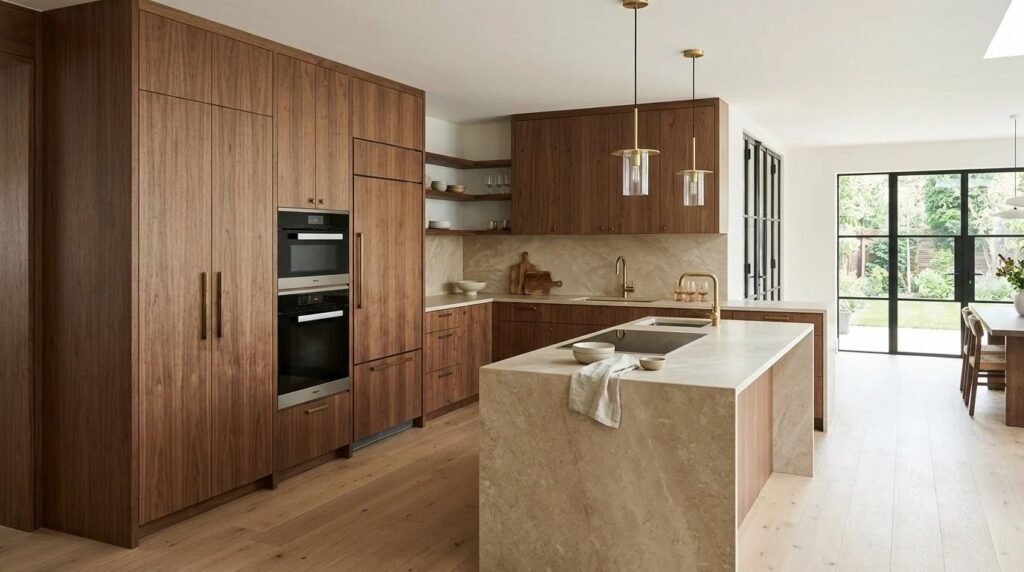
Custom walnut kitchen cabinets offer more flexibility when you want your kitchen to look coordinated and make the best use of available space. You can choose the cabinet dimensions, door style, storage arrangement, and finish according to your kitchen layout.
One beautiful approach is to create a matching walnut pantry wall alongside the main cabinets. This gives the kitchen a consistent appearance while providing extra space for food storage and small appliances.
You can also include pull-out pantry drawers, hidden appliance garages, and integrated lighting. Although custom cabinetry generally requires a larger investment, it can be worthwhile when standard cabinet sizes do not suit your space.
What Makes Walnut Kitchen Cabinets Special?
Walnut is a popular hardwood used in furniture, cabinetry, and interior finishes because of its attractive grain and naturally warm appearance. Its color can range from lighter brown to deeper chocolate tones, depending on the species, cut, and finish.
Here are a few reasons homeowners consider walnut for their kitchens.
Natural Walnut Grain and Color Variations
One of the most appealing features of walnut is its natural grain pattern. Unlike some manufactured cabinet finishes, real walnut has variations in color and texture that give each cabinet door its own character.
Some pieces have relatively straight grain, while others display more noticeable patterns. These variations make walnut particularly attractive in kitchens where natural materials are an important part of the design.
Solid Walnut vs. Walnut Veneer
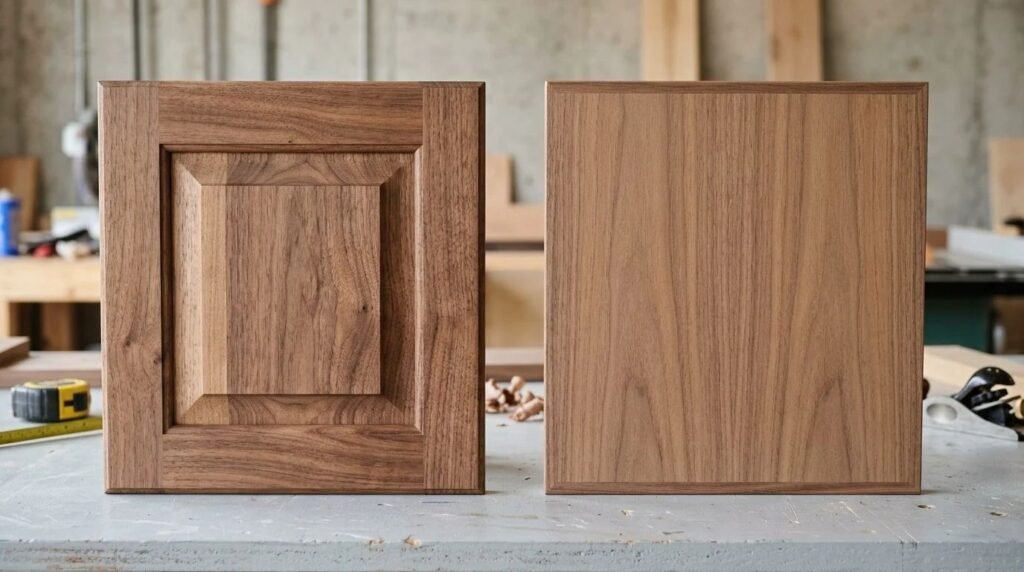
Before choosing walnut cabinetry, it is helpful to understand the difference between solid walnut and walnut veneer.
- Solid walnut: Made from natural walnut wood. It offers an authentic wood appearance and can be suitable for quality cabinet construction, although it requires careful material selection and finishing.
- Walnut veneer: Uses a thin layer of real walnut over a stable core material. It provides the appearance of walnut while often using less expensive wood material.
Both options can create beautiful kitchen cabinets. Your choice should depend on your budget, construction quality, desired appearance, and the cabinet manufacturer’s specifications.
Why Walnut Works in Different Kitchen Styles
Walnut is not limited to one decorating style. Its natural brown tones work beautifully with minimalist kitchens, traditional cabinetry, contemporary interiors, and rustic spaces.
For example, flat-panel walnut doors look sleek and modern, while walnut shaker cabinets offer a more traditional appearance. This flexibility makes walnut a useful material for homeowners who want a kitchen that feels warm but still fits their preferred design style.
Light Walnut vs. Dark Walnut Kitchen Cabinets
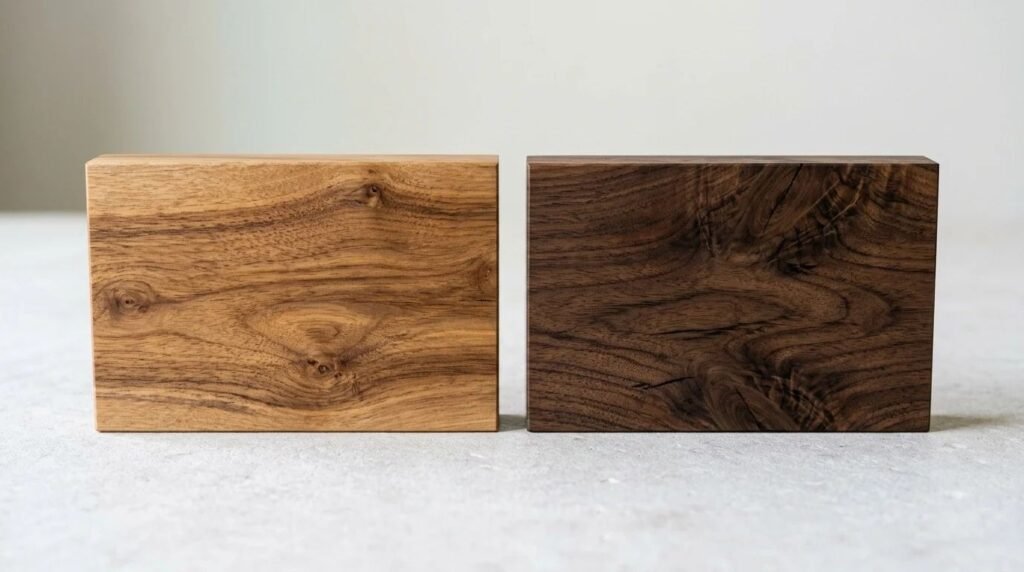
Choosing between light and dark walnut can significantly change the atmosphere of your kitchen. Both finishes have their own appeal, so the right option depends on your room size, lighting, and preferred color palette.
What Are the Differences Between Light and Dark Walnut?
Light walnut finishes create a softer, more relaxed appearance. They work well with cream walls, white countertops, pale flooring, and natural materials.
Dark walnut kitchen cabinets, on the other hand, create a richer and more dramatic atmosphere. They pair particularly well with marble, black hardware, brass details, and contrasting light surfaces.
Neither option is automatically better. Consider the amount of natural light in your kitchen and the overall mood you want to create.
Which Walnut Finish Works Best in a Small Kitchen?
For smaller kitchens, lighter walnut finishes are often easier to balance because they create less visual weight.
However, you don’t necessarily have to avoid dark walnut. You can use darker cabinets on the lower portion of the kitchen and introduce white upper cabinets, light countertops, and good lighting to maintain a more open appearance.
Which Colors Pair Best with Each Finish?
Here are some combinations worth considering:
| Walnut finish | Complementary colors |
| Light walnut | Cream, white, beige, sage green |
| Medium walnut | Warm white, taupe, charcoal, muted green |
| Dark walnut | White, marble gray, black, brass, ivory |
The goal is to create contrast while allowing the natural walnut grain to remain visible.
Are Walnut Kitchen Cabinets in Style?
Yes, walnut kitchen cabinets remain a desirable choice for homeowners who appreciate natural materials and warm interior design. Their appeal comes from their distinctive wood grain, rich brown tones, and ability to work with both contemporary and traditional kitchen styles.
Modern kitchens often feature walnut in flat-panel cabinetry, waterfall islands, integrated pantry walls, and two-tone designs. Homeowners also combine walnut with marble, quartz, brass hardware, and neutral colors to create a balanced appearance.
One reason walnut is so versatile is that it doesn’t depend on a particular cabinet color trend. Its natural wood appearance can complement changing countertop styles, lighting choices, and decorative accessories.
If you want a kitchen that feels warm and sophisticated, walnut is certainly worth considering. Choosing simple cabinet doors and classic complementary materials can also help the design remain attractive over time.
Is Walnut Good for Kitchen Cabinets?
Walnut can be an excellent material for kitchen cabinets when it is properly constructed, finished, and maintained. It is a hardwood with good workability and an attractive natural appearance, making it suitable for quality cabinetry.
However, like other natural wood materials, walnut needs appropriate protection in a kitchen environment.
Advantages of Walnut Kitchen Cabinets
1. Beautiful natural appearance: Walnut has distinctive grain patterns and warm brown tones that add character to a kitchen.
2. Hardwood construction: Walnut is a hardwood with good workability and is suitable for many cabinetry applications.
3. Design versatility: It works with modern, traditional, rustic, and transitional kitchen styles.
4. Natural color variations: Its different shades and grain patterns give cabinets an authentic wood appearance.
5. Works with many materials: Walnut pairs well with quartz, marble, granite, stainless steel, and other natural finishes.
Disadvantages to Consider
1. Higher cost: Walnut can be more expensive than many common cabinet materials, particularly when you choose solid walnut or custom construction.
2. Natural variation: Different boards can have noticeable differences in color and grain, which may require careful matching.
3. Moisture sensitivity: Prolonged exposure to water can damage wood and affect its finish.
4. Sunlight exposure: Direct sunlight can gradually change the appearance of natural walnut.
5. Maintenance: Walnut cabinetry needs suitable cleaning and occasional finish care to maintain its appearance.
Overall, walnut is a good choice if you value natural wood aesthetics and are comfortable with the cost and maintenance involved.
Are Walnut Kitchen Cabinets Expensive?
Walnut kitchen cabinets are generally considered a premium cabinetry option, although the final price depends on the type of walnut, cabinet construction, design, and installation requirements.
Solid walnut cabinetry usually requires a larger investment than walnut veneer or standard manufactured cabinets. Custom walnut kitchen cabinets can cost more because they involve specific measurements, personalized storage features, and additional craftsmanship.
What Affects the Cost of Walnut Cabinets?
Several factors influence the overall price:
- Wood selection: Solid walnut and premium walnut veneer have different material costs.
- Cabinet construction: Joinery, drawer systems, and cabinet box materials affect pricing.
- Custom design: Unusual dimensions, integrated appliances, and personalized storage increase complexity.
- Finishing: The type of stain, protective coating, and surface preparation can affect the final cost.
- Hardware: Premium hinges, drawer slides, and handles add to the investment.
- Installation: Labor, transportation, and kitchen preparation may increase the total project cost.
Are Custom Walnut Kitchen Cabinets Worth It?
Custom cabinets can be worthwhile if your kitchen has unusual dimensions or you want storage designed around your everyday needs.
For example, you might want a full-height pantry, hidden appliance storage, deep drawers, or a matching walnut island. Custom construction gives you more control over these details.
If your budget is limited, walnut veneer cabinetry can be a practical alternative. It can provide the natural appearance of walnut without requiring every cabinet component to be made from solid walnut.
Before making a decision, request detailed quotations that specify the wood species, veneer thickness where applicable, cabinet construction, finish, hardware, and installation.
How to Finish Walnut Kitchen Cabinets

The right finish helps protect walnut cabinets while bringing out their natural grain and color. Since kitchen cabinetry is exposed to cooking splashes, moisture, grease, and frequent handling, choosing a suitable protective coating is important.
Choosing the Right Finish
Different finishes create different appearances.
- Clear protective finish: Helps preserve the natural walnut appearance while providing a protective surface.
- Oil-based finish: Can enrich the wood’s color and highlight its grain, depending on the product and application.
- Matte finish: Creates a softer, understated appearance with less surface shine.
- Satin finish: Provides a gentle sheen that works well in many contemporary and traditional kitchens.
For kitchen cabinets, choose a coating specifically suitable for cabinetry and follow the manufacturer’s application and curing instructions.
How to Protect the Natural Walnut Color
Start by selecting a finish that complements the walnut’s natural tone. Test it on a sample piece before applying it to all the cabinet doors.
Avoid leaving water, cooking oil, or food spills on cabinet surfaces for long periods. Use gentle cleaning methods and protect areas near sinks and dishwashers from repeated moisture exposure.
If you are installing new walnut cabinets, professional finishing is worth considering because a consistent finish can make a significant difference to the final appearance.
How to Restain Walnut Kitchen Cabinets
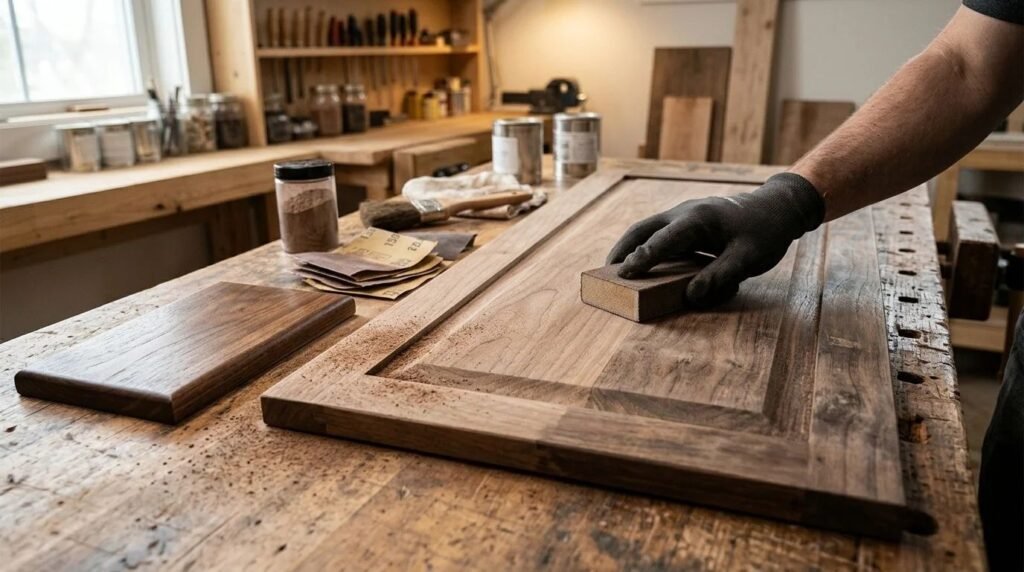
Restaining walnut kitchen cabinets can refresh their appearance when the existing finish has become worn or you want to change the cabinet color. However, the process requires preparation, particularly if the cabinets already have a protective coating.
1. Clean and Prepare the Cabinet Surfaces
Start by removing dust, grease, and cooking residue using a suitable cabinet cleaner. Remove cabinet doors and hardware where practical so you can work on each surface more easily.
Allow the wood to dry completely before proceeding.
2. Remove or Prepare the Existing Finish
The existing coating will determine how the cabinets need to be prepared. Some finishes require stripping or sanding before a new stain can penetrate the wood.
If the cabinets are veneer, use particular care because the real wood layer can be thin. Aggressive sanding may damage it.
3. Apply a Compatible Stain
Choose a stain that is suitable for walnut and compatible with the prepared surface. Test the color on an inconspicuous area or a matching sample first.
Apply the stain according to the manufacturer’s instructions, paying attention to drying times and the recommended application method.
4. Seal and Protect the Cabinets
Once the stain has dried as directed, apply a compatible protective topcoat.
This final layer helps protect the cabinet surface from everyday handling, moisture, and kitchen spills. Allow the finish to cure fully before reinstalling doors and using the cabinets normally.
If your cabinets are valuable, heavily finished, or made with veneer, professional refinishing may be the safer option.
How to Clean and Maintain Walnut Kitchen Cabinets
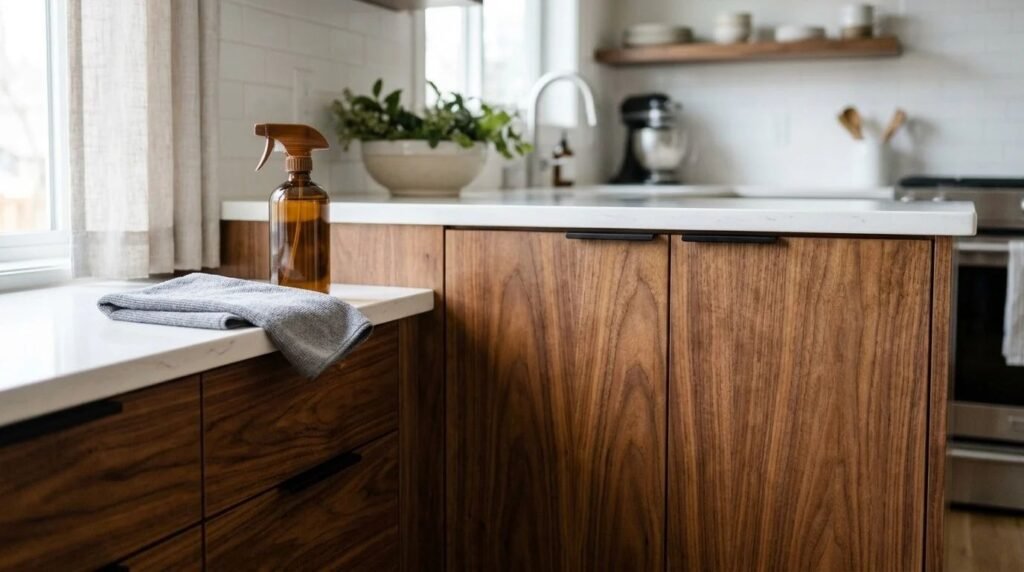
Proper maintenance can help walnut kitchen cabinets retain their natural beauty for many years. The good news is that everyday care is relatively simple when you follow a few basic habits.
- Dust regularly: Use a soft microfiber cloth to remove dust and loose dirt.
- Clean spills quickly: Wipe away water, oil, and food splashes before they sit on the surface.
- Use gentle cleaners: Choose a cleaner recommended for your cabinet finish rather than harsh chemicals.
- Avoid excessive moisture: Never leave wet cloths or standing water against wooden cabinet doors.
- Protect from direct sunlight: Use window coverings where strong sunlight repeatedly hits the cabinets.
- Check hardware: Tighten loose handles and hinges when needed.
Avoid abrasive pads, strong solvents, and excessive water. Always follow the cabinet manufacturer’s cleaning instructions, as the best care method depends on the finish.
With regular attention, walnut cabinetry can continue to look attractive while handling the demands of everyday kitchen use.
Final Thoughts
Walnut kitchen cabinets are a beautiful way to bring natural warmth, texture, and sophistication into your home. Whether you prefer light walnut finishes, dramatic dark cabinets, a two-tone kitchen, or a statement walnut island, there are plenty of ways to make this material work with your design preferences.
Before choosing your cabinets, consider your kitchen’s size, natural lighting, countertop materials, budget, and maintenance needs. Solid walnut and walnut veneer can both create attractive results when selected and constructed carefully.
The best kitchen design is one that looks beautiful while making everyday cooking, storage, and family time more comfortable.
Frequently Asked Questions About Walnut Kitchen Cabinets
1. Are walnut kitchen cabinets in style?
Yes, walnut kitchen cabinets remain a popular choice for homeowners who appreciate natural wood finishes. Their warm brown tones and distinctive grain work well in modern, traditional, minimalist, and transitional kitchens.
2. Is walnut good for kitchen cabinets?
Yes. Walnut is a hardwood with attractive grain patterns and good workability, making it suitable for quality kitchen cabinetry. However, it needs a suitable protective finish and proper care to handle everyday kitchen moisture and spills.
3. Are walnut kitchen cabinets expensive?
Walnut cabinets are generally a premium option. Solid walnut, custom construction, cabinet dimensions, finishing, and hardware all influence the final price. Walnut veneer can be a more budget-conscious alternative.
4. Do walnut kitchen cabinets darken over time?
Walnut can change color as it ages and is exposed to light. The direction and extent of the change depend on the wood, finish, and exposure conditions. Ask your cabinet manufacturer about the expected color changes before choosing a finish.
5. What colors go best with walnut kitchen cabinets?
Walnut pairs beautifully with warm white, cream, beige, sage green, charcoal, and soft gray. White marble, light quartz, brass hardware, and natural stone are also attractive choices.
6. Are dark walnut kitchen cabinets suitable for small kitchens?
Yes, but balance is important. Combine dark walnut lower cabinets with lighter upper cabinets, pale countertops, reflective surfaces, and good lighting to prevent the kitchen from feeling too enclosed.
7. How do you finish walnut kitchen cabinets?
Walnut cabinets can be finished with suitable clear protective coatings, oils, or other cabinetry finishes. The best choice depends on the desired appearance and level of protection. Always test the product on a sample before applying it to the entire cabinet.
8. How do you restain walnut kitchen cabinets?
Start by cleaning and preparing the cabinet surfaces. Depending on the existing coating, you may need to remove the old finish before applying a compatible stain. Finish by applying a suitable protective topcoat and allowing it to cure according to the manufacturer’s instructions.