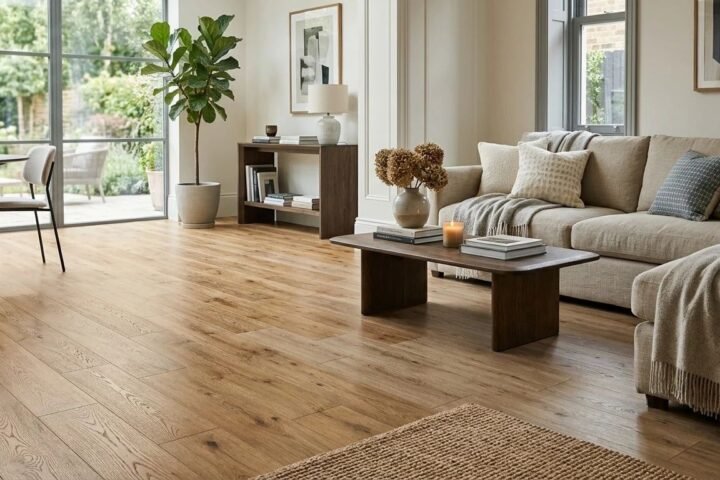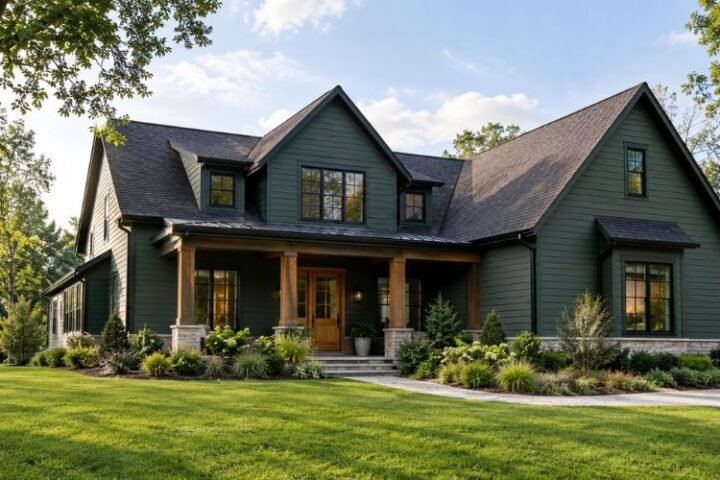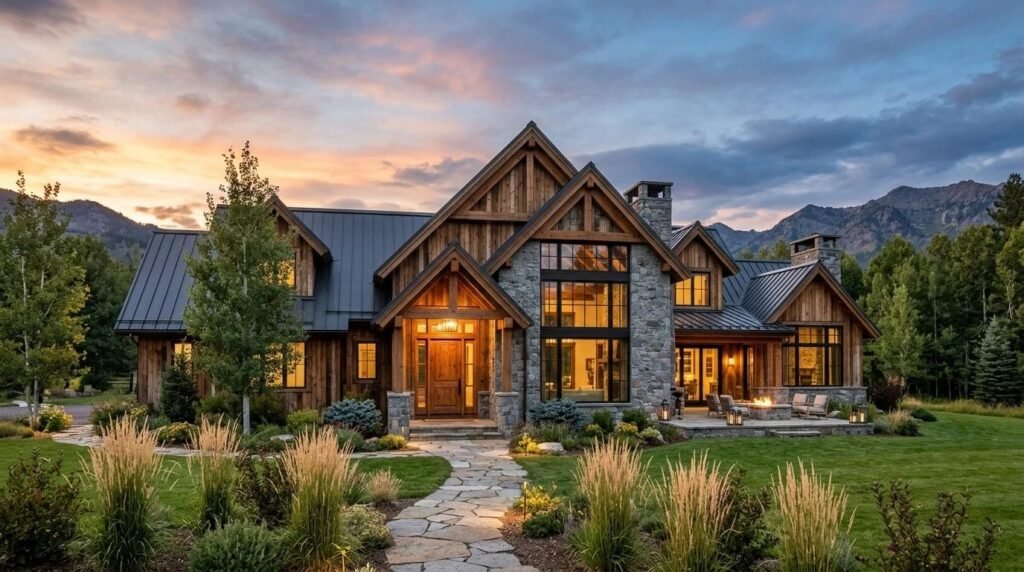
Modern houses don’t have to feel cold or overly minimalist. By combining clean architectural lines with natural wood, textured stone, and earthy colors, you can create a home that feels both contemporary and welcoming. Modern rustic house designs bring together the best of both worlds, offering inspiration for anyone who loves the warmth of rustic houses and the simplicity of modern architecture.
Whether you’re exploring house ideas for a new build or looking for ways to refresh your existing exterior, there are plenty of ways to achieve this timeless style. From cozy modern country houses to contemporary homes with timber accents and large windows, these 17 designs show how natural materials and thoughtful details can create a warm, stylish living space.
In this guide, you’ll discover inspiring modern rustic house designs, practical exterior tips, and modern rustic decor ideas to help you bring this beautiful style into your own home.
1. Modern Rustic Houses With Natural Wood Siding
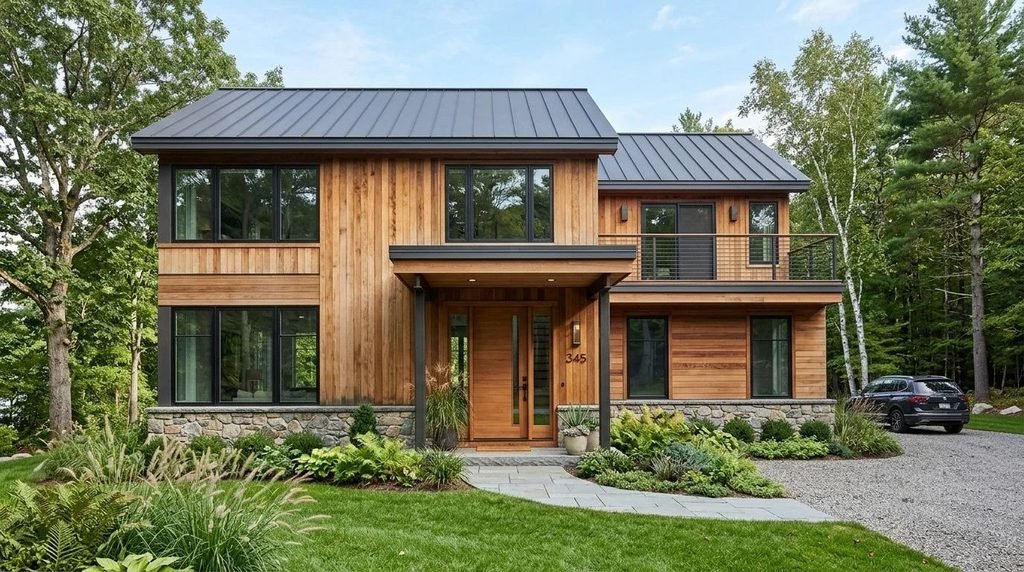
Natural wood siding is one of the most recognizable features of modern rustic house designs. Its warm tones, visible grain, and organic texture create a welcoming appearance while complementing the clean lines of contemporary architecture.
Cedar, timber, and other suitable exterior wood products can work beautifully with large windows, simple rooflines, and understated landscaping. For a balanced look, pair warm wood siding with charcoal window frames, a dark roof, or a stone foundation.
You can also use wood selectively instead of covering the entire exterior. Adding timber around the entrance or along one architectural section creates visual interest without overwhelming the design.
Design tip: Choose an exterior finish that suits your climate and maintenance preferences. Proper sealing, ventilation, and routine care help protect natural wood from moisture and weathering.
2. Rustic Houses With Stone and Wood Exteriors
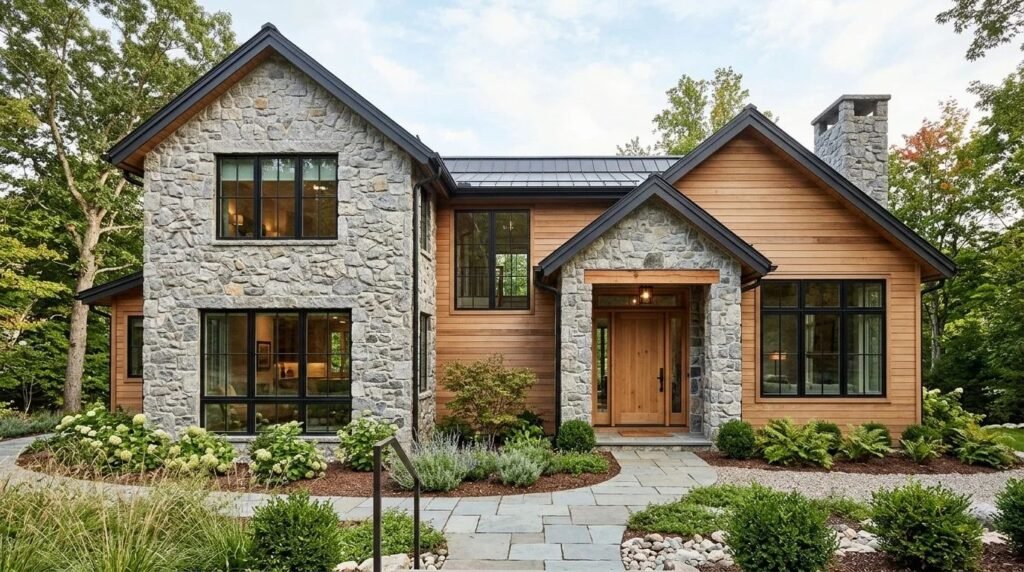
Wood and stone make a natural combination for rustic houses. Wood adds warmth, while stone introduces texture and a sense of permanence. Together, they create an exterior that feels connected to nature without looking old-fashioned.
Consider using stone around the lower portion of the house, near the entrance, or on a feature wall. Wooden siding or timber accents can soften the heavier appearance of the stone. Large windows and simple geometric shapes keep the overall design contemporary.
For the color palette, gray stone works well with warm brown timber, while beige or cream stone pairs beautifully with lighter wood tones.
Design tip: Limit the number of competing textures. Two primary exterior materials, supported by a consistent trim color, can create a more cohesive result than combining too many finishes.
3. Modern Country House Designs With Rustic Charm
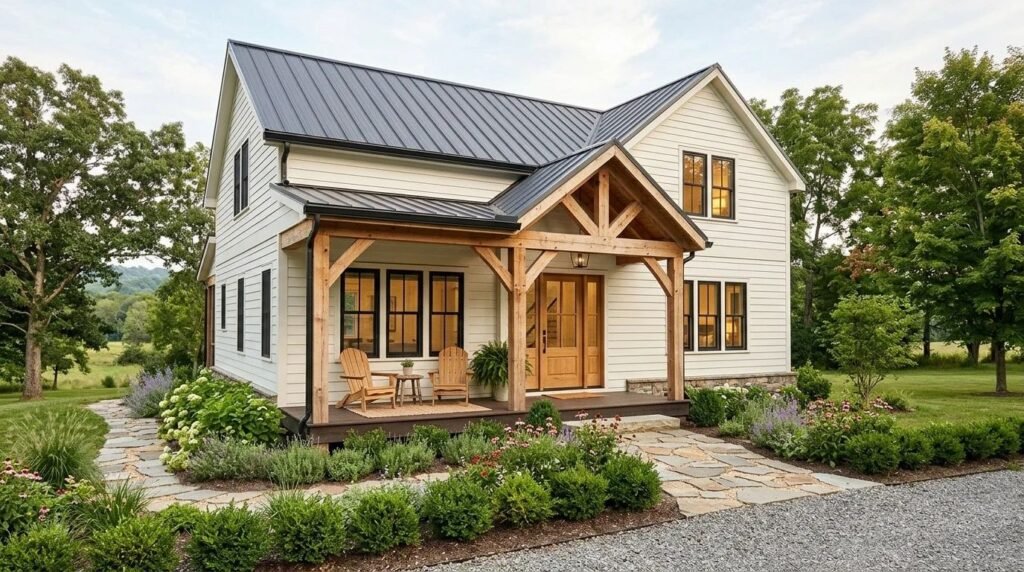
Modern country house designs combine the relaxed character of rural architecture with contemporary finishes. Think natural timber, simple rooflines, large windows, and welcoming porches. These features create a home that feels connected to nature while maintaining a clean, updated appearance.
White or warm-neutral siding can keep the exterior bright, while wood accents and stone details introduce rustic character. A natural wood front door can become the focal point of the entrance, especially when surrounded by restrained landscaping.
This style works particularly well for homeowners who appreciate traditional country homes but prefer simpler architectural details.
Design tip: Use a limited color palette of warm white, natural wood, and a dark accent color. Repeat these shades across the windows, roof, front door, and outdoor lighting for a coordinated look.
4. Cozy Modern Rustic Cabin Houses
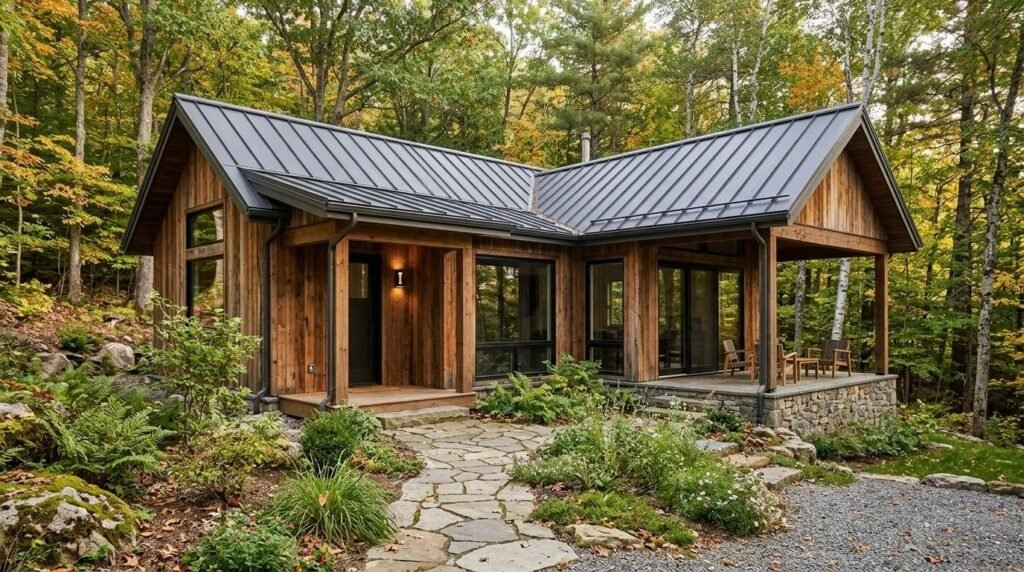
Modern rustic cabin designs capture the peaceful atmosphere of a woodland retreat while incorporating contemporary architecture. Natural timber cladding, pitched roofs, large windows, and sheltered entrances are common features.
A cabin can look striking with dark exterior siding and warm wood accents, or it can feel softer with natural cedar, light stone, and a charcoal roof. The surrounding landscape also plays an important role. Trees, native plants, and simple stone paths help the house blend into its environment.
Even if you don’t live in a forest, you can borrow cabin-inspired details for a suburban home. A timber entrance, textured facade, and warm outdoor lighting can create a similar feeling.
Design tip: If privacy is important, consider how large windows are positioned in relation to neighboring homes and outdoor spaces.
5. Modern Rustic Homes With Large Glass Windows
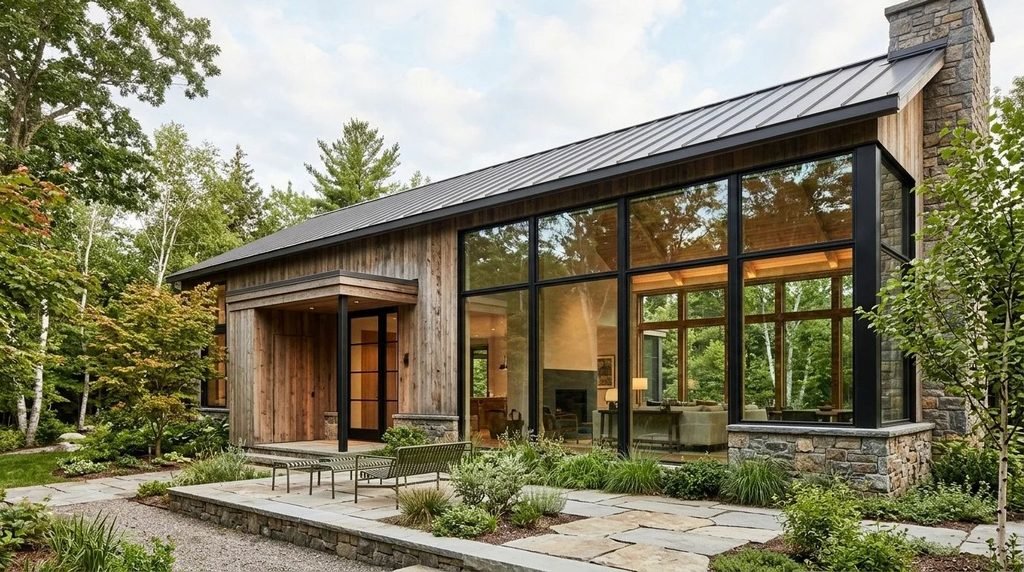
Large windows create a beautiful contrast with rustic materials. The natural texture of wood or stone gives the exterior character, while expansive glazing makes the architecture feel lighter and more contemporary.
Floor-to-ceiling windows can connect indoor living spaces with gardens, wooded views, or patios. Dark frames provide definition, especially when paired with lighter wood siding or pale stone.
For homes in warmer climates, window placement and shading deserve careful consideration. Overhangs, exterior shades, suitable glazing, and cross-ventilation can help improve comfort and manage heat gain.
Design tip: Plan window placement around daylight, privacy, views, and the home’s orientation rather than choosing large windows purely for appearance.
6. Rustic Modern Houses With Dark Metal Roofs
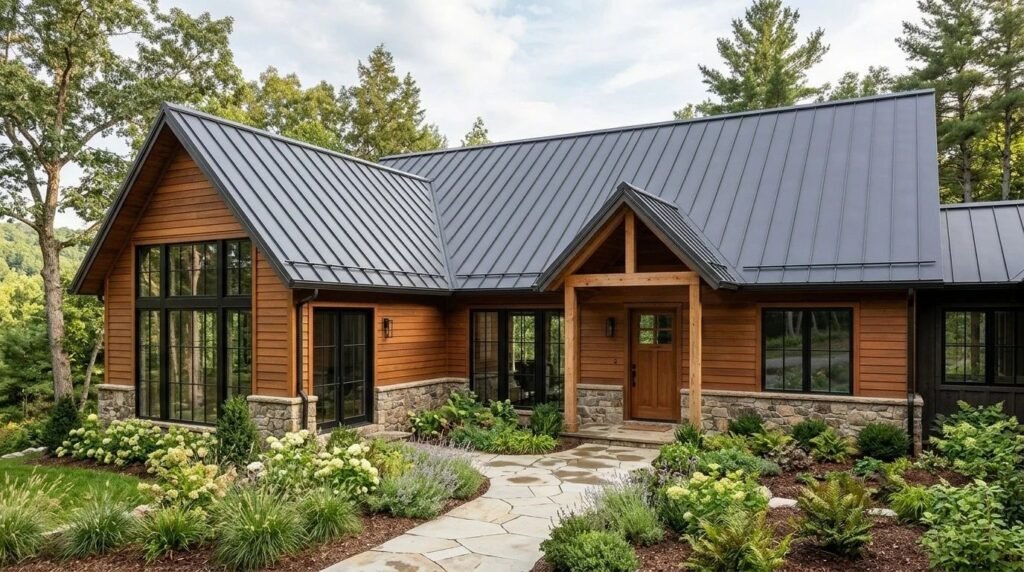
A dark metal roof can give a modern rustic house a crisp, contemporary finish. Charcoal, black, and deep gray roofing provide a strong contrast against natural wood, light stone, or cream-colored siding.
Standing-seam metal roofing is particularly suited to clean architectural lines. It can complement both traditional pitched roofs and more contemporary forms, depending on the overall design.
To avoid an overly dark exterior, balance the roof with warm timber, lighter wall finishes, or greenery around the house. The contrast helps each material stand out without competing for attention.
Design tip: Check local climate requirements, roof insulation, drainage details, and installation standards before selecting a roofing material.
7. Warm Neutral Rustic House Designs
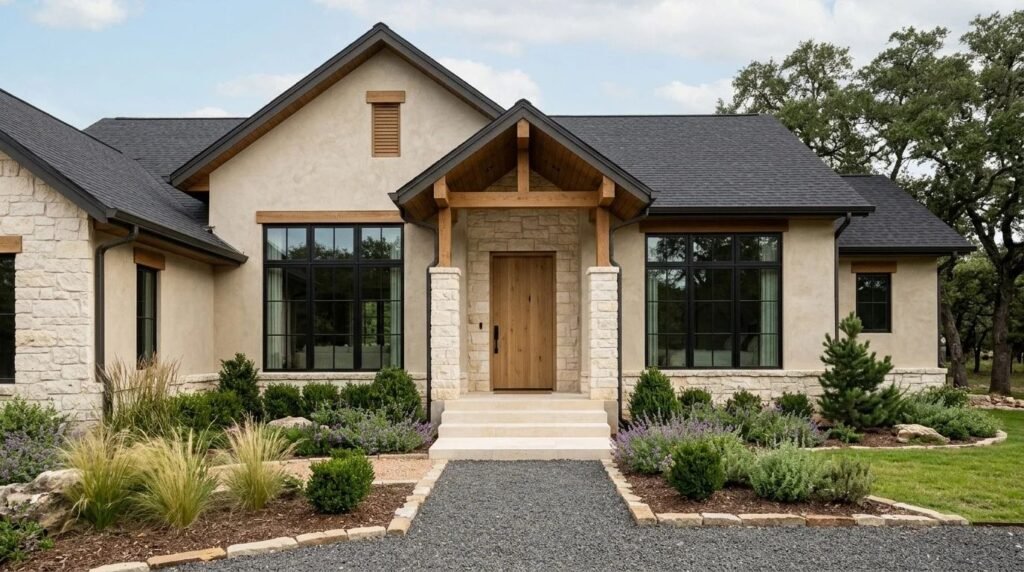
Neutral colors are ideal for creating a calm and timeless rustic exterior. Shades such as cream, beige, taupe, warm gray, and soft brown complement natural materials and help a house feel inviting.
A warm beige facade with timber accents and a dark roof can look elegant without being overly formal. Alternatively, cream walls and pale stone can create a lighter appearance, particularly when paired with natural wood around the entrance.
Texture matters just as much as color. Wood grain, stone surfaces, and subtly textured plaster can add depth even when the overall palette is simple.
Design tip: Test exterior paint samples in different lighting conditions. Colors can look noticeably different in direct sunlight, shade, and evening light.
8. Modern Rustic Houses With Earthy Green Accents
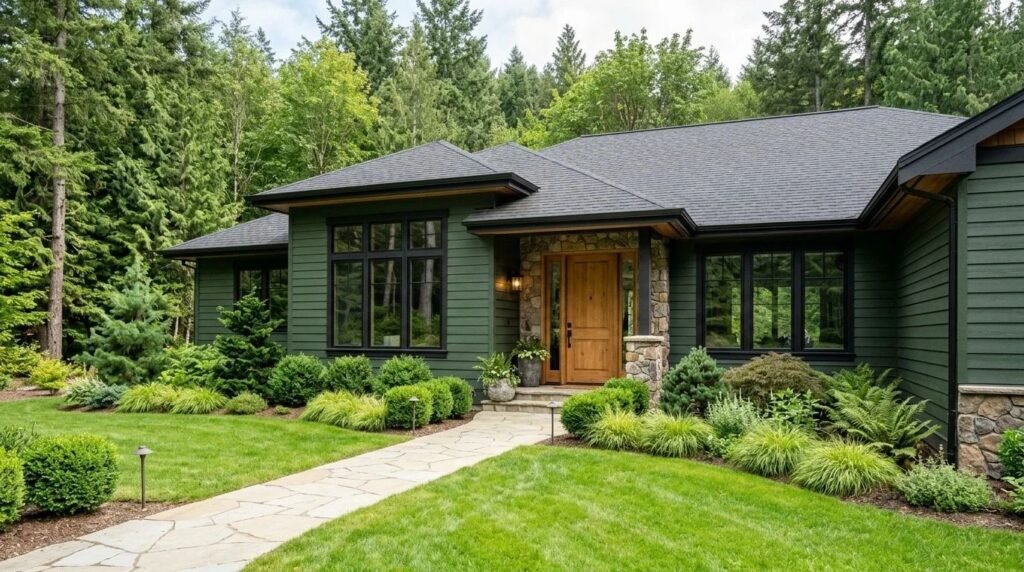
Earthy greens bring a natural, distinctive quality to modern rustic architecture. Sage, olive, and deep forest green can work beautifully with timber, stone, and dark window frames.
For a subtle look, use muted sage siding with natural wood around the entrance. For a bolder appearance, consider deep green exterior walls with black trim, a dark roof, and carefully placed greenery.
If you love this color combination, explore our guide to dark green house exteriors with black trim for more exterior color inspiration.
Green is especially effective when the surrounding landscape includes trees, shrubs, or ornamental grasses. The color helps visually connect the building with its environment.
Design tip: Use natural wood or a lighter stone finish to balance dark green siding and prevent the exterior from appearing too heavy.
9. Simple Single-Story Rustic Modern Houses
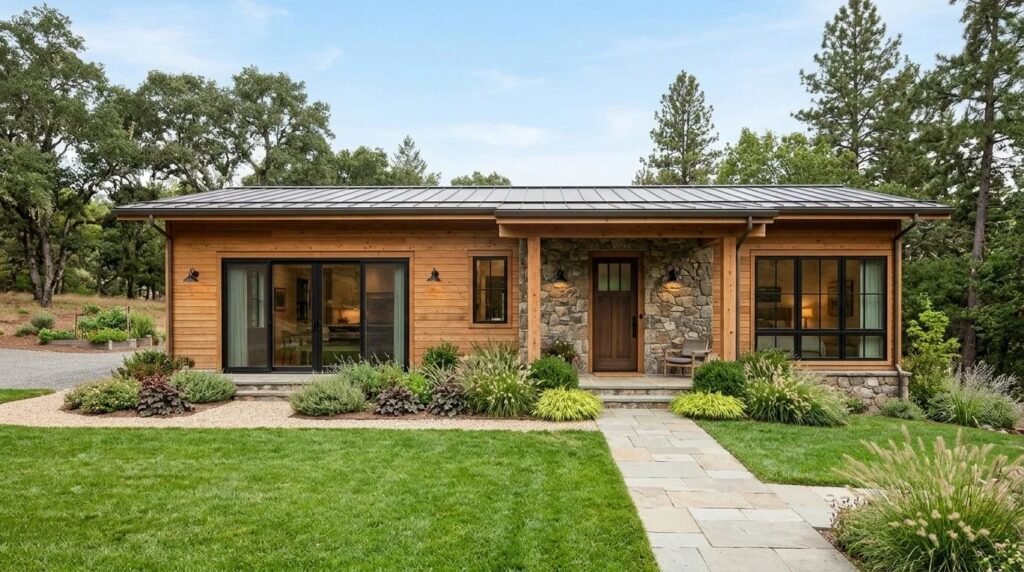
Single-story homes can achieve a modern rustic look through proportion, material choice, and thoughtful detailing rather than elaborate architecture.
A low roofline, horizontal timber siding, a stone accent wall, and a simple entrance can give a modest home plenty of character. Large windows and a restrained landscape design help the house feel open and connected to the outdoors.
This approach can also be practical for homeowners who prefer fewer stairs and easier access between indoor and outdoor spaces.
Design tip: Pay attention to the roofline and the placement of windows. A well-balanced facade often looks more polished than one with too many decorative elements.
10. Two-Story Modern Rustic House Designs
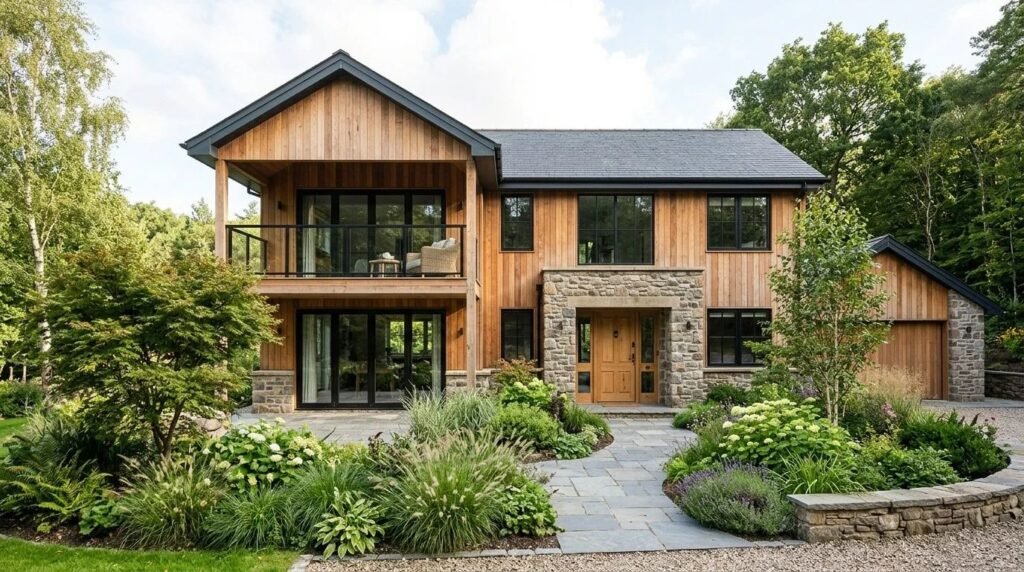
Two-story rustic modern houses offer more opportunities to combine materials and create architectural contrast. Wood cladding on the upper level, stone around the entrance, and dark-framed windows can give the exterior a distinctive appearance.
Balconies, covered porches, and large windows can add visual interest while creating useful outdoor spaces. However, keeping the material palette consistent helps prevent the design from feeling too busy.
A charcoal roof, warm timber, and pale stone are one possible combination. For a darker look, deep brown siding and black trim can create a more dramatic effect.
Design tip: Repeat at least one material or color across both floors to make the entire facade feel connected.
11. Rustic Houses With Exposed Timber Beams
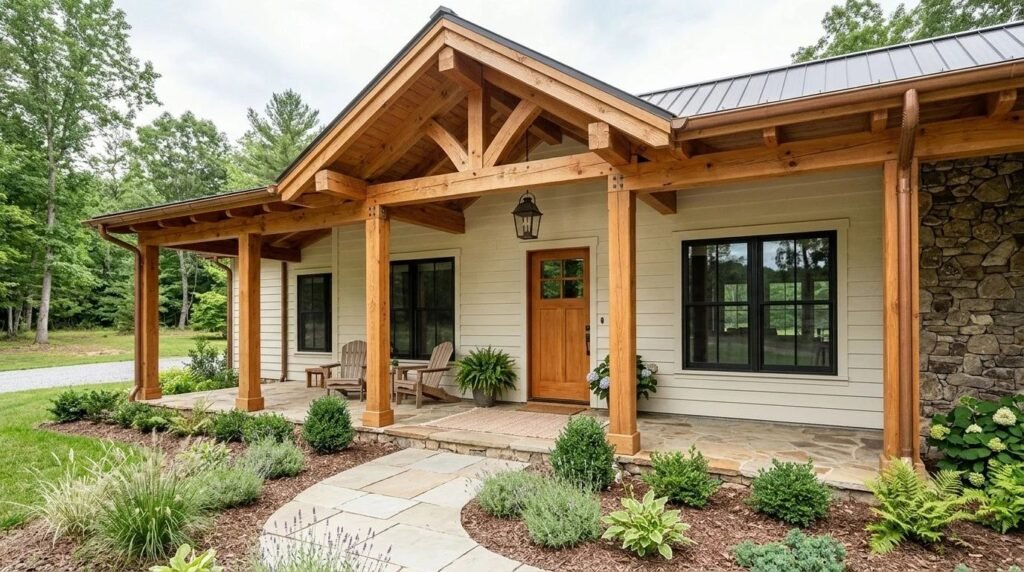
Exposed timber beams introduce craftsmanship and architectural character to a modern rustic home. They can frame a covered porch, support a roof overhang, or highlight the entrance.
Natural wood beams look particularly attractive against light plaster, stone, or simple siding. Their texture provides a rustic contrast to clean window frames and contemporary architectural shapes.
You can use timber accents sparingly to make the design feel intentional. A few well-positioned beams often have more visual impact than an excessive number of decorative wooden elements.
Design tip: If beams are structural, their dimensions and connections should be designed by a qualified professional. Decorative timber elements also need appropriate exterior protection when exposed to weather.
12. Modern Rustic Houses With Welcoming Front Porches
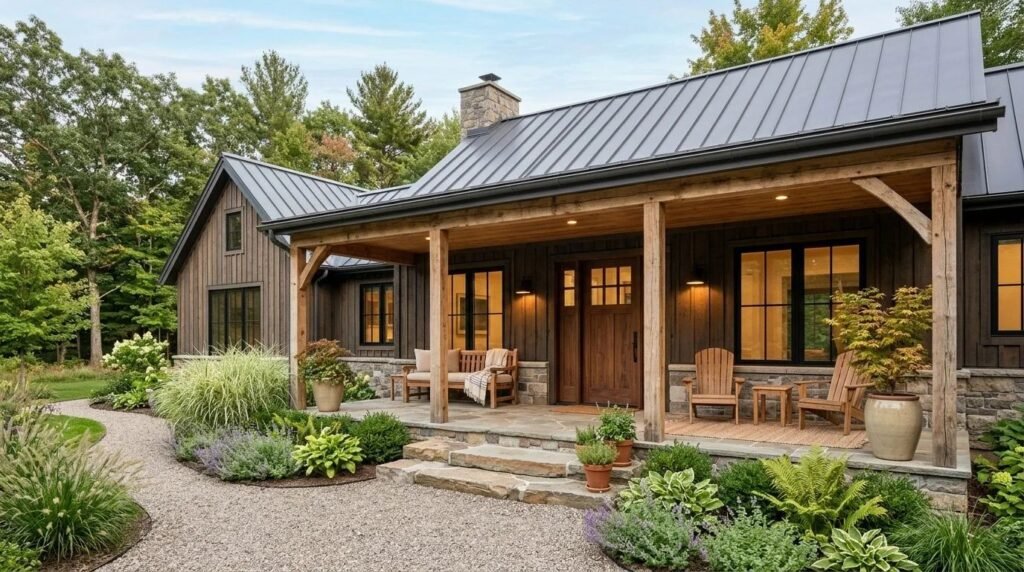
A front porch makes a rustic home feel approachable and gives the entrance a stronger architectural presence. Timber posts, a simple roof overhang, natural stone steps, and warm wall lights can create an inviting transition between the house and the outdoors.
For a modern finish, keep the porch furniture simple. A wooden bench, a pair of understated chairs, and a few planters can provide enough decoration without crowding the space.
A porch also offers an opportunity to repeat materials used elsewhere on the exterior, such as the front door’s wood tone or the stone around the foundation.
Design tip: Choose outdoor furniture and fabrics suited to your climate, and make sure the porch has adequate drainage and weather protection.
13. Rustic Modern Houses With Natural Landscaping
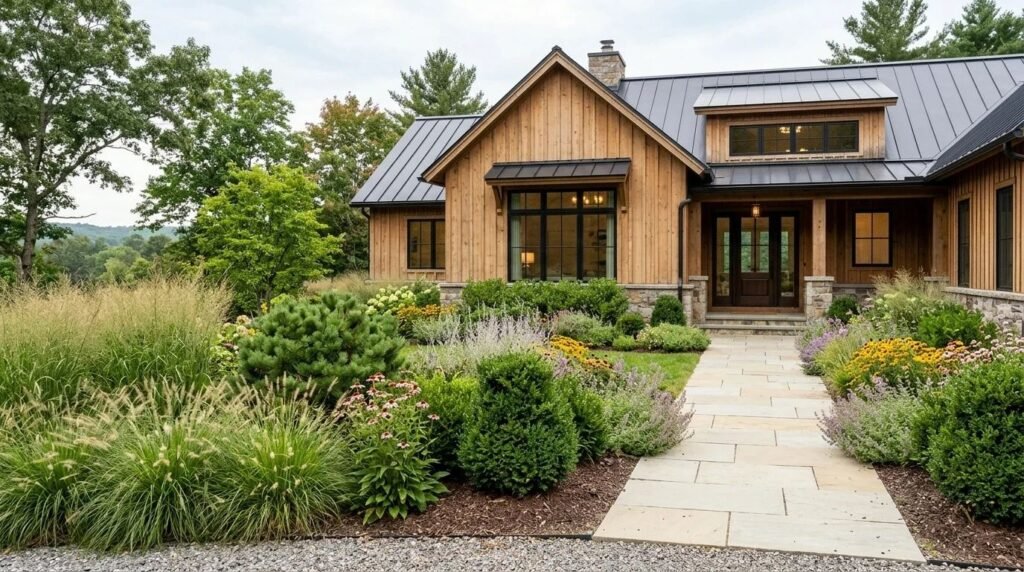
Landscaping can make a significant difference to the appearance of a modern rustic home. Rather than creating a highly formal garden, consider a natural arrangement of ornamental grasses, evergreen shrubs, native plants, and simple planting beds.
A stone pathway leading to a timber entrance can create a strong focal point. Gravel, natural stepping stones, and restrained edging can reinforce the rustic character without distracting from the architecture.
For a polished appearance, repeat a few plant varieties throughout the garden instead of using too many different species. This creates visual consistency and can simplify maintenance.
Design tip: Select plants according to your local climate, sunlight, soil, and water availability. Native or climate-adapted plants can be a practical choice for many landscapes.
14. Small Modern Rustic Homes With Big Character
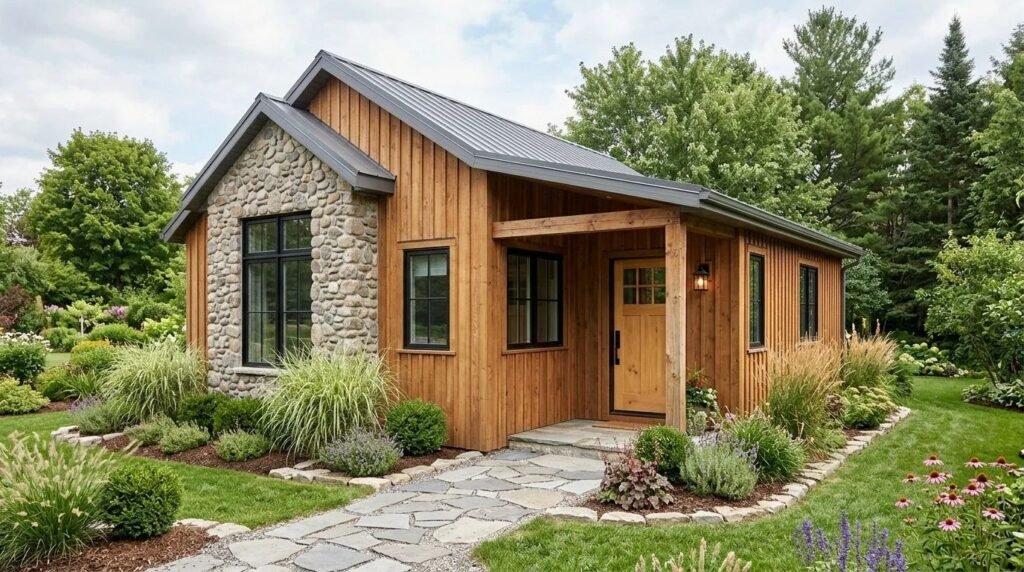
A small house can look just as stylish as a larger property when the design focuses on proportion and carefully selected materials. Simple architectural forms, warm wood, and a restrained stone accent can provide plenty of visual interest without making the exterior feel crowded.
Large, well-positioned windows can help compact homes feel brighter, while a clearly defined entrance creates a sense of structure. A small porch or compact outdoor seating area can also make the home feel more welcoming.
Instead of using multiple finishes, choose one main siding material and one contrasting accent. This approach helps the exterior look intentional and cohesive.
Design tip: Prioritize functional space and durable materials before adding decorative details. A well-planned compact home can be both attractive and easier to maintain.
15. Rustic Houses With Reclaimed Wood Details
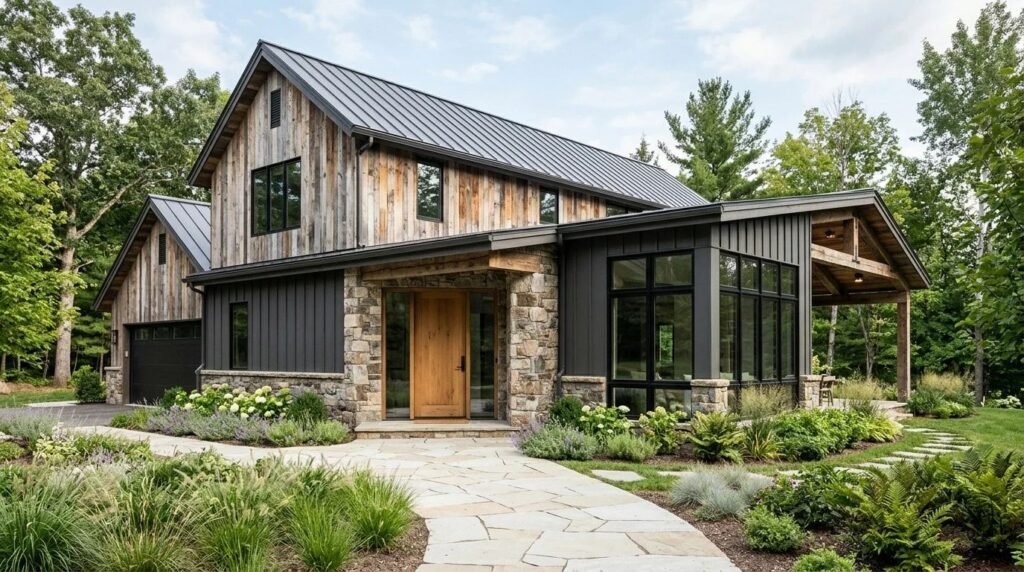
Reclaimed wood brings distinctive grain patterns, weathered tones, and a sense of history to rustic modern architecture. It can be used around a front entrance, on a feature wall, or as an accent beneath a covered porch.
The key is to combine the aged appearance of the wood with contemporary elements. Clean-lined windows, simple roof forms, and uncluttered landscaping can keep the exterior from feeling overly traditional.
Reclaimed materials may also allow usable timber to be repurposed, although their environmental benefits depend on sourcing, processing, transport, and the condition of the material.
Design tip: Verify the timber’s condition and suitability for exterior use. Reclaimed wood should be assessed for rot, pests, coatings, and any treatment required for its intended application.
16. Modern Rustic Houses With Warm Exterior Lighting
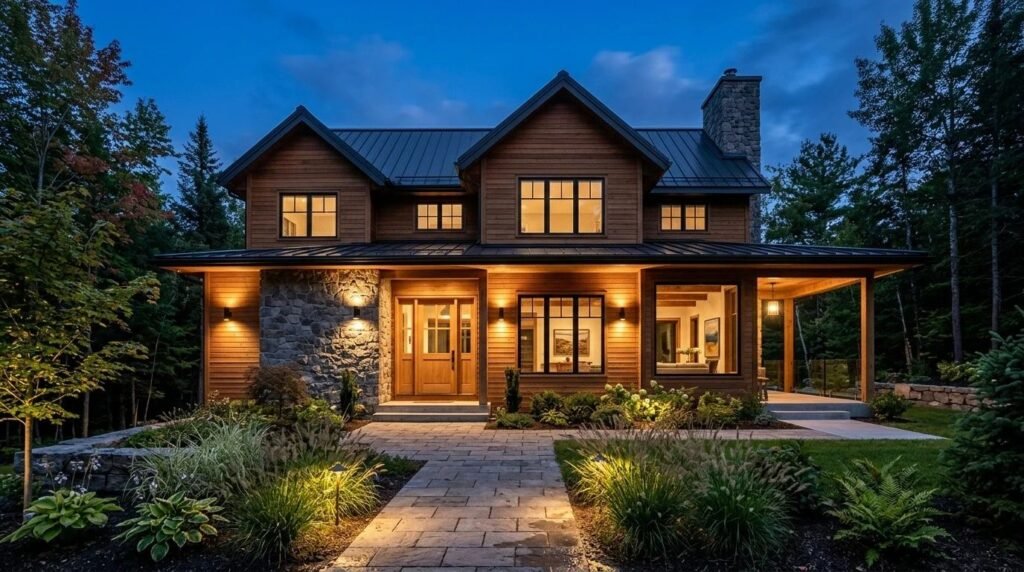
Exterior lighting can transform the appearance of a modern rustic home after sunset. Warm wall sconces, subtle pathway lights, and carefully positioned entrance lighting highlight architectural details while making outdoor areas easier to navigate.
Lighting looks especially effective when it brings attention to natural materials. A fixture beside a stone wall can emphasize texture, while a light near a timber door can make the entrance feel welcoming.
Avoid illuminating every part of the facade equally. A few well-placed fixtures usually create a more balanced effect than excessive brightness.
Design tip: Choose outdoor-rated fixtures, use appropriately shielded lights, and position them to reduce glare into neighboring properties and the night sky.
17. Sustainable Modern Rustic House Designs
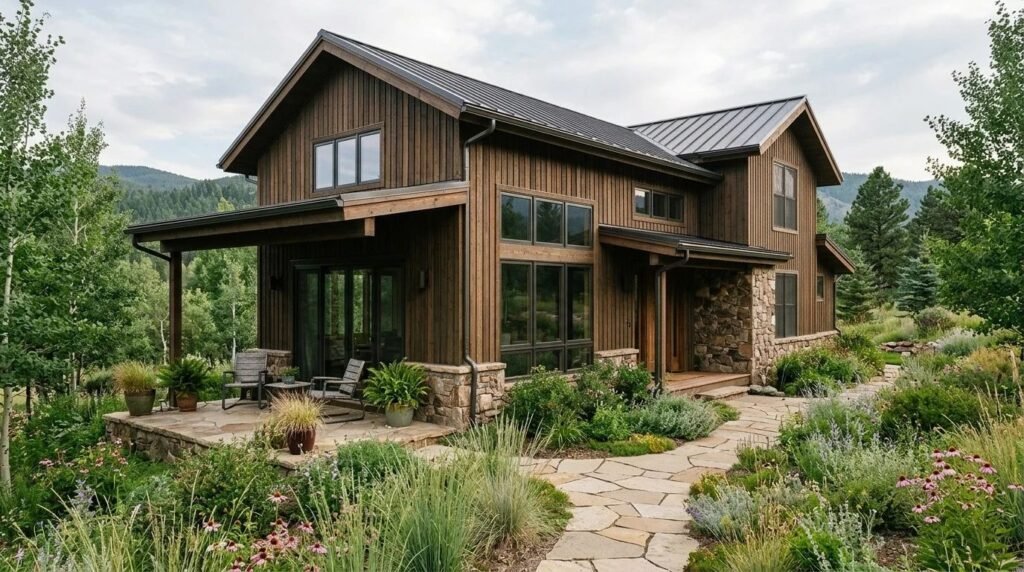
Sustainable design can complement modern rustic architecture through durable materials, efficient building systems, and a stronger connection to the local environment.
Responsibly sourced timber, long-lasting exterior finishes, suitable insulation, energy-efficient windows, and effective shading can all contribute to a more comfortable home. The best choices depend on the climate, construction method, and performance requirements of the building.
Natural materials are visually appealing, but their environmental impact varies. Consider where materials come from, how long they last, and how much maintenance they require over time.
Design tip: Think about sustainability from the planning stage. Orientation, ventilation, shading, insulation, and water management can be just as important as the visible exterior finishes.
Modern Rustic Decor Ideas for a Cohesive Home
Modern rustic decor is all about balancing natural textures with simple, contemporary details. Wood, stone, linen-inspired textiles, warm neutrals, and dark metal accents can create a consistent look across a home’s exterior and interior.
For example, a natural wood front door can complement wooden furniture inside the house. Stone exterior details can inspire a textured fireplace surround, while earthy exterior colors can be carried into cushions, rugs, and other decorative accents.
The goal is not to make every room or exterior feature look identical. Instead, repeat a few materials, colors, and textures to create a connection between different spaces.
Here are a few ways to achieve the look:
- Choose warm neutral colors for a calm foundation.
- Combine natural wood with metal or stone accents.
- Use textured fabrics to add softness to contemporary interiors.
- Keep decorative accessories simple and purposeful.
- Introduce plants and natural materials to reinforce the connection with nature.
By balancing these elements, you can create a home that feels comfortable and coordinated without becoming visually cluttered.
What Makes Modern Rustic Houses Unique?
Modern rustic houses combine the warmth and texture of traditional materials with the simplicity and functionality of contemporary design. Instead of reproducing an old-fashioned country house, this style uses natural details in a more streamlined way.
Several elements help define the look:
- Natural materials: Wood, stone, and other textured finishes add warmth and visual depth.
- Clean lines: Simple rooflines and uncluttered facades keep the design contemporary.
- Earthy colors: Warm neutrals, muted greens, and charcoal accents complement natural surroundings.
- Functional windows: Carefully positioned glazing can improve daylight and connect indoor spaces with the outdoors.
- Thoughtful landscaping: Plants, paths, and outdoor seating help the home feel connected to its setting.
Not every modern rustic house needs all these elements. The strongest designs select a few complementary features and use them consistently.
Best Materials and Colors for Modern Rustic Houses
Choosing suitable materials and colors helps bring the entire design together.
Natural Wood, Stone, and Metal
Wood introduces warmth and texture, while stone creates a solid, natural appearance. Metal roofing and dark window frames provide contrast and can make the overall design feel more contemporary.
These materials can be used in different proportions depending on the home’s architecture. A timber-dominant facade feels warmer, while stone-heavy exteriors often appear more substantial.
Earthy Colors That Complement Rustic Architecture
Warm white, cream, beige, taupe, brown, olive green, forest green, and charcoal are useful starting points for a rustic modern palette.
For a bright exterior, combine cream walls with natural timber. For a dramatic look, try dark green siding with black trim and wood accents. If you prefer something understated, beige walls, gray stone, and a medium-brown front door create a softer combination.
How to Balance Rustic Texture With Modern Finishes
The goal is to create contrast without making the facade feel cluttered. Pair a textured material with a smoother one, or use dark window frames against lighter walls.
It also helps to repeat the same wood tone or accent color in more than one area. This makes the design feel coordinated and intentional.
How to Create a Modern Rustic Look on a Budget
You don’t necessarily need a complete exterior renovation to introduce rustic modern details. A few carefully selected updates can make an existing home feel warmer and more contemporary.
- Refresh the front door: A natural wood finish or a suitable wood-look design can create a welcoming focal point.
- Update exterior lighting: Simple wall sconces near the entrance can improve both appearance and functionality.
- Use accent materials selectively: Consider a timber detail or a suitable stone feature instead of replacing the entire facade.
- Refresh the paint color: A compatible earthy neutral or muted green can change the overall appearance of the house.
- Improve the landscaping: A defined pathway, a few well-chosen shrubs, and neat planting beds can enhance curb appeal.
- Keep the design simple: Avoid spending money on decorative elements that don’t contribute to the home’s overall look.
Before making changes, check material compatibility, local building requirements, and the condition of existing surfaces. Prioritizing repairs and weather protection can be more valuable than purely cosmetic improvements.
Frequently Asked Questions
What is a modern rustic house?
A modern rustic house combines natural materials and traditional textures with contemporary architectural forms. It often features wood, stone, simple rooflines, large windows, and earthy colors to create a warm yet uncluttered appearance.
What materials are commonly used in modern rustic houses?
Common choices include timber siding, natural stone, metal roofing, glass, and textured plaster or stucco. The ideal combination depends on the home’s location, climate, budget, and maintenance requirements.
Which colors look best on a modern rustic house?
Warm white, beige, taupe, brown, olive green, forest green, and charcoal can all work well. Natural wood accents help connect these colors with the rustic character of the architecture.
Can a small house have a modern rustic design?
Yes. A small home can achieve this look with a simple layout, a restrained material palette, well-positioned windows, and a few distinctive natural accents. Thoughtful landscaping and a clearly defined entrance can add further character.
How can I make my house exterior look modern and rustic?
Start with one or two natural materials, such as wood and stone. Add clean-lined windows, a complementary roof color, simple outdoor lighting, and landscaping suited to the property. Keeping the palette consistent will help the exterior feel cohesive.
What is modern rustic decor?
Modern rustic decor combines natural textures, earthy colors, and materials such as wood and stone with clean contemporary furniture and simple decorative accents. The result is a comfortable, natural-looking space that avoids excessive ornamentation.
What is the difference between a modern rustic house and a modern country house?
A modern rustic house emphasizes natural textures and materials, such as wood and stone, combined with contemporary design. A modern country house often draws more directly from rural or farmhouse architecture, including traditional rooflines, porches, and countryside-inspired details. The styles can overlap considerably.
Final Thoughts
Modern rustic house designs show how natural materials and contemporary architecture can work together to create a home that feels both stylish and welcoming. Whether you prefer the warmth of timber siding, the texture of stone, the simplicity of a modern country house, or the dramatic contrast of dark window frames, there are many ways to adapt this style to your preferences.
Start by identifying the materials, colors, and architectural details you love most. Then consider your home’s climate, maintenance needs, budget, and surrounding landscape before making changes.
With a thoughtful balance of rustic texture and modern simplicity, you can create an exterior that feels distinctive, comfortable, and timeless.