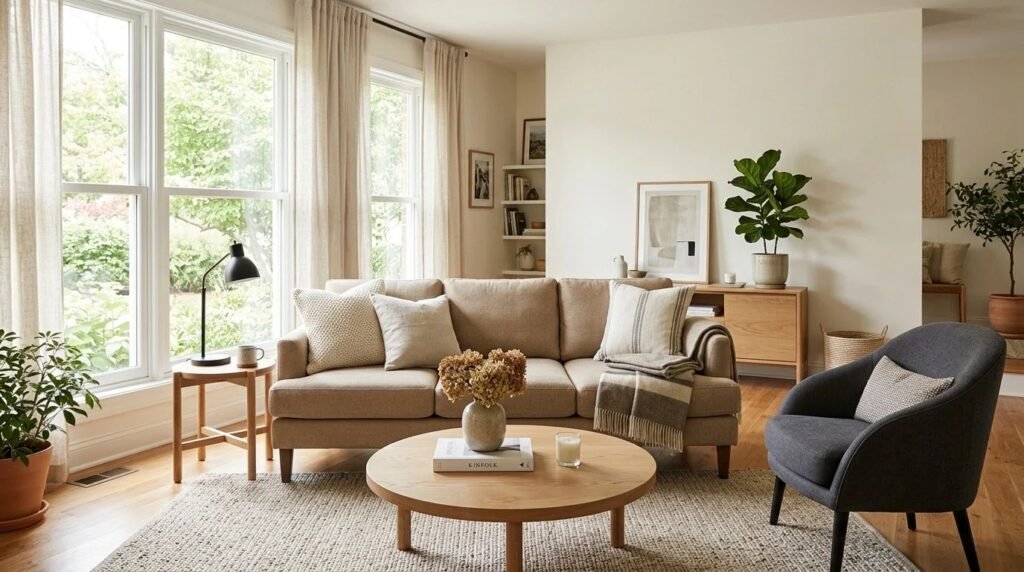
The best furniture ideas for a living room start with a few well-chosen pieces: a comfortable sofa, a coffee table, smart storage, and some flexible extra seating, all sized to fit your space. Get the scale right and even a compact room feels open and welcoming. Get it wrong and a large room can still feel cramped.
This guide covers 25 practical living room furniture ideas, from sofas and tables to small-space and multifunctional pieces. You will also find layouts for small, medium, and large rooms, with real measurements you can use when you shop.
What Furniture Does a Living Room Need?
Most living rooms need a sofa or sectional, a coffee table, a TV unit or media storage, at least one accent chair, a side table, and layered lighting. A rug helps tie the seating area together. Beyond these basics, the right extras depend on your room size and how you use the space.
Before you buy anything, ask yourself three questions:
- How many people sit here on a normal day? Plan seating for daily use, then add a few flexible pieces for guests.
- What else does the room do? If it also serves as a workspace, dining spot, or play area, you need furniture that handles more than one job.
- How much clear floor do you want to keep? A good rule is to leave 30 to 36 inches (76 to 91 cm) for walkways.
Sofa and Seating Ideas
The sofa sets the tone for the whole room, so start here and build everything else around it.
1. Sectional Sofa for Larger Rooms
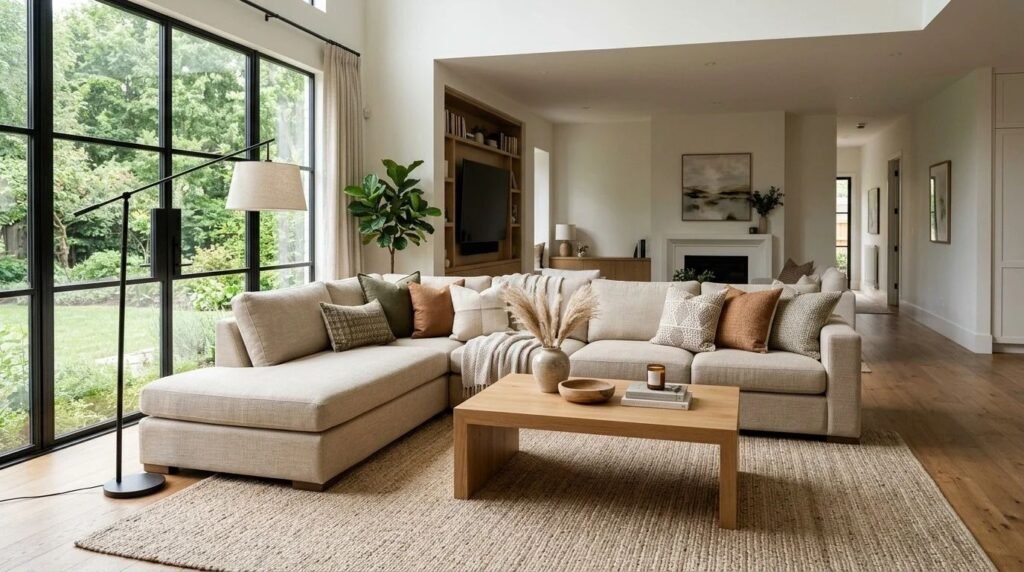
A sectional fits a lot of seating into one footprint and works well in medium and large rooms. An L-shape is the most common, and it can anchor a corner or divide an open-plan space into zones. Choose a chaise version if you want a spot to stretch out. In smaller rooms, pick a compact L-shape rather than a wide model, so it does not take over the floor.
2. Loveseat or Compact Sofa

If your room is small, a loveseat (usually around 55 to 70 inches, or 140 to 180 cm, wide) gives you comfortable seating for two without crowding the room. Look for slim arms and a shallower depth of about 32 to 36 inches (81 to 91 cm). These details save floor space while still looking proportionate.
3. Accent Chairs and Armchairs

One or two accent chairs add seating and personality. Place them at an angle to the sofa to create a conversation area. Swivel chairs work well in tight rooms because you can turn them toward the TV or toward guests. Choose a fabric or colour that complements the sofa without matching it exactly.
4. Sofa Bed for Guest-Ready Rooms
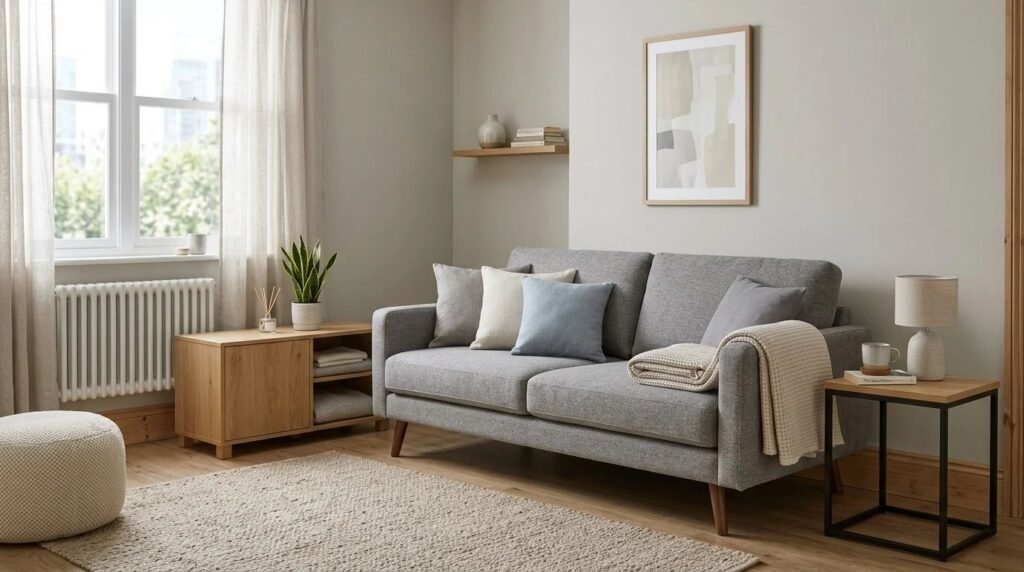
A sofa bed lets your living room double as a guest room. Modern versions look like regular sofas and fold out in seconds. When shopping, test the mattress and mechanism in person if you can, because a bad fold-out bed will disappoint guests and frustrate you.
Coffee Table and Side Table Ideas
Tables tie a seating area together and give you places for drinks, books, and remotes.
5. Nesting Tables

Nesting tables are two or three tables that slide into one another. Keep them stacked for a small footprint, then pull them apart when you have guests. They are ideal for small living rooms and can replace a bulky coffee table.
6. Lift-Top Coffee Table
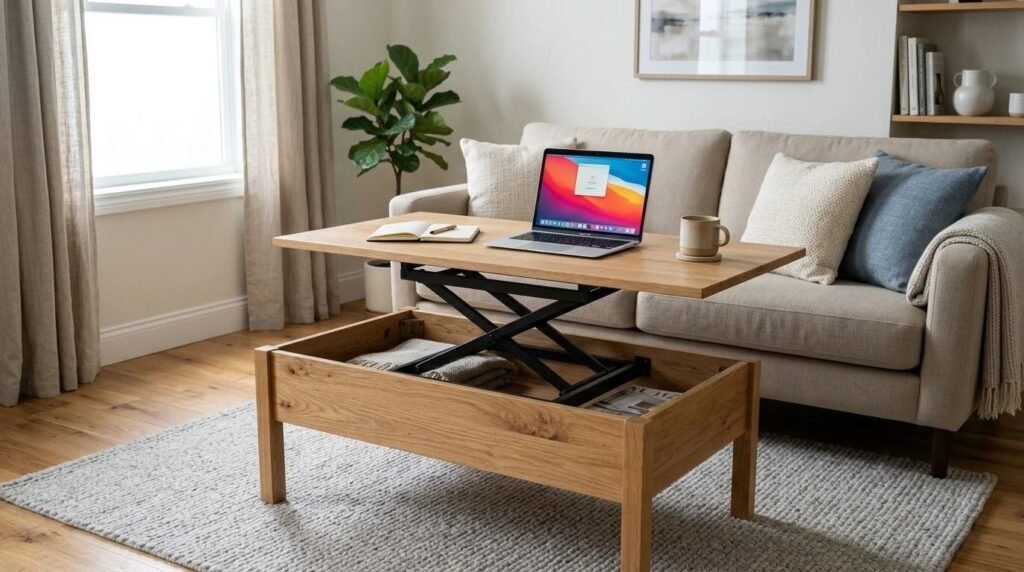
A lift-top table rises to a comfortable working or dining height and often hides storage inside. It suits anyone who eats or works on the sofa and wants a tidier room afterward.
7. Round Coffee Table for Tight Spaces

Round tables have no sharp corners to bump into, which makes walking around them easier in narrow rooms. A round table also softens a room full of straight lines. As a general guide, keep the table about two-thirds the length of your sofa and leave 14 to 18 inches (35 to 45 cm) between the sofa and the table. Aim for a table height equal to or slightly lower than the sofa seat.
Furniture for Small Space
Small living rooms need furniture that works harder. Choose pieces that save floor space, store things, or both.
8. Storage Ottomans
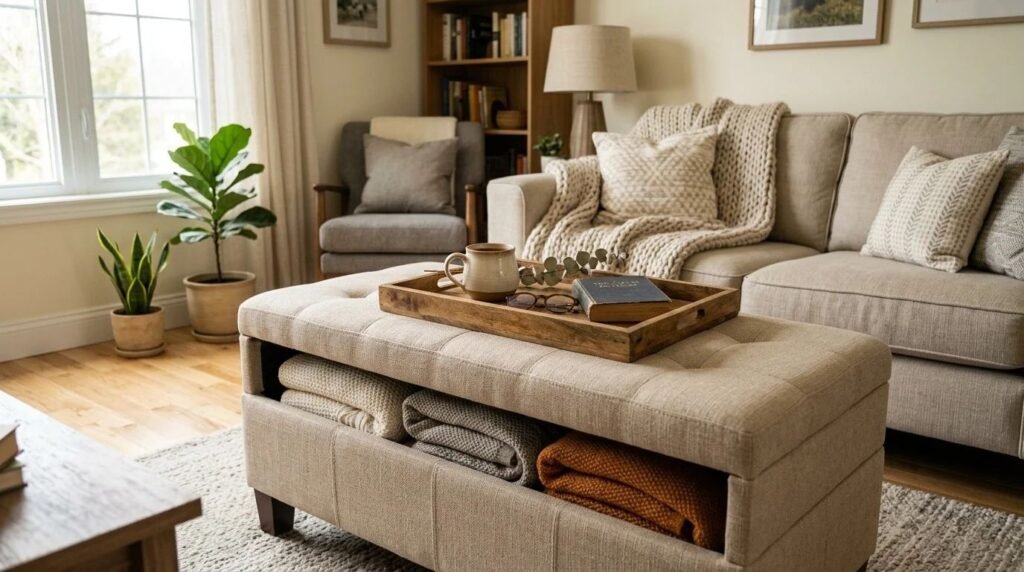
An ottoman can serve as a footrest, extra seat, and coffee table with a tray on top, with hidden storage for blankets, remotes, or board games. Choose one with a firm lid so it can safely hold a tray or a person.
9. Wall-Mounted Shelves and Slim Console Tables
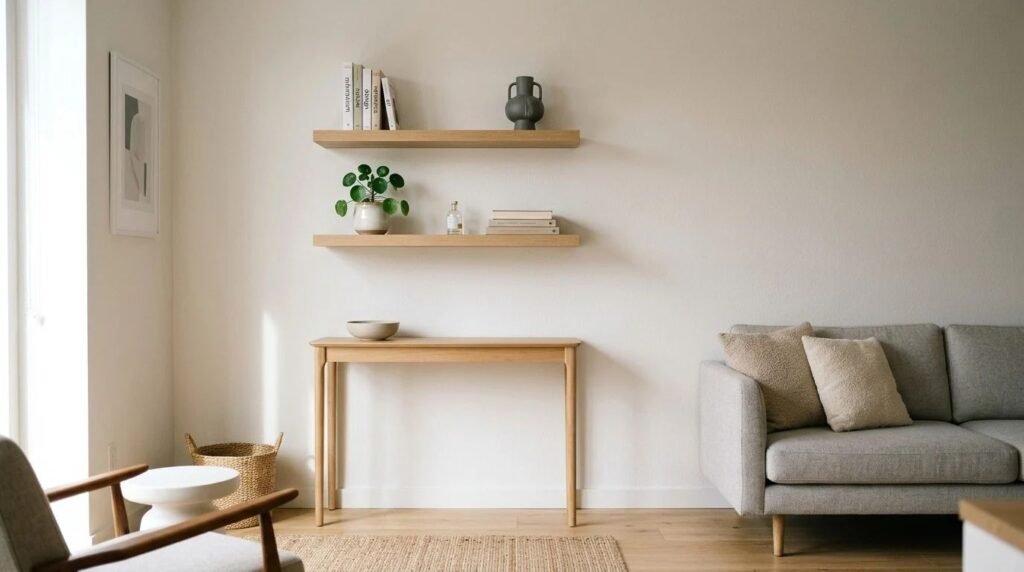
Moving storage up and onto the wall frees floor space. Floating shelves about 8 to 12 inches (20 to 30 cm) deep hold books and decor without crowding the room. A slim console table behind the sofa or along an entry wall adds a surface for lamps and keys.
10. Furniture on Legs
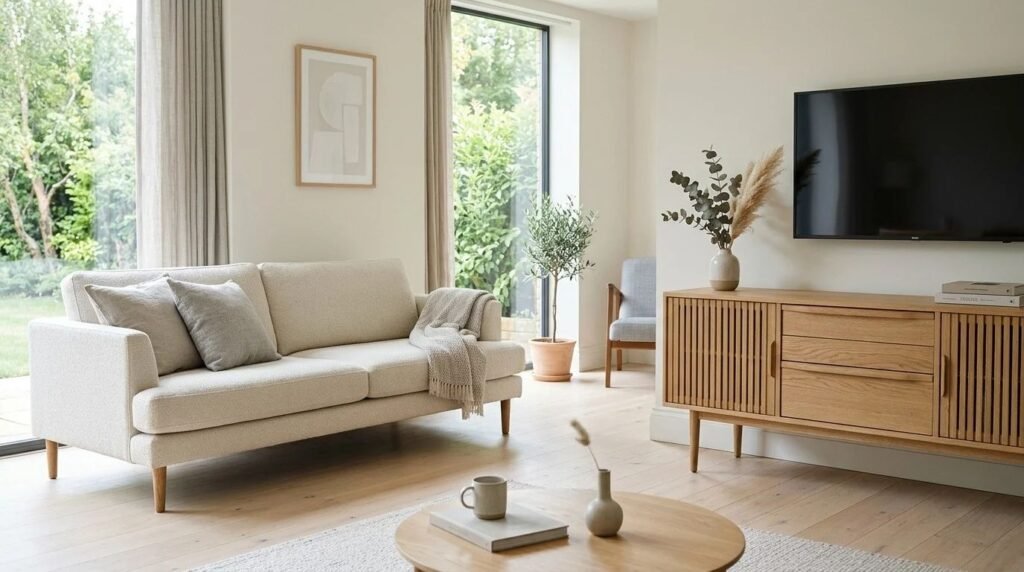
Sofas, cabinets, and TV units raised on legs let you see the floor underneath. That visible floor makes a room look larger and lighter. Legs also make it easier to vacuum underneath.
11. Right-Scale Pieces

Oversized furniture is the most common small-room mistake. Measure your room, mark the footprint of each piece on the floor with painter’s tape, and check that you still have clear walking paths. A smaller sofa with a few well-chosen extras always looks better than a large sofa that blocks the room.
Smart Furniture for Home
“Smart furniture” here means space-saving, multifunctional furniture that adapts to how you live. Some modern pieces also include built-in charging ports or USB outlets.
12. Fold-Down or Wall-Mounted Desk

If you work from home but have no spare room, a wall-mounted desk folds flat when you are done. The living room goes back to being a living room at the end of the day.
13. Furniture With Built-In Storage
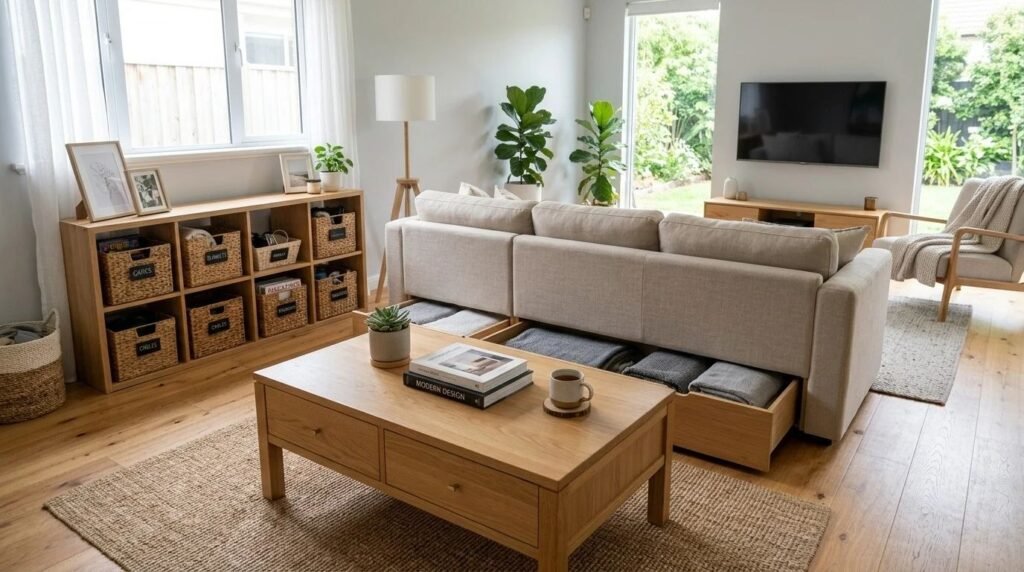
Storage beds, benches, sofas with storage under the seat, and coffee tables with drawers all hide clutter in plain sight. They are especially useful in rooms without a closet or spare cabinet.
14. Modular and Expandable Furniture
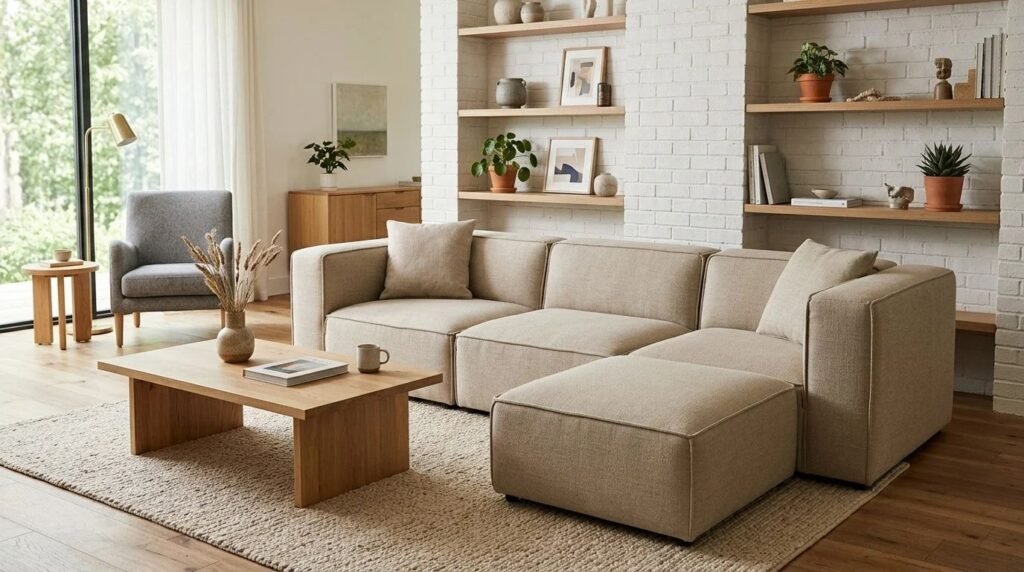
Modular sofas and shelving units can be rearranged, added to, or separated when your space changes. This is useful if you rent, move often, or expect your needs to change. Extendable tables and stackable stools also fall in this category.
TV Unit and Storage Ideas
The TV wall is usually the focal point, so it deserves some thought.
15. Floating TV Unit

A wall-mounted TV unit keeps the floor clear, which makes the room feel more spacious and simplifies cleaning. For comfortable viewing, mount the TV so the centre of the screen sits at about eye level when you are seated, roughly 40 to 42 inches (100 to 107 cm) from the floor.
16. Media Console With Closed Storage

A low console with doors or drawers hides cables, gaming consoles, and remotes. Choose one with ventilation cutouts at the back for electronics, and leave a little space behind it for cables.
17. Bookcase or Open Shelving Unit

A tall bookcase or open shelving unit next to or around the TV adds display and storage space. Mix books, baskets, and decor, and leave some shelves partly empty so the wall does not feel heavy.
Extra Pieces That Add Flexibility
These smaller pieces help a living room adapt to guests, work, and changing layouts.
18. Console Table Behind the Sofa
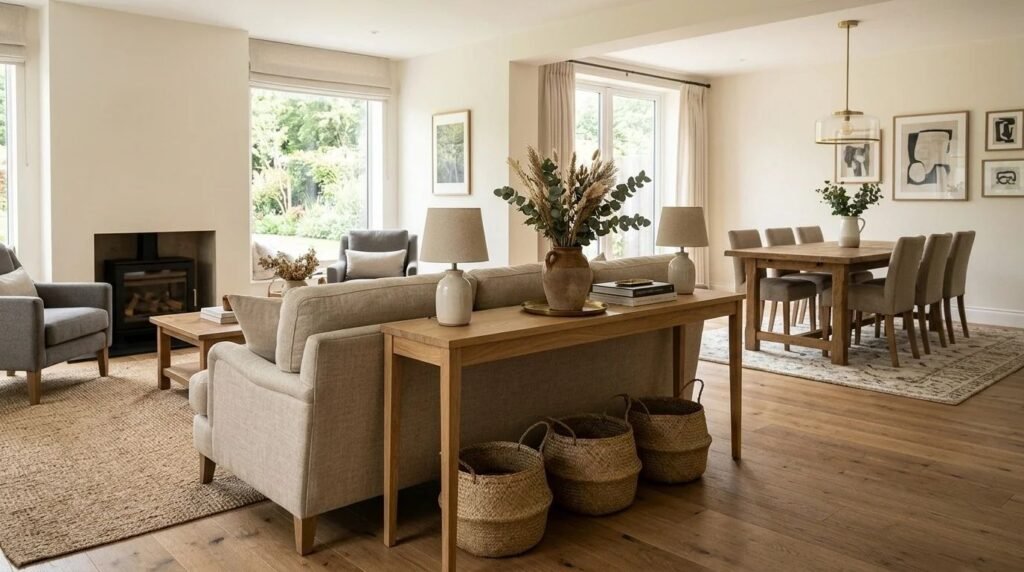
In open-plan homes, a narrow console behind the sofa creates a soft boundary between the living area and the dining area or entryway. It also gives you a surface for lamps and baskets.
19. Poufs and Floor Seating
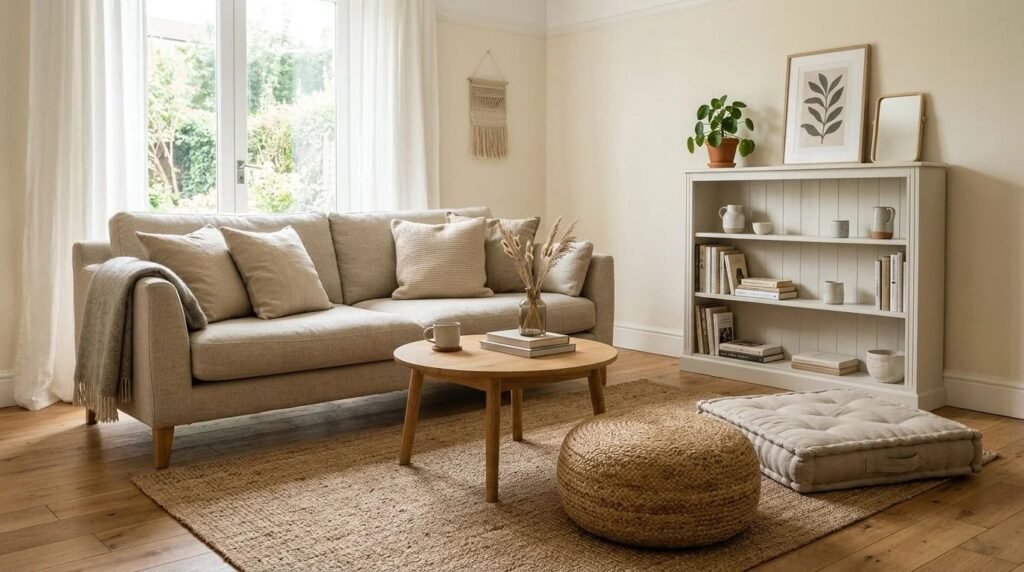
Poufs, floor cushions, and stools tuck away easily and give you extra seats when guests arrive. They also work as footrests or small tables with a tray on top.
20. Corner Furniture
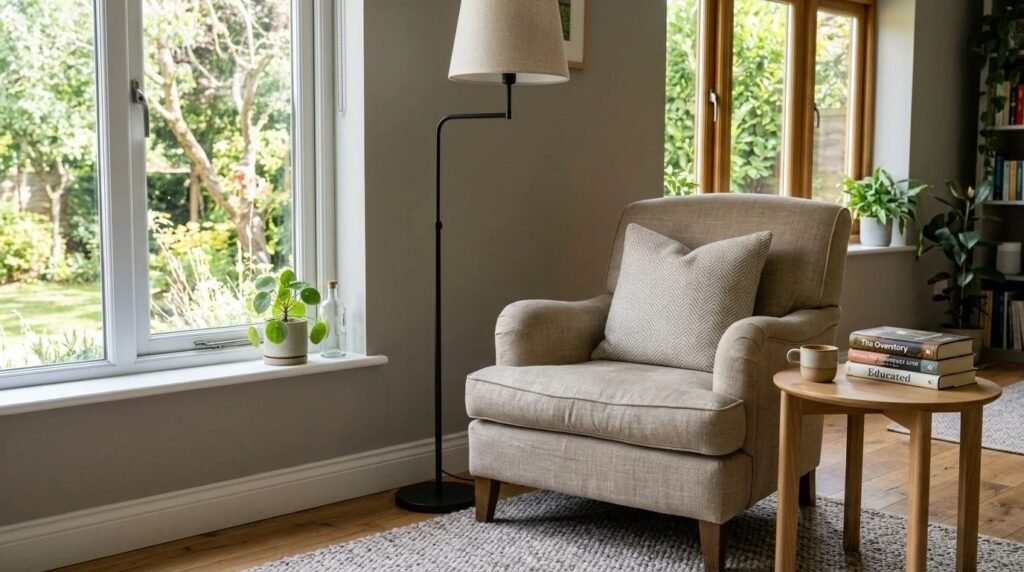
Corners are often wasted. A corner shelf, a corner bookcase, or a corner reading chair with a lamp puts that space to work without crowding the walkways.
21. Bar Cart or Rolling Trolley
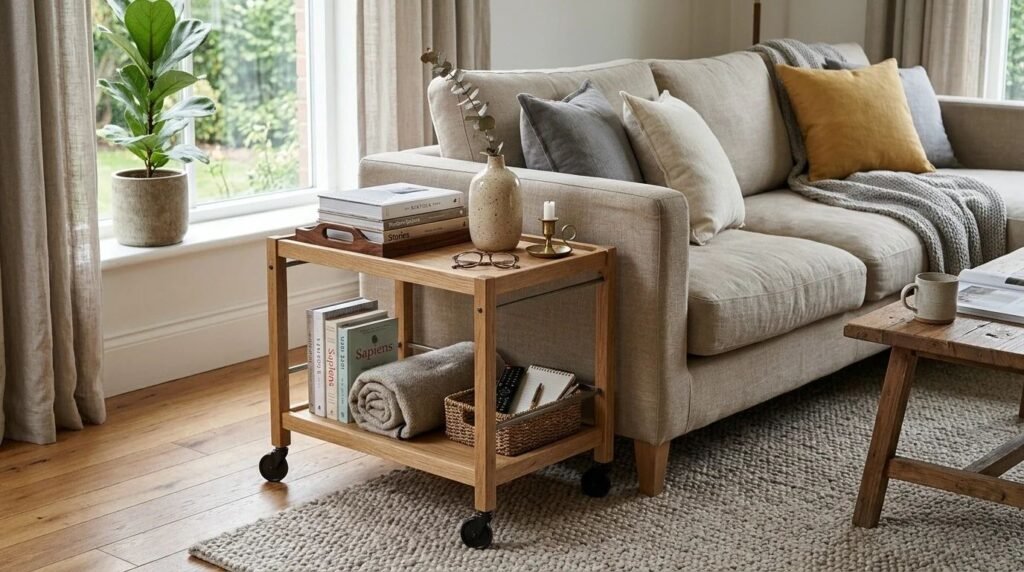
A small cart works as a movable side table, a drinks station, or extra storage. Roll it next to the sofa when you need it and park it in a corner when you do not.
Living Room Furniture Layouts by Room Size
The same furniture can look very different depending on how you arrange it. Use these layouts as starting points.
Small Living Room (around 10 x 12 ft / 3 x 3.6 m)
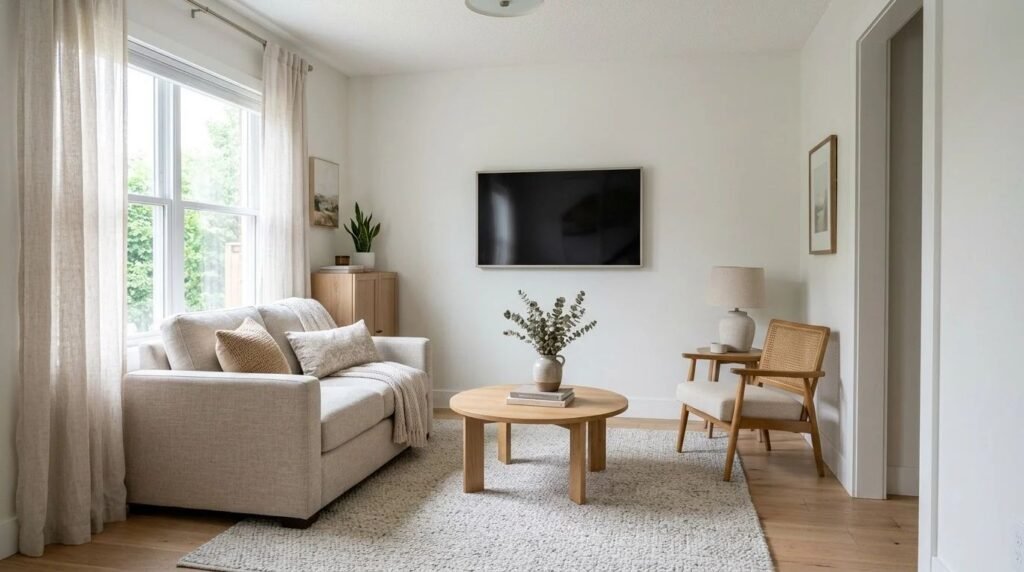
- Choose a loveseat or compact sofa against the longest wall.
- Add one accent chair or a pouf instead of a second sofa.
- Use nesting tables or a small round coffee table.
- Mount the TV on the wall or use a slim floating unit.
- Keep at least 30 inches (76 cm) clear for the main walkway.
Medium Living Room (around 12 x 15 ft / 3.6 x 4.6 m)

- Use a standard sofa with two accent chairs facing it to form a conversation area.
- Add a rectangular or oval coffee table with a side table at one end.
- Place a media console or floating unit on the opposite wall.
- Use a rug large enough that at least the front legs of every seat rest on it.
Large or Open-Plan Living Room (15 x 20 ft / 4.6 x 6 m or more)
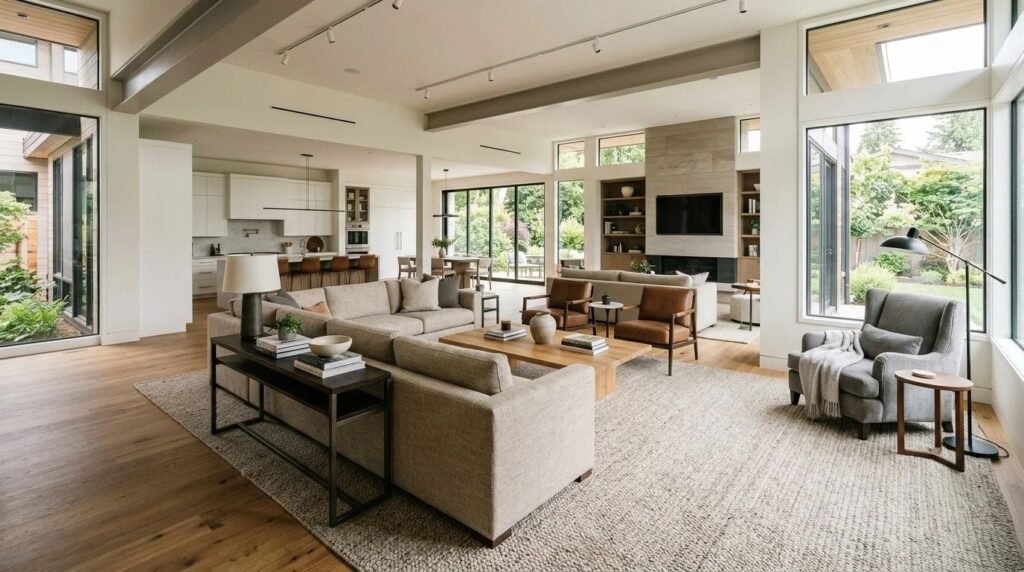
- Use a sectional to define the seating zone and show where the living area begins.
- Place a console table behind the sofa to separate it from the rest of the space.
- Create a second small zone, such as a reading corner or a desk, so the room does not feel empty.
- Choose a large rug to anchor the main seating group.
Furniture Ideas by Style
Style affects the shape, colour, and material of the furniture you choose.
22. Modern

Modern living rooms use clean lines, simple shapes, and a restrained colour palette. Look for sofas with slim legs, glass or metal tables, and minimal decoration. Keep the room uncluttered, and let one or two pieces stand out.
23. Scandinavian
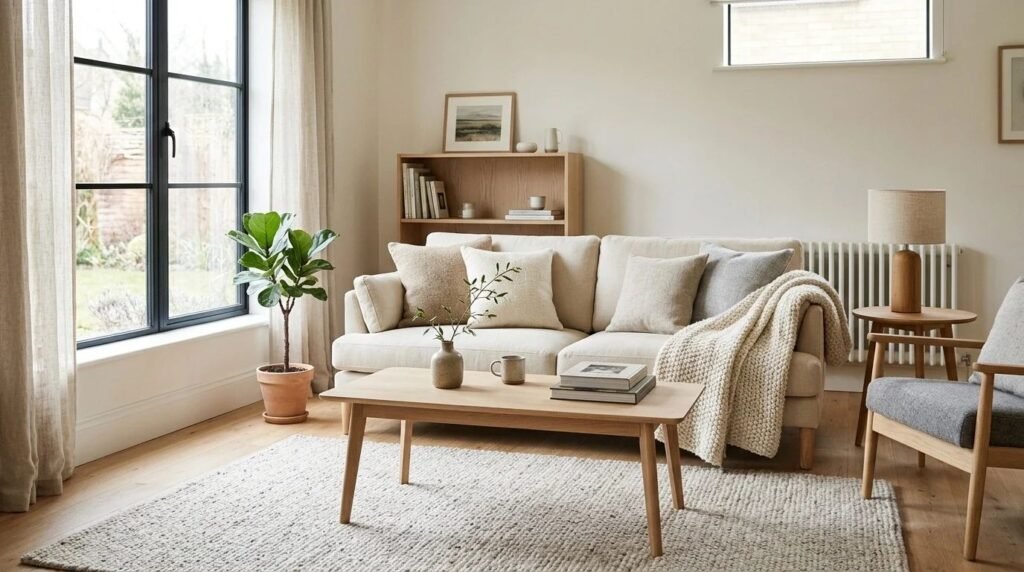
Scandinavian style centres on light wood, soft neutrals, and function. Pick pale wood tables and shelves, a light-coloured sofa, and wool or linen textiles. It suits small rooms well because it keeps things light and bright.
24. Traditional

Traditional rooms favour rolled arms, carved wood, and richer colours. Use a classic sofa with a wooden coffee table and a matching pair of side tables. Balanced, symmetrical layouts work best here.
25. Boho

Boho style mixes textures and patterns in a relaxed way. Combine rattan or cane chairs, a low wooden coffee table, woven baskets, and layered rugs. Keep the base furniture simple so the textures stand out without overwhelming the room.
Wall Decor to Pair With Your Furniture

Furniture only gets you part of the way there. Walls finish the look, and a few quick rules help:
- Hang art or a mirror above the sofa so the bottom edge sits about 6 to 10 inches (15 to 25 cm) above the back.
- Make the artwork about two-thirds the width of the furniture beneath it.
- Use a large mirror opposite a window to bounce light around the room.
- Repeat one colour from the furniture in the wall art so everything feels connected.
We will cover wall styling in more detail in a separate guide to living room wall decor ideas.
Quick Comparison: Which Furniture Fits Your Room?
| Furniture type | Best for | Room size | Budget level |
| Sectional sofa | Large families, open-plan rooms | Medium to large | Medium to high |
| Loveseat | Couples, compact homes | Small | Low to medium |
| Nesting tables | Flexible surfaces | Small to medium | Low |
| Storage ottoman | Seating plus hidden storage | Any | Low |
| Lift-top coffee table | Work and dining at the sofa | Small to medium | Medium |
| Floating TV unit | Clear floors, modern look | Any | Medium |
| Sofa bed | Guest-ready living rooms | Small to medium | Medium to high |
| Wall-mounted desk | Work-from-home setups | Small | Low to medium |
Frequently Asked Questions
What furniture do I need in a living room?
At minimum, you need a sofa, a coffee table, a TV unit or media storage, an accent chair, and a side table with a lamp. Add a rug and storage depending on your space and how you use the room.
How do I choose furniture for a small living room?
Choose smaller-scale pieces with slim arms and raised legs, add storage that doubles as seating, and keep walkways at least 30 inches (76 cm) wide. Measure the room and mark furniture footprints with tape before you buy.
How much space should be between living room furniture pieces?
Leave 14 to 18 inches (35 to 45 cm) between the sofa and coffee table, and 30 to 36 inches (76 to 91 cm) for main walkways. Seating that faces each other should be close enough for easy conversation, usually no more than 8 to 10 feet (2.4 to 3 m) apart.
What is the best sofa for a small living room?
A compact sofa or loveseat with slim arms, raised legs, and a shallower depth usually works best. Light fabric colours also help the room feel more open.
How do I arrange furniture in a living room?
Start with the largest piece, usually the sofa, and place it against the longest wall or facing the focal point. Then add chairs to create a conversation area, place the coffee table within easy reach, and keep clear walkways around the group.
Final Thoughts
Good living room furniture comes down to scale, function, and flow. Choose pieces that fit your room, serve more than one purpose where possible, and leave enough open space to move comfortably. Start with the sofa, measure carefully, and add one piece at a time until the room feels right.