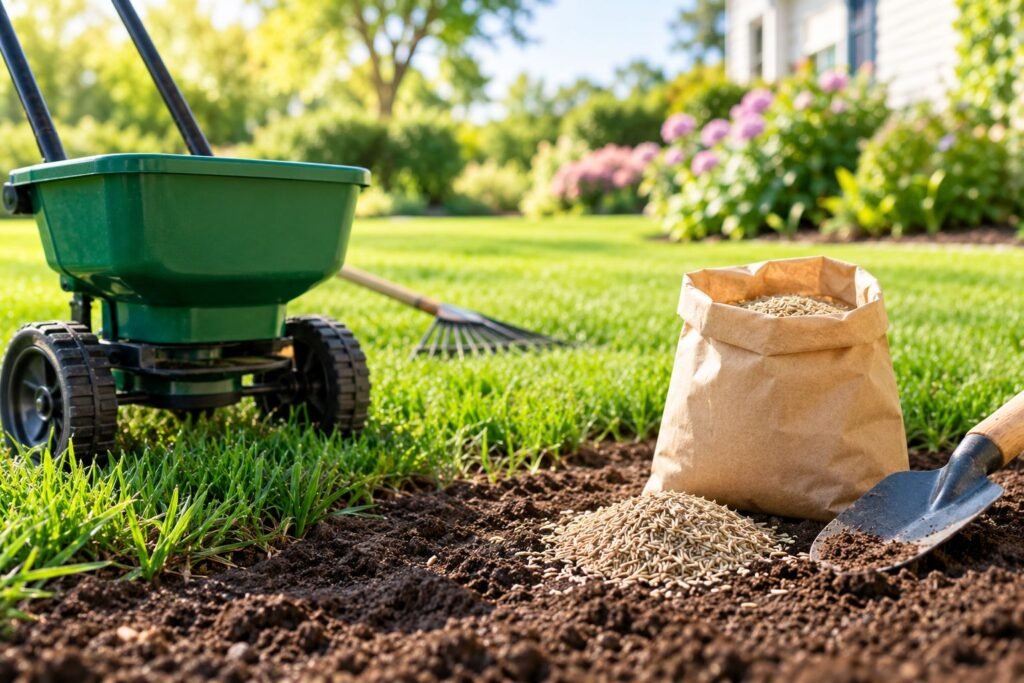
Spring feels like the perfect time to fix a patchy lawn. The weather warms up, the days get longer, and you want green grass as soon as possible. But if you plant grass seed too early, it can sit in cold soil and rot. Plant it too late, and young grass struggles through summer heat.
So, when should you plant grass seed in spring? The short answer is this: plant when your soil, not the air, is warm enough for your type of grass to sprout. For most lawns, that means mid-spring, after the last frost has passed.
In this guide, you’ll learn how to read the right signs, which grass types to plant when, how to sow seed step by step, and which beginner mistakes to avoid.
Why Timing Matters When Planting Grass Seed
Grass seed is alive. It needs three things to sprout: moisture, oxygen, and warmth. In spring, moisture is usually easy because of rain. Warmth is the tricky part.
If the ground is still cold, seeds stay dormant. While they wait, birds eat them, heavy rain washes them away, and fungus can attack them. On the other hand, if you wait too long, the new grass won’t have enough time to grow deep roots before hot, dry summer weather arrives.
Good timing gives your seed a fast start and a few strong weeks of growth before summer stress begins.
Soil Temperature: The Most Important Signal

Many beginners look at the calendar or the air temperature. But a few warm afternoons don’t mean the soil has warmed up. Soil heats up much more slowly than air, so it’s the better guide. For more guidance on choosing the right planting window, read this guide on when to plant grass seed for a lush lawn.
Ideal Soil Temperatures for Grass Seed
- Cool-season grasses: soil around 50–65°F (10–18°C)
- Warm-season grasses: soil around 65–70°F (18–21°C) or warmer
How to Check Soil Temperature
You don’t need expensive tools. A simple soil thermometer costs very little. Push it about 2 inches (5 cm) into the ground in the morning, when soil is coolest. Check it for several days in a row. When the reading stays in the right range, it’s time to plant.
Example: Say your afternoons reach 70°F, but your morning soil reading is only 45°F. That means you should wait another week or two, even though it feels warm outside.
Cool-Season vs Warm-Season Grass: Which One Do You Have?

The right planting time depends a lot on your grass type. Grasses fall into two main groups.
Cool-Season Grasses
These grow best in cooler weather and are common in northern areas. Examples include:
- Kentucky bluegrass
- Tall fescue
- Perennial ryegrass
- Fine fescue
When to plant in spring: early to mid-spring, once soil reaches about 50°F (10°C). Spring is a decent time for these grasses, but early fall is usually even better.
Warm-Season Grasses
These love heat and are common in southern and tropical areas. Examples include:
- Bermuda grass
- Zoysia grass
- Centipede grass
- Bahia grass
When to plant in spring: late spring to early summer, when soil reaches 65°F (18°C) or more and nights stay warm. For these grasses, late spring is often the best time of the whole year.
Signs It’s the Right Time to Plant in Your Area
Spring arrives at different times in different places. A lawn in a cold northern region may be ready weeks after one in a mild area. Instead of picking a fixed date, watch for these signs:
- The last frost has passed. Look up your area’s average last frost date and plant after it.
- Soil temperature is steady. Your morning readings stay in the right range for about a week.
- The ground isn’t soggy. If soil sticks to your shoes in heavy clumps, it’s too wet to work.
- Nature gives hints. Many gardeners plant cool-season seed when forsythia bushes bloom or when lilacs start to leaf out.
If you’re unsure, your local garden center or agricultural extension office can tell you the usual seeding window for your region.
How to Plant Grass Seed in Spring: Step by Step
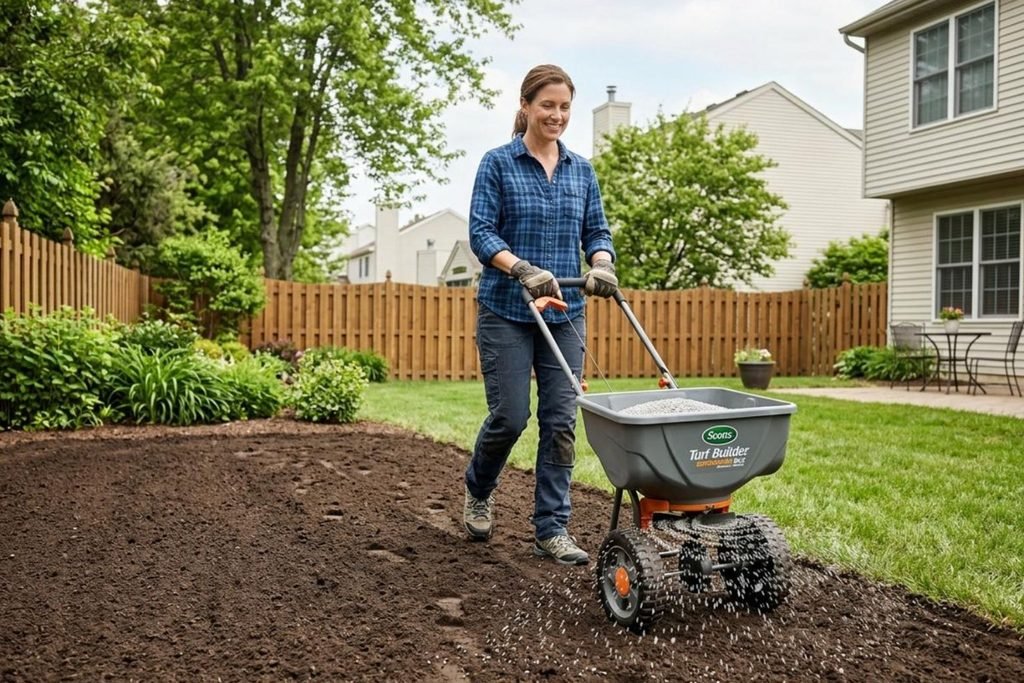
Once the timing is right, follow these simple steps for the best results.
1. Clear and Loosen the Soil
Remove weeds, rocks, and dead grass. Then loosen the top 2–3 inches (5–8 cm) of soil with a rake. Seeds need loose soil so their roots can push down easily.
2. Improve the Soil
Spread a thin layer of compost or topsoil if your soil is hard or poor. A starter fertilizer helps young roots grow, too.
3. Spread the Seed Evenly
Use a handheld or push spreader. Follow the seeding rate on the bag. A helpful trick is to spread half the seed walking in one direction, then the other half walking crosswise. This prevents bare stripes.
4. Rake Lightly and Press Down
Gently rake so seeds are just barely covered, about 1/4 inch (6 mm) deep. Then press the soil with a roller or by walking over it. Good seed-to-soil contact helps germination.
5. Water Gently and Often
Keep the top layer of soil moist, but not flooded. This usually means light watering once or twice a day. Once the grass reaches about 2 inches tall, water less often but more deeply.
Example: If you seed on a Saturday, plan to water lightly every morning and evening for the next two to three weeks, unless it rains.
Common Spring Seeding Mistakes to Avoid
Even with good timing, a few small errors can ruin your results. Watch out for these:
- Planting too early. Cold soil slows germination and leaves seed exposed for weeks.
- Using weed preventer at the wrong time. Most pre-emergent weed killers stop grass seed from sprouting too. Check the label, and don’t use one where you plan to seed unless it says it’s safe for new seeding.
- Burying seed too deep. Grass seed needs light and should sit just under the surface.
- Letting the soil dry out. Even one hot, dry day can kill sprouting seeds.
- Mowing too soon. Wait until the new grass is about 3–4 inches tall before the first cut, and use a sharp blade.
- Using cheap seed mixes. Low-cost bags often contain weed seeds and filler. Look for a quality mix suited to your climate.
Spring vs Fall: Which Is Better for Grass Seed?

This is one of the most common questions beginners ask. The honest answer depends on your grass type.
- For cool-season grass, fall usually wins. The soil is still warm from summer, the air is cooler, and there are fewer weeds. Spring still works well if your lawn needs repair now.
- For warm-season grass, spring wins. These grasses need the long, hot months ahead to grow strong before winter.
If your lawn has bare patches in spring, don’t wait for fall just because it’s “better.” With good timing and care, spring seeding can give you a healthy lawn by summer.
Conclusion
Knowing when to plant grass seed in spring comes down to one simple rule: follow the soil, not the calendar. Cool-season grasses are ready to plant in early to mid-spring, once the soil reaches about 50°F (10°C). Warm-season grasses do best in late spring, when the soil hits 65°F (18°C) or more.
Prepare your soil well, spread the seed evenly, and keep it moist while it sprouts. Avoid common mistakes like planting too early or using weed preventer at the wrong time. With a little patience, you’ll see fresh green blades in a few weeks and enjoy a fuller lawn all season long.
Frequently Asked Questions
What month is best to plant grass seed in spring?
It depends on where you live. In many cooler regions, April to May works well for cool-season grass. Warm-season grass is usually planted from late April to June, once soil is warm.
Can I plant grass seed if there’s still a chance of frost?
A light frost usually won’t harm seeds that haven’t sprouted yet. But it can damage young seedlings. It’s safer to wait until after your area’s last frost date.
How long does grass seed take to grow in spring?
Most grass seed sprouts in 5 to 30 days. Ryegrass is fast, often within a week. Kentucky bluegrass and some warm-season grasses can take three weeks or more.
Can I just throw grass seed on my existing lawn?
You can, but results will be poor. Mow short, rake to loosen the soil, then seed. This is called overseeding, and it works best when seed touches bare soil.
Should I fertilize when planting grass seed in spring?
Yes, a starter fertilizer helps new roots develop. Avoid regular weed-and-feed products, because they can stop seed from germinating.