Choosing the right cabinet colour can completely change the look and feel of your kitchen. The right shade can make a small kitchen feel brighter, create a warm and welcoming atmosphere, or give a modern space a stylish appearance. If you are planning a kitchen update in 2026, exploring the latest colour ideas can help you find a design that suits your home and personal taste.
The kitchen cabinet colours 2026 trend focuses on warm neutrals, natural wood finishes, earthy greens, and deeper shades that add character. White cabinets remain a classic choice, but many homeowners are also exploring colours that make their kitchens feel more personal and inviting.
Whether you prefer a clean, modern look or a cosy, traditional kitchen, there are plenty of options to consider. In this guide, we will explore popular kitchen cabinet colours for 2026, discuss their benefits, and share practical tips for choosing the right shade for your home.
Why Kitchen Cabinet Colour Trends Matter in 2026
Kitchen cabinets cover a large part of the room, so their colour has a major influence on the overall design. A suitable shade can complement your countertops, flooring, walls, and appliances.
In 2026, many kitchen designs focus on combining natural materials, comfortable colours, and practical features. Instead of choosing a colour only because it is fashionable, homeowners can look for shades that work with their existing interiors and remain attractive over time.
Some popular kitchen cabinet colour trends to explore include:
- Warm whites, creams, and beige shades
- Natural wood finishes
- Sage green and olive green cabinets
- Navy blue and other deep blue shades
- Charcoal and dark-coloured cabinets
- Two-tone cabinet combinations
These options offer plenty of flexibility, whether you want a simple, timeless kitchen or a more colourful design.
1. Warm White Kitchen Cabinets
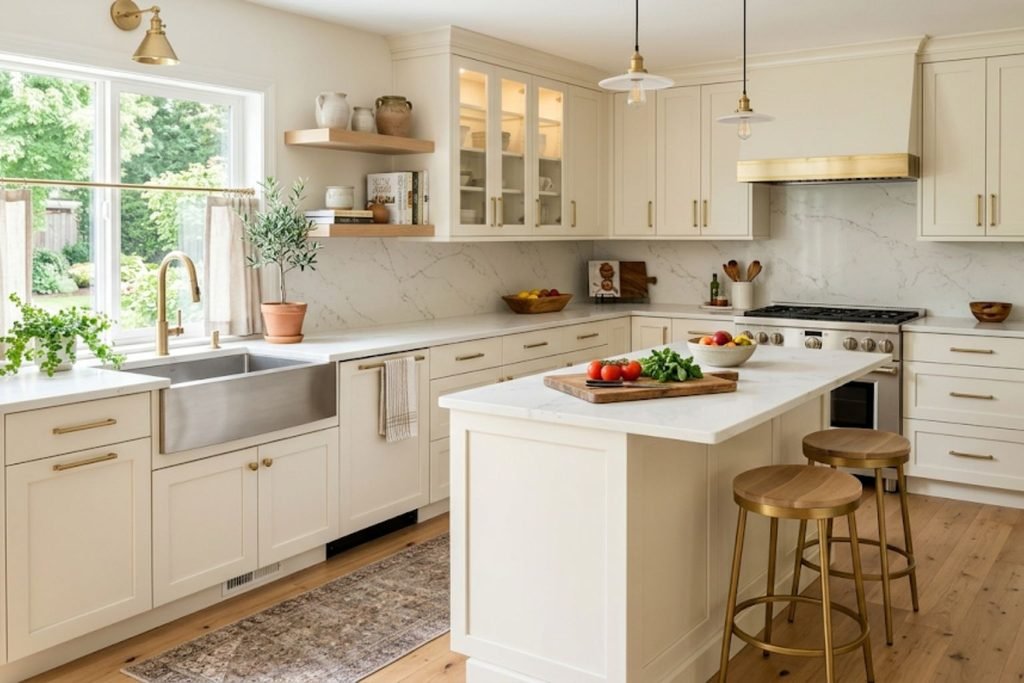
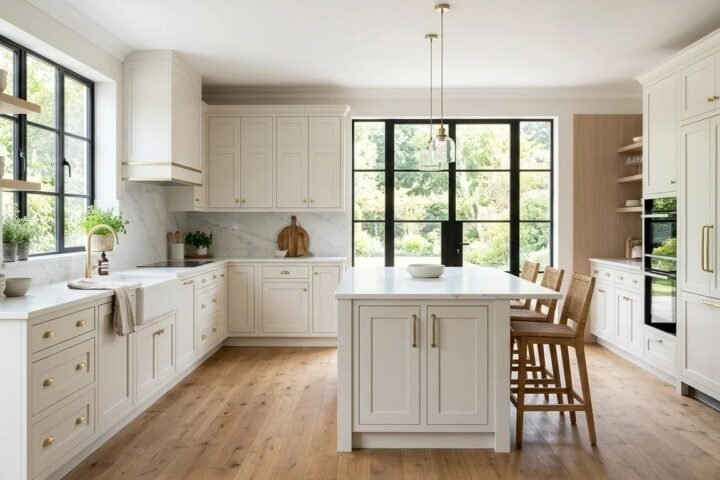
White cabinets have been a popular choice for years because they make kitchens feel bright, clean, and open. In 2026, warmer versions of white, such as creamy white and ivory, are worth considering if you want a softer appearance.
Unlike stark white, warm white has subtle yellow or beige undertones. These shades can make a kitchen feel more welcoming without losing the fresh look associated with white cabinetry.
How to Style Warm White Cabinets
Warm white cabinets work well with:
- Light wood or natural oak flooring
- Beige, cream, or marble-look countertops
- Brushed brass or matte black handles
- Neutral backsplashes
- Soft wall colours
For example, a kitchen with creamy white cabinets, oak shelves, and a light stone countertop can look modern without feeling too cold.
Warm white is also a practical choice if you want a cabinet colour that can adapt to changing decor styles. You can update the kitchen with new handles, lighting, or accessories without needing to replace the cabinets.
2. Natural Wood Kitchen Cabinets
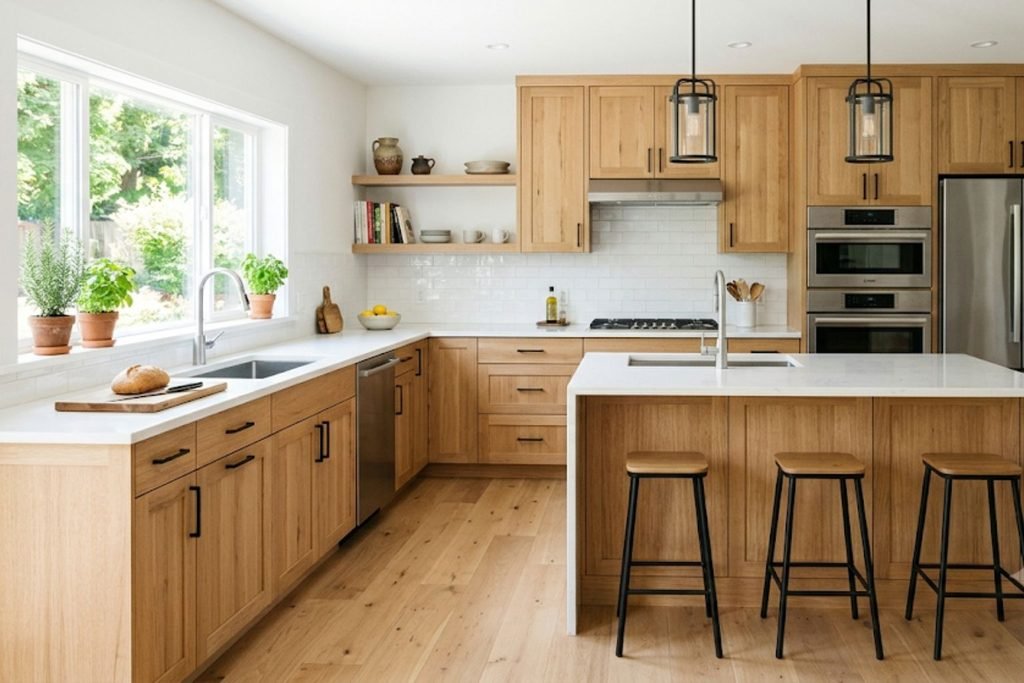
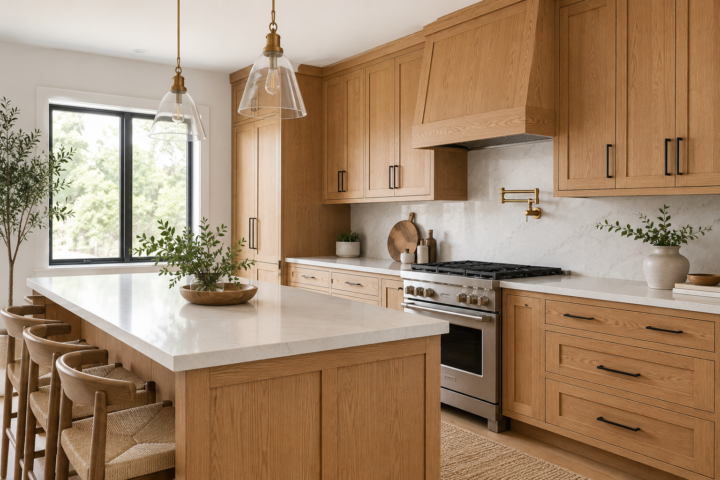
Natural wood is an attractive option for homeowners who want a warm and organic kitchen design. Wood cabinets introduce natural grain and texture, helping the space feel more comfortable and connected to nature.
Light oak, medium brown wood, and dark walnut are some finishes worth considering. Each creates a different look depending on the lighting and other materials in the kitchen.
Popular Natural Wood Tones
Light oak: Light oak creates an open, relaxed look and pairs well with white walls, simple hardware, and light countertops.
Medium wood: Medium brown finishes add warmth and work well with cream, beige, and earthy green shades.
Dark walnut: Dark walnut creates a rich appearance that suits kitchens with enough lighting and balanced finishes.
Natural wood cabinets are especially useful if you want to introduce texture without relying on a bold paint colour. You can also combine wood cabinets with painted upper or lower cabinets for a more customised design.
3. Sage Green Kitchen Cabinets
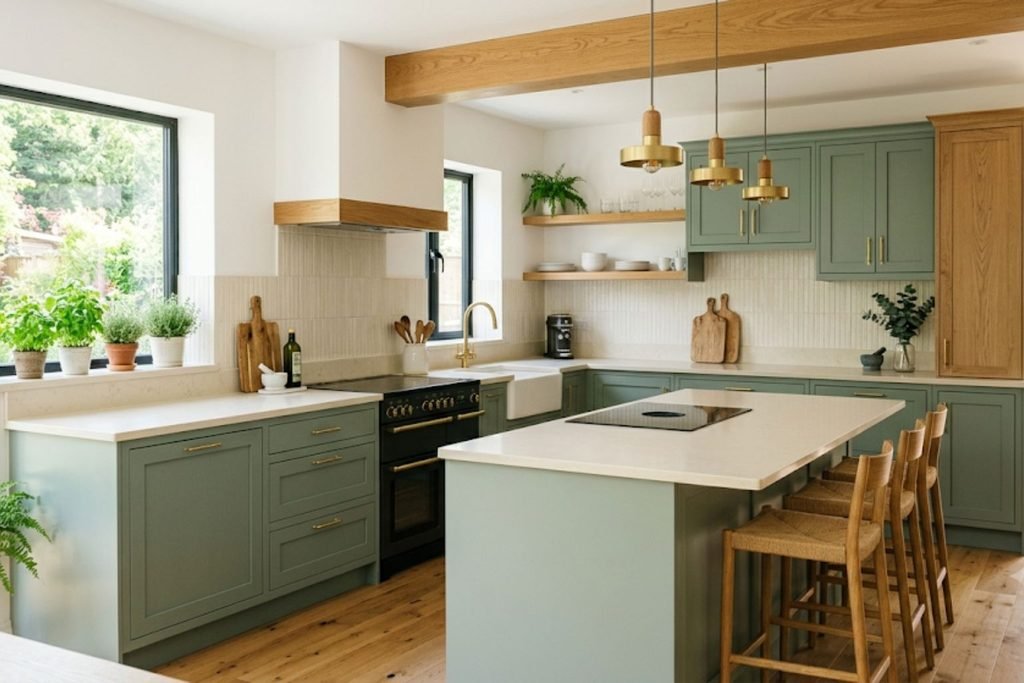
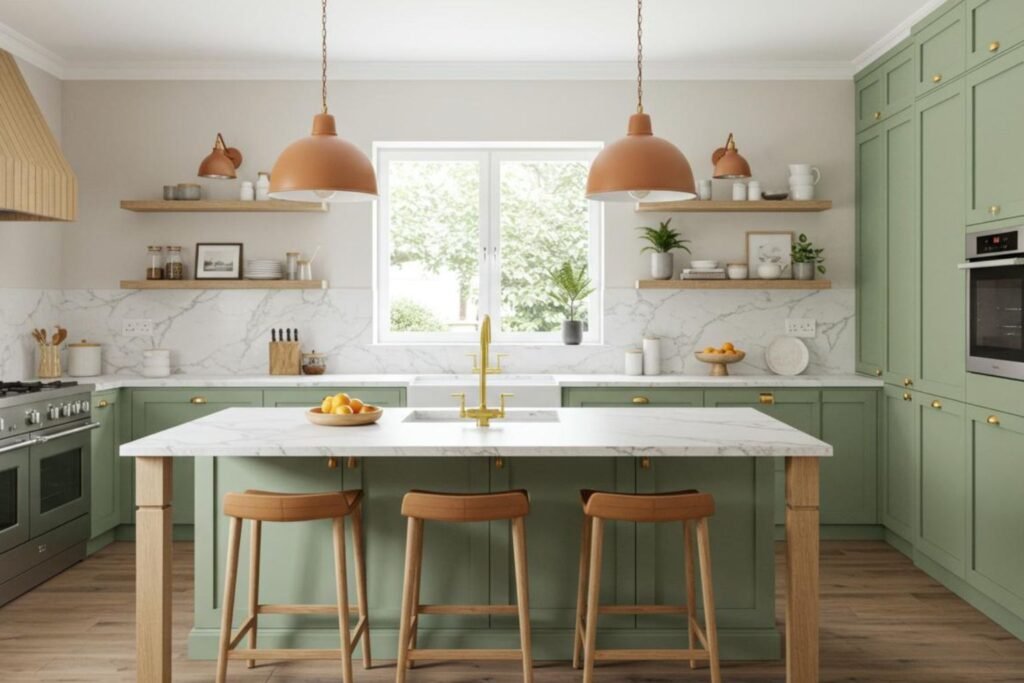
Sage green is a muted shade with soft grey undertones. It offers a way to introduce colour without making the kitchen look too bold.
This shade works well in both modern and traditional kitchens. It adds personality while maintaining a calm, balanced appearance.
Best Colour Combinations for Sage Green
Consider pairing sage green cabinets with:
- White or cream countertops
- Natural wood shelves
- Warm brass or brushed nickel hardware
- Beige tiles
- Light-coloured flooring
For example, sage green lower cabinets with cream upper cabinets can create a balanced look in a small or medium-sized kitchen.
If you prefer a subtle design, choose a lighter sage shade. For a stronger visual effect, consider a deeper olive green.
Sage green is also a good option if you want to move away from all-white cabinets while keeping the overall kitchen palette soft and neutral.
4. Deep Green Kitchen Cabinets
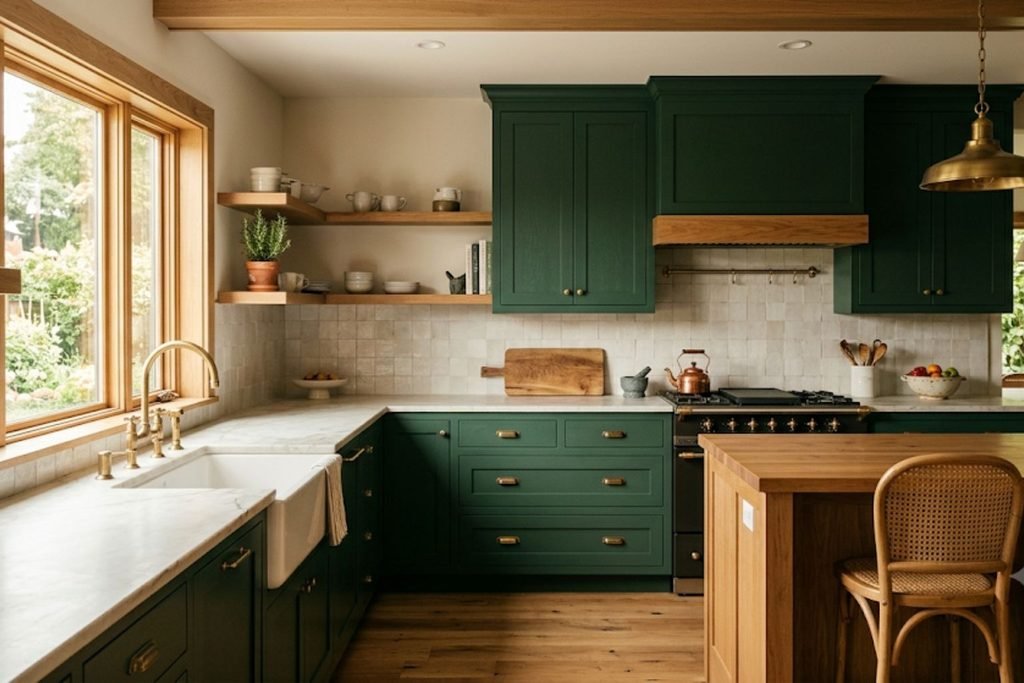
If you want a kitchen with more depth, forest green and deep olive are worth exploring. These shades create a rich, grounded appearance and can work particularly well with natural materials.
Deep green cabinets are often paired with wood, stone, brass, and warm neutral colours. This combination creates contrast without requiring several competing colours.
Tips for Using Deep Green
Deep green can look beautiful on all cabinets, but it may feel heavy in a small kitchen with limited natural light. To balance the colour:
- Use light countertops or a pale backsplash.
- Add under-cabinet lighting to brighten work areas.
- Choose warm wood accents to soften the overall look.
- Consider using deep green only on the island or lower cabinets.
For example, a deep green island surrounded by cream cabinets can become a focal point without making the entire kitchen feel dark.
5. Blue Kitchen Cabinets

Blue is another option for homeowners looking for modern kitchen cabinet colours. Depending on the shade, blue can feel fresh, elegant, or dramatic.
Soft blue works well in bright kitchens, while navy blue creates stronger contrast and a sophisticated appearance.
How to Use Blue Cabinets
Here are a few combinations to consider:
- Navy blue and white: A classic combination that creates a clean, balanced look.
- Blue and natural oak: Wood tones soften blue and add warmth.
- Blue and light grey: A subtle combination for contemporary kitchens.
- Blue island with neutral cabinets: A simple way to introduce colour without covering the entire kitchen in blue.
If you are unsure about using blue on every cabinet, start with the kitchen island or lower cabinets.
Blue cabinets can also work well with stainless steel appliances, light countertops, and simple hardware. These combinations help the colour stand out without overwhelming the space.
6. Beige and Warm Neutral Kitchen Cabinets
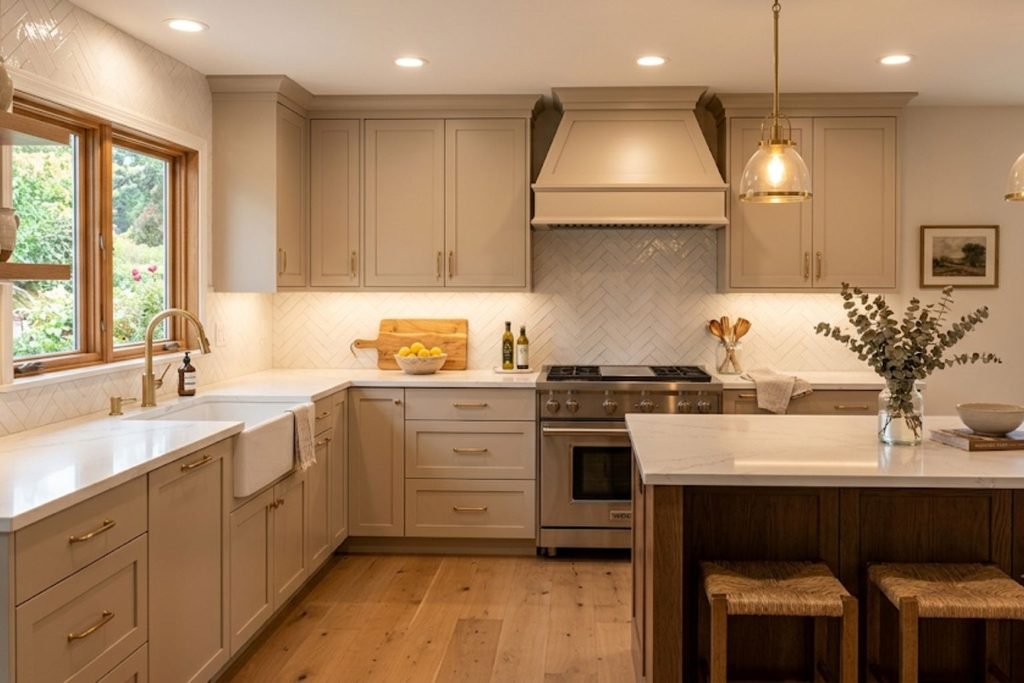
Beige, taupe, and other warm neutral shades are excellent alternatives to traditional white cabinets. They create a soft, natural look and work with many different kitchen styles.
These colours are especially useful if you want a neutral kitchen that feels warmer than a bright white or cool grey design.
Why Choose Warm Neutral Cabinets?
Warm neutral cabinets offer several advantages:
- They complement wood, stone, and many countertop materials.
- They work well with traditional and modern interiors.
- They create a comfortable appearance without strong colour contrasts.
- They are relatively easy to coordinate with future decor changes.
For example, beige cabinets paired with a white quartz countertop, warm wood flooring, and simple metal handles can create a timeless design.
When choosing a neutral shade, pay attention to its undertones. Some beiges lean yellow, while others have pink, grey, or brown undertones. Testing a sample next to your countertop and flooring can help you avoid mismatched colours.
7. Dark and Moody Kitchen Cabinets
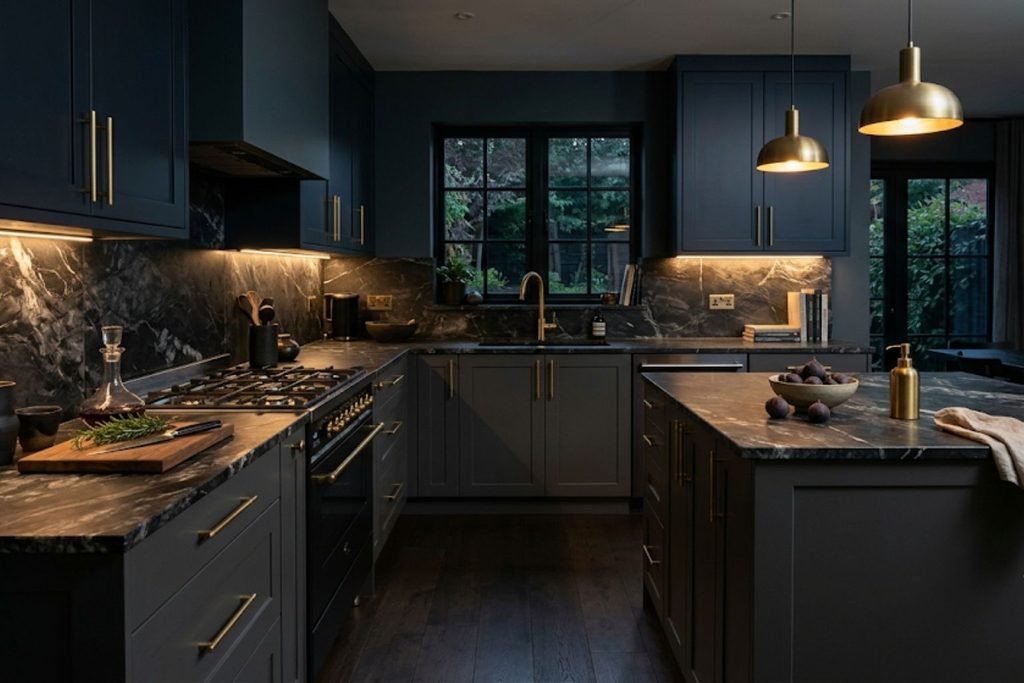
Dark kitchen cabinets can create a bold and elegant appearance. Charcoal, deep navy, and soft black are worth considering if you prefer a more dramatic kitchen.
These colours can work particularly well in larger kitchens or spaces with good lighting. However, darker shades need careful planning because they may make a room feel enclosed when combined with dark flooring and limited natural light.
Tips for Choosing Dark Cabinets
- Pair dark cabinets with light countertops to create contrast.
- Use good task lighting and ceiling lights.
- Add natural wood to make the space feel warmer.
- Consider using dark colours on the island or lower cabinets only.
- Choose cabinet hardware that complements the finish.
For example, charcoal lower cabinets with white upper cabinets can give a kitchen a contemporary look without making the entire room feel dark.
A matte finish can create a softer appearance than a highly reflective finish. However, the best option depends on the cabinet material, cleaning requirements, and your household’s daily use.
8. Two-Tone Kitchen Cabinets
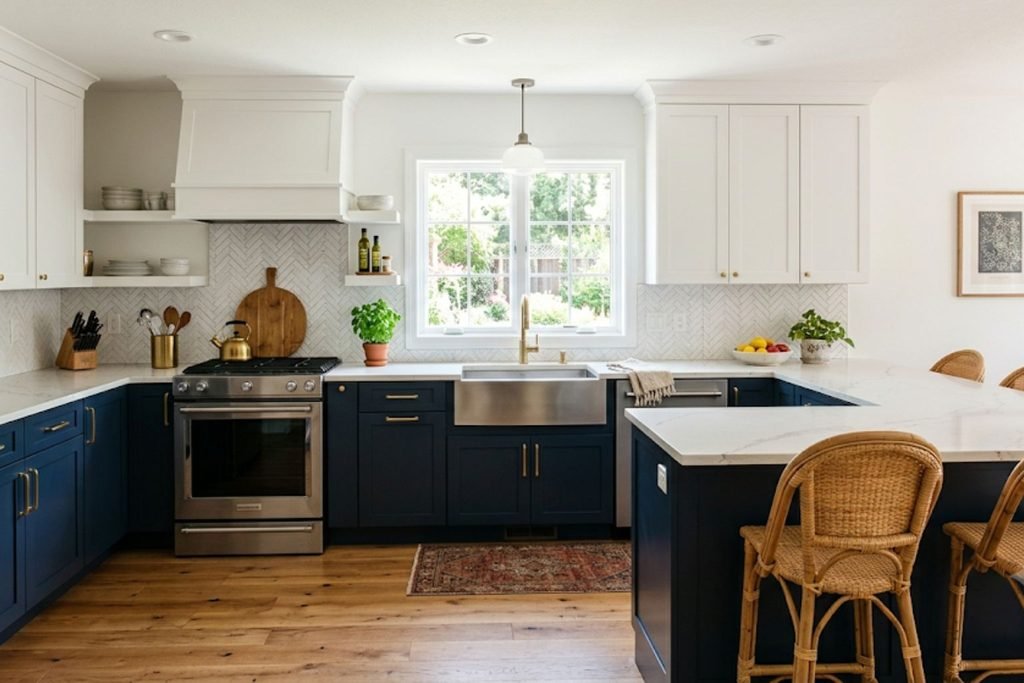
Two-tone kitchen cabinets use two different colours or finishes in the same kitchen. This design is a useful option for homeowners who want more visual interest without choosing one bold colour for everything.
You can combine a painted colour with a wood finish or use two related paint shades.
Popular Two-Tone Cabinet Combinations
Some combinations to consider include:
- White upper cabinets with sage green lower cabinets
- Cream upper cabinets with natural oak lower cabinets
- White cabinets with a navy blue island
- Beige cabinets with dark walnut accents
- Light gray cabinets with charcoal lower cabinets
The key is to make the colours work together rather than compete for attention. Choose one main shade and use the second colour to create contrast.
Two-tone cabinets are particularly useful when you want to highlight a kitchen island or visually separate different areas of an open-plan space.
This approach also gives you more flexibility. If you want to introduce a trendy shade but prefer a timeless overall design, you can use it on the island or lower cabinets and keep the remaining cabinets neutral.
How to Choose the Best Kitchen Cabinet Colour for Your Home
Trends can help you discover new ideas, but the best colour depends on your kitchen, lighting, and personal preferences.
1. Consider Your Kitchen Size
Light colours such as warm white, cream, and pale beige can help a small kitchen feel brighter and more open. Darker colours can also work in smaller spaces, but they may need more thoughtful lighting and contrast.
2. Check the Natural Lighting
A cabinet colour can look different throughout the day. Some rooms receive warm sunlight, while others have cooler or limited natural light.
Test paint samples in your kitchen before making a final decision. Look at them in both natural and artificial light to understand how the colour changes.
3. Match Your Countertops and Flooring
Your cabinets should complement the permanent elements of your kitchen. If your countertop has warm beige or brown undertones, a warm neutral cabinet may be easier to coordinate than a cool grey.
You do not need to match every surface exactly. A little contrast often makes the design more interesting.
4. Think About Long-Term Style
A trend may look appealing today, but replacing cabinets can be expensive. If you want a design that lasts, consider neutral shades, natural wood, or muted greens.
You can introduce more adventurous colours through an island, backsplash, wall paint, or accessories that are easier to change later.
5. Consider Maintenance
Some cabinet finishes show fingerprints, dust, and scratches more clearly than others. Very dark and very light surfaces can both require regular cleaning, depending on the finish.
Choose a durable cabinet material and a finish suited to your household’s daily use. Ask your cabinet supplier about cleaning instructions and resistance to moisture and everyday wear.
Common Mistakes to Avoid When Choosing Cabinet Colours
Before finalising your kitchen design, watch out for these common mistakes:
- Choosing a colour from a screen alone: Online photos may not show the true shade accurately.
- Ignoring lighting: A colour that looks perfect in a showroom may appear different at home.
- Following every trend: Choose a colour that suits your home instead of copying a design that does not fit your space.
- Forgetting existing finishes: Cabinets should work with your countertops, flooring, walls, and appliances.
- Using too many competing colours: Keep the main palette balanced and introduce contrast thoughtfully.
- Skipping sample testing: Small paint samples can help you identify undertones before committing to a full kitchen.
Taking time to test samples and compare materials can help you avoid costly changes later.
Conclusion
The best kitchen cabinet colours for 2026 offer a balance of warmth, personality, and long-term style. Warm white and beige remain versatile choices, while natural wood, sage green, deep green, blue, and two-tone combinations provide more ways to personalise your kitchen.
Before selecting a shade, consider your room size, lighting, countertops, flooring, and maintenance needs. Test samples in the actual space and look at them at different times of day.
Ultimately, the right cabinet colour is not simply the one that is trending. It is the one that makes your kitchen feel comfortable, functional, and suited to your everyday life.
Frequently Asked Questions (FAQs)
1. What are the most popular kitchen cabinet colours in 2026?
Natural wood, white, warm neutrals, and green are useful options to consider in 2026. Blue and deeper shades also offer choices for homeowners who want more contrast or personality.
2. Are white kitchen cabinets still in style in 2026?
Yes. White cabinets remain a classic option. Creamy white and off-white shades are worth considering if you want a softer appearance than bright, cool white.
3. Is green a good colour for kitchen cabinets?
Yes. Sage, olive, and forest green can work well in many kitchen styles. Lighter greens create a subtle look, while deeper greens add richness and contrast.
4. What cabinet colours make a small kitchen look bigger?
Warm white, cream, pale beige, and other light shades can help a small kitchen feel more open. Good lighting and reflective surfaces can also improve the overall effect.
5. Are natural wood kitchen cabinets still popular in 2026?
Natural wood is a good option for homeowners who want warmth and texture. Light oak creates an airy feel, while darker wood adds depth and richness.
6. What is the best colour combination for kitchen cabinets?
Popular combinations to consider include white and navy, cream and oak, sage green and white, and beige with dark wood. The best combination depends on your lighting, countertops, flooring, and preferred style.
7. Should kitchen cabinets be lighter or darker than countertops?
Neither is always better. Light cabinets with dark countertops create contrast, while dark cabinets with light countertops can produce a balanced, modern look. Choose shades that complement each other.
8. How can I test a kitchen cabinet colour before buying?
Use paint samples or cabinet samples and place them near your countertops and flooring. Check them in natural and artificial light at different times of day before making your final choice.